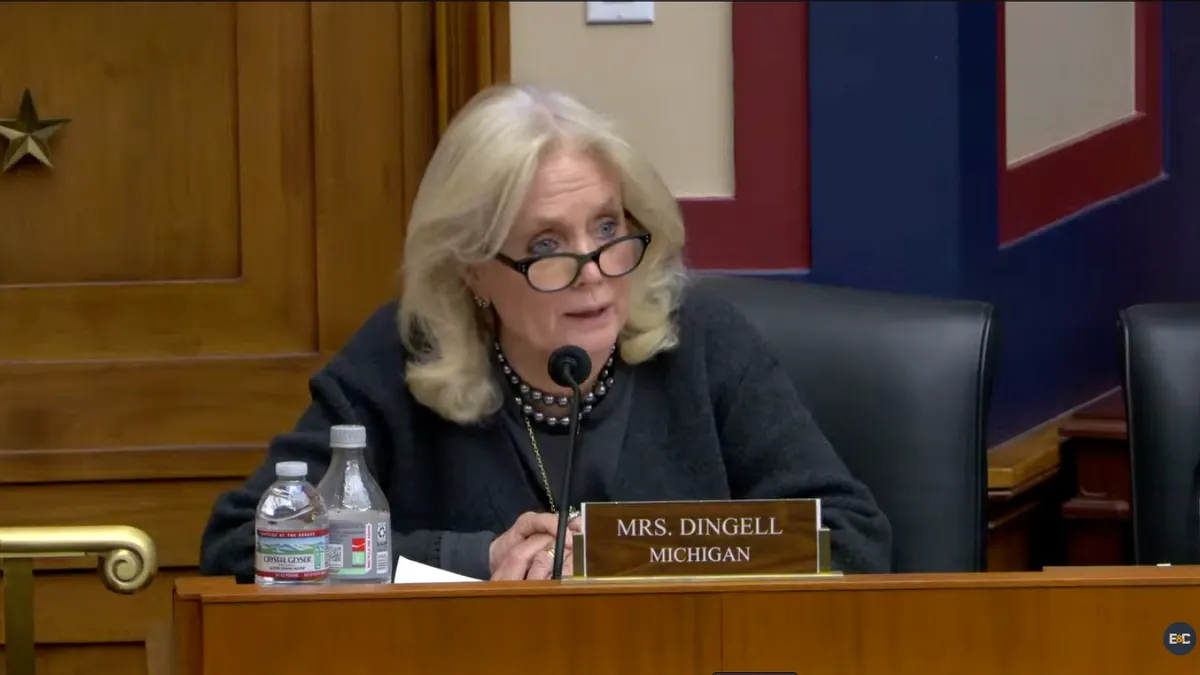
UPDATE: Feb. 11, 2026: The House Committee on Energy and Commerce voted 12-11 Tuesday to advance the Self Drive Act, a bill that would establish federal regulations for autonomous vehicles but limit the regulatory authority of state and local governments. The bill was co-sponsored by Reps. Bob Latta, R-Ohio, and Debbie Dingell, D-Mich., but Dingell withdrew her sponsorship and voted no on the current draft legislation.
The tone of the committee members indicated they would eventually reach a consensus, however. “I truly believe that we are going to get to a bipartisan AV framework signed into law,” Dingell said during the hearing, adding that “we have to make sure safety is [of] the utmost importance.”
Concerns over state and federal preemption, and what some believe are insufficient data reporting requirements, fueled negative votes.
“This is an important and challenging issue, and it's going to take time to get this right,” said Rep. Frank Pallone, D-N.J.
“I agree this bill will need more time,” said Rep. Brett Guthrie, R-Ky. He referenced the upcoming surface transportation legislation, due by Sept. 30, and said “it's a time limit we're trying to meet.”
Dive Brief:
- The House Committee on Energy and Commerce held a hearing Jan. 13 on draft legislation co-written by Reps. Debbie Dingell, D-Mich., and Bob Latta, R-Ohio, to establish a federal policy pertaining to autonomous vehicles, including robotaxis.
- The proposed bill would require automakers to develop a “safety case” for any automated driving system and submit it to the National Highway Traffic Safety Administration. Manufacturers would be allowed to self-certify these safety cases, according to a legislative analysis by Adam Raviv of the Sidley law firm.
- The draft bill includes language prohibiting states and local governments from regulating any vehicle equipped with automated driving systems that has a safety case on file with NHTSA, but may allow regulations applicable to vehicles currently in use, Raviv stated.
Dive Insight:
Dingell and Latta, both from automotive manufacturing states, introduced similar legislation in 2017, 2020 and 2021, to no avail. “I've been committed to finding a bipartisan path forward on AV legislation,” Dingell said at the hearing. “We've made very significant progress in this draft, but we’ve still got stakeholders that are concerned, so our work is not going to stop.”
Rep. Lori Trahan, D- Mass., called the draft bill “incredibly important” but said, “we need more data on autonomous vehicle deployments, especially on unexpected stoppages and how they affect first responders.” She referred to Waymo’s recent issue in San Francisco during an area-wide blackout that darkened traffic signals, causing some of its vehicles to stop and block traffic.
Safety advocates expressed concern at the hearing about the safety case draft language. Michael Brooks, executive director for the Center for Auto Safety, called the requirements “problematic,” adding that “there's no requirement in the Self Drive Act for the safety cases to be submitted routinely in any form or reported to the Secretary of the [Department of Transportation] or to NHTSA.”
“We believe AVs will reduce crashes and congestion, provide transportation for seniors and people with disabilities, and transform how we live and work,” Hillary Cain, senior vice president of policy at the Alliance for Automotive Innovation, said. “Countries around the world are racing to shape the AV future and dominate this space, but America must lead, and the best way to do that is with national standards that support the safe and immediate deployment of AVs.”
Latta said he and Dingell “are working to get this legislation completed, and we believe that this new structure provides the most nimble and narrowly targeted way of doing so.”