As staffing and funding cuts strain the National Oceanic and Atmospheric Administration and the National Weather Service, members of Congress are moving to bolster the nation’s weather forecasting and disaster response systems.
Rep. Eric Sorensen, D-Ill., on Thursday introduced the National Weather Safety Board Act, which would establish an independent review board to investigate major weather-related disasters and issue recommendations to prevent future tragedies. Modeled after the National Transportation Safety Board, the panel would examine forecasting, warnings and emergency response across federal agencies, according to a press release.
Sorenson is the only meteorologist serving in Congress. “After a major disaster, we owe families more than thoughts and prayers — we owe them answers, accountability, and real solutions,” he said in a statement. “Weather will always be difficult to predict, but our response to it doesn’t have to be.”
In the Senate, a bipartisan coalition on Feb. 25 introduced the Weather Research and Forecasting Innovation Reauthorization Act, a bill that would authorize National Oceanic and Atmospheric Administration programs that would strengthen weather research and forecasting “to save lives and better prepare our nation against dangerous weather disasters,” according to a press release.
That bill would establish an atmospheric river forecast improvement program, strengthen landslide preparedness, establish an official Fire Weather Services Program and deploy new technology to forecast droughts and heat waves.
Sen. Maria Cantwell, D-Wash., ranking member of the Commerce, Science and Transportation Committee, said in a statement that the Weather Research and Forecasting Innovation Reauthorization Act is an “important next step” in her five-point plan to bolster the nation’s weather readiness.
“We need to compile more data by land, air, space, and sea by modernizing our weather collection tools, including better radar, hurricane hunters, weather satellites, and ocean buoys,” Cantwell said in a July 21 letter to President Donald Trump. “There is strong support for making the generational investments necessary to become a weather ready nation that will empower Americans to get out of harm’s way.”
“This is an area we need to fund”
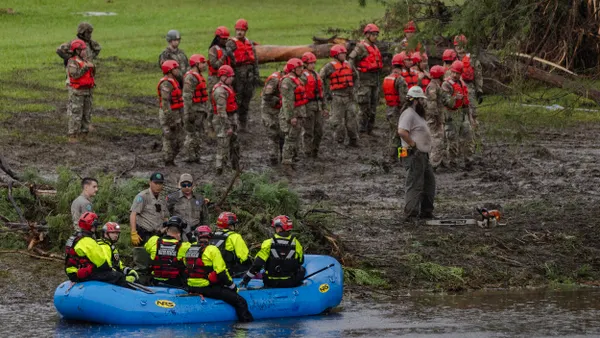
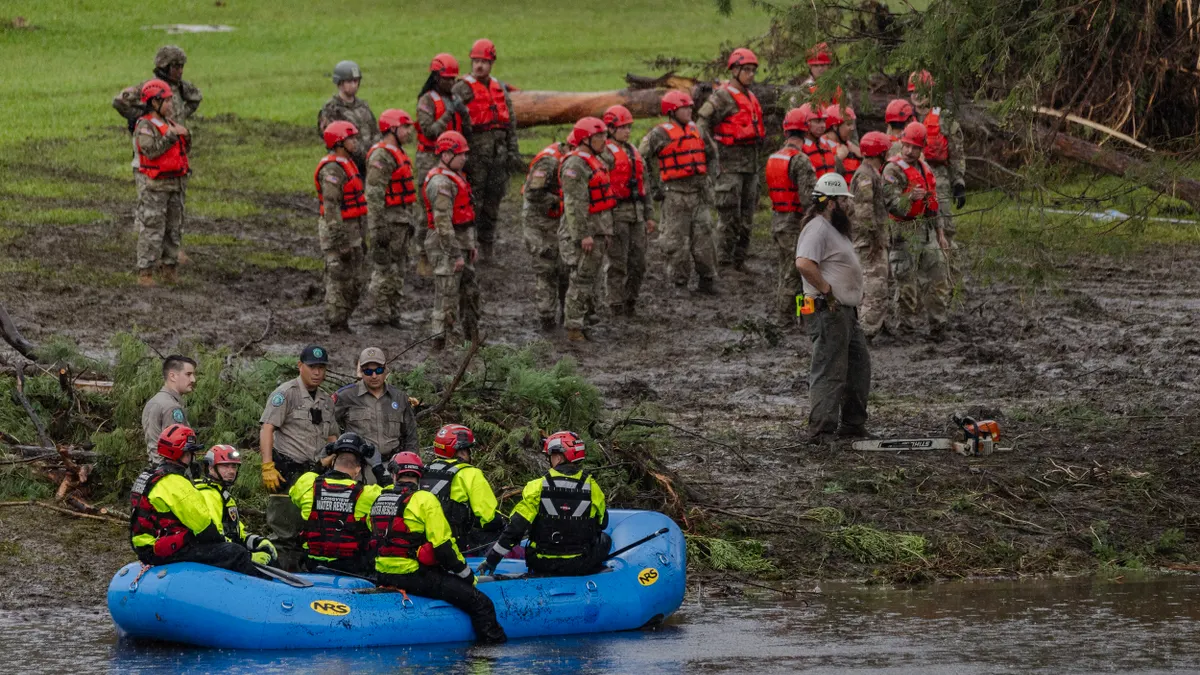
Sen. Ted Cruz, R-Tex., chairman of the Senate Commerce, Science and Transportation Committee, which oversees NOAA and NWS, said the catastrophic flooding in Kerr County, Texas, which killed more than 135 people in July, contributed to his motivation to co-sponsor the weather research and forecasting bill. “Giving Americans the most up-to-date radar information — and delivering it quickly, no matter where you are, no matter the time of day — is imperative,” he said in a statement.
In the wake of the Kerr County flooding, Senate Minority Leader Chuck Schumer, D-N.Y., sent a letter to Commerce Department Acting Inspector General Duane Townsend urging an investigation into whether staffing shortages at key local NWS stations in Texas contributed to the “catastrophic loss of life and property.”
The American Meteorological Society warned in a March 2025 statement that staff cuts at NOAA and NWS “are likely to cause irreparable harm and have far-reaching consequences for public safety.” The National Weather Association said in a statement that cutting staff and budget at NOAA and NWS “could endanger the safety of U.S. citizens and undermine the critical services that protect us from hazardous and high-impact weather and climate events.”
The NWA and the International Association of Emergency Managers released a joint statement in September, protesting the Trump administration’s moves to reduce weather research and emergency management funding. “We are deeply concerned by recent discussions that jeopardize this foundation, whether through reductions in scientific research, disaster response and preparedness funding, or staffing within the meteorological and emergency management fields,” the statement says. “Weakening these systems not only increases risk but undermines the progress that has been made in safeguarding communities from preventable tragedies.”
“In emergency management, we have a very close relationship with the National Weather Service. We rely on their information, their data, the weather radar network that’s used to issue tornado warnings and talk about severe storms,” said Robert Dale, deputy emergency manager for Ingham County, Michigan, and chair of the IAEM USA Weather Caucus.
Dale urged city leaders to continue making the case for NOAA and NWS with the public and federal officials. “We want our House and Senate leaders to come together and say this is an area that we need to fund,” he said.