

Dive Brief:
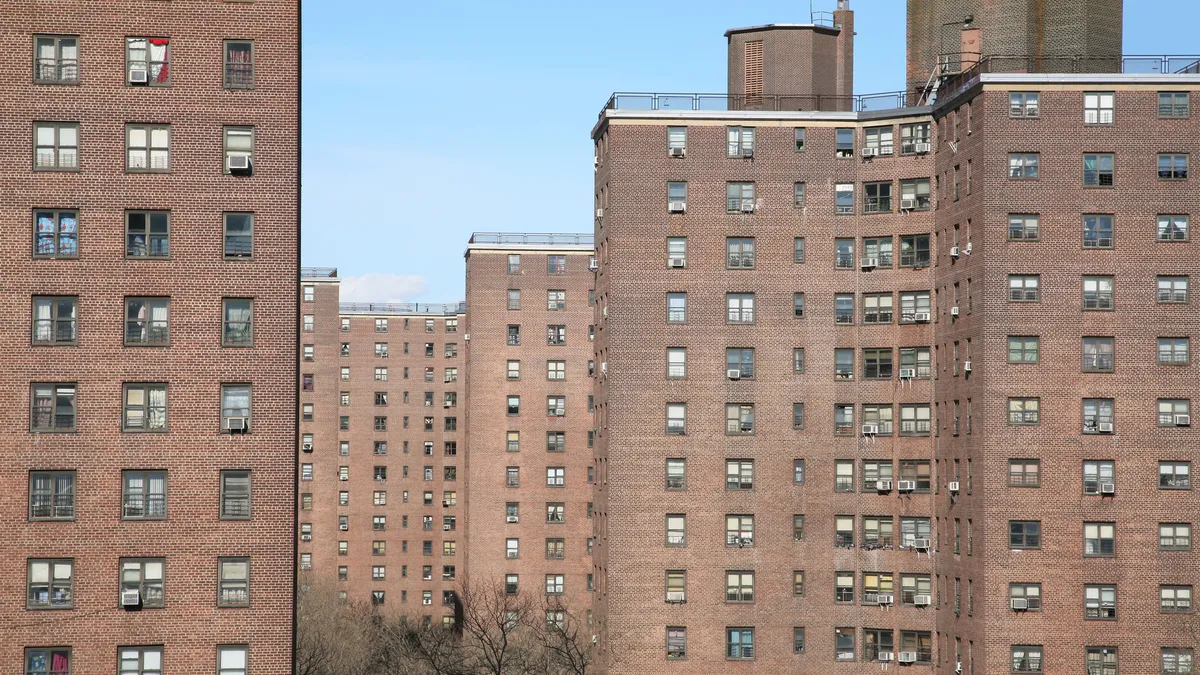
- The number of vacant New York City Housing Authority apartments grew from 2,840 in January 2022 to 6,740 as of May 2025, a surge of 137%, according to a Department of Investigation report released Tuesday.
- NYCHA apartments are sitting vacant for around one year on average, the report found. The longer vacancy rates "heighten the risk of illegal occupancy,” Acting DOI Commissioner Christopher Ryan said in a statement.
- “NYCHA apartments that sit vacant reduce the already limited availability of the City’s public housing stock, and without appropriate security measures, pose a public safety risk for public housing residents, employees and contractors,” Ryan stated. “DOI’s investigation found that NYCHA must do more to stop trespassing and other illegal activity in vacant apartments.”
Dive Insight:
New York City is in the midst of a housing squeeze. Vacancy rates hit historic lows last year at just 1.4%, and the cost of housing has skyrocketed.
But as the DOI report found, vacancies in public housing — which has a waitlist of 165,000 applicants — have been a different story.
A variety of factors have contributed to the increase in NYCHA vacancies, according to DOI, including: an increase in transfers from one apartment to another; funding constraints that can extend timelines for refurbishing an apartment; and a surge of vacant apartments that require lead abatement following a local law change concerning acceptable levels of lead in lead-based paint.
The report found that the average apartment turnover cost is approximately $52,000 — including $17,000 for lead abatement, $25,000 for asbestos abatement and $10,000 for general renovations, although those costs can “vary widely.”
Along with the increase in vacancies, DOI found instances of unauthorized occupants in 548 apartments from January 2022 to May 2025, leading to 81 arrests.
The report includes enhanced security recommendations for NYCHA, such as proactively inspecting vacant apartments, ensuring vacant apartments are locked and secured, and more actively engaging with its Resident Watch program to encourage reporting of suspected trespassing in vacant units.