This audio is auto-generated. Please let us know if you have feedback.
Dive Brief:
- More than 160 miles of new rail, bus and other fixed-guideway transit lines opened in the U.S. in 2025, and about 94 miles more are projected to be completed this year, according to data from The Transport Politic.
- Cities are choosing less expensive and more flexible bus rapid transit and similar arterial rapid transit over light rail projects, said Yonah Freemark, a researcher at the Urban Institute and creator of The Transport Politic. BRT lines generally run on dedicated traffic lanes, while arterial rapid transit systems use existing traffic lanes, often with bus signal priority.
- “Over the past decade, a lot of cities have been reorienting their investment approaches,” Freemark said in an interview. “Light rail is just very expensive for these cities, and they're not finding the mechanism to reduce that.”
Dive Insight:
In total, about 150 miles of new fixed-guideway transit lines are expected to open this year across the U.S., Canada and Mexico, compared to over 240 miles in 2016.
These are some of the major projects expected to open in the U.S. in 2026:
- Atlanta will launch a 3.1-mile BRT line from downtown Atlanta to the Atlanta BeltLine.
- Baton Rouge, Louisiana, plans to complete a 9.3-mile arterial rapid transit line to connect the north and south sides of the city to its downtown.
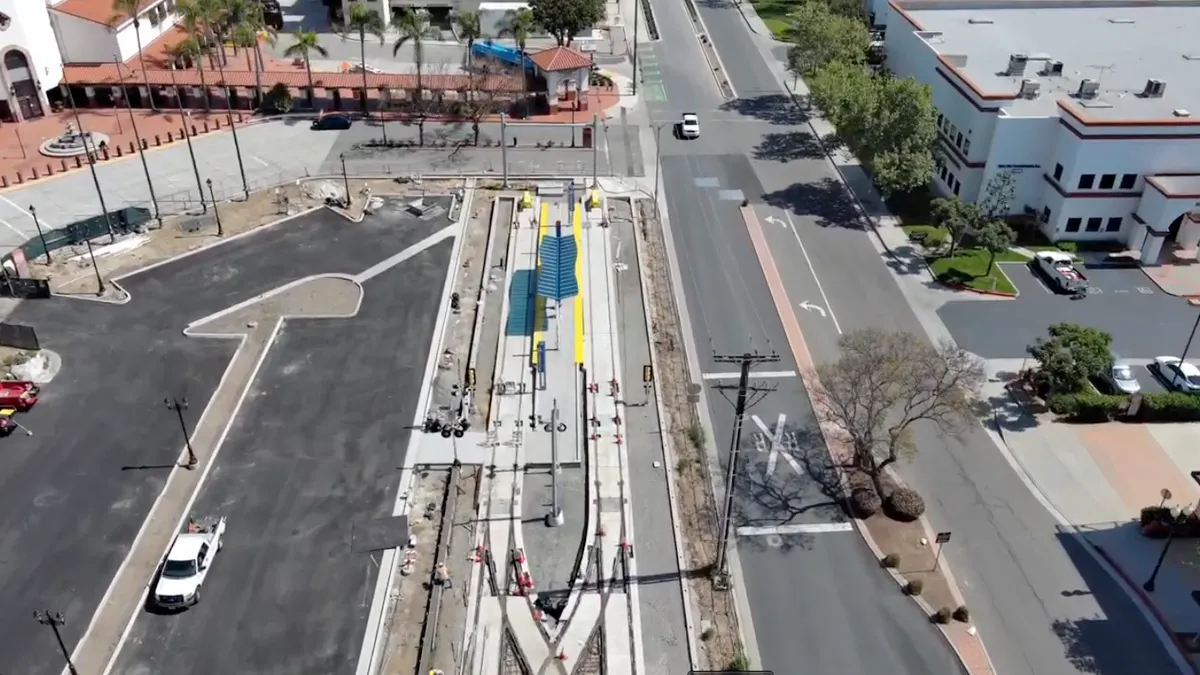
- Kansas City will extend its streetcar line 0.7 miles to Berkeley Riverfront Park, while Orange County, California, expects to open its 4-mile streetcar line connecting the cities of Santa Ana and Garden Grove.
- Seattle’s 7.5-mile light rail extension will connect two existing light rail lines across Lake Washington.
Canadian cities Montreal, Ottawa and Toronto are building light rail projects. “Canada is acting a little bit more like the rest of the world,” Freemark said. “Their major cities are building a lot of rail lines and are doing so on a pretty rapid pace, and that is not true in the U.S.”