Dive Brief:
-
President Donald Trump said Tuesday that his administration will halt federal payments to cities and states with policies that limit cooperation with federal immigration enforcement, starting Feb. 1.
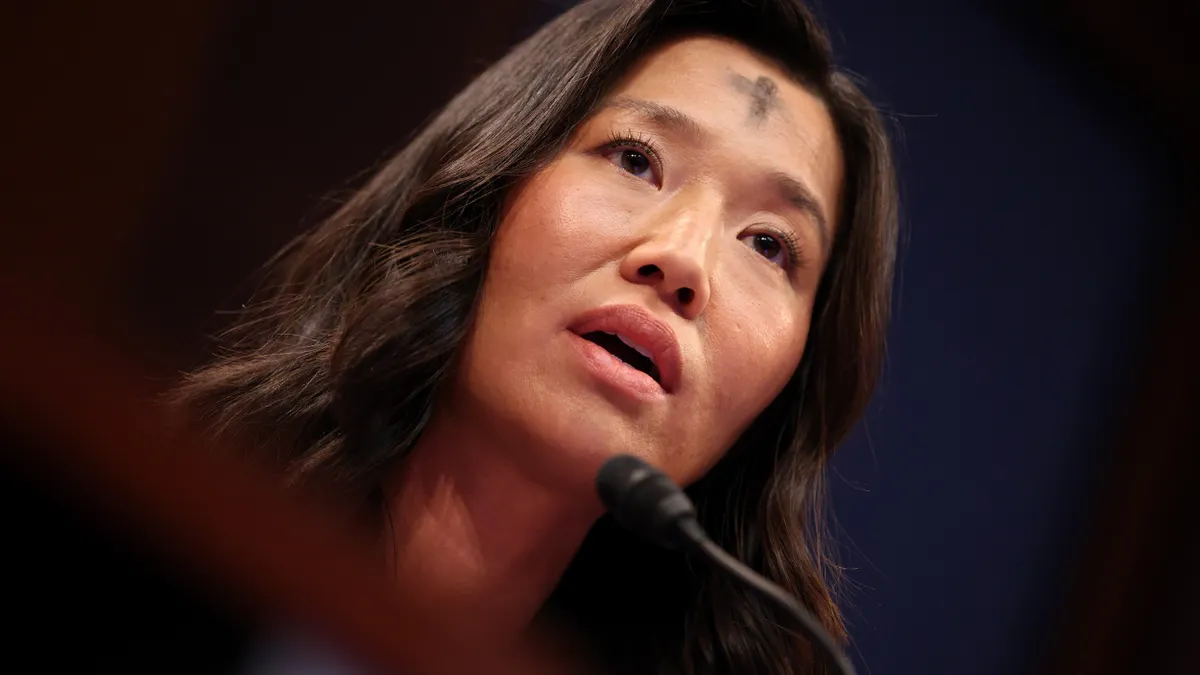
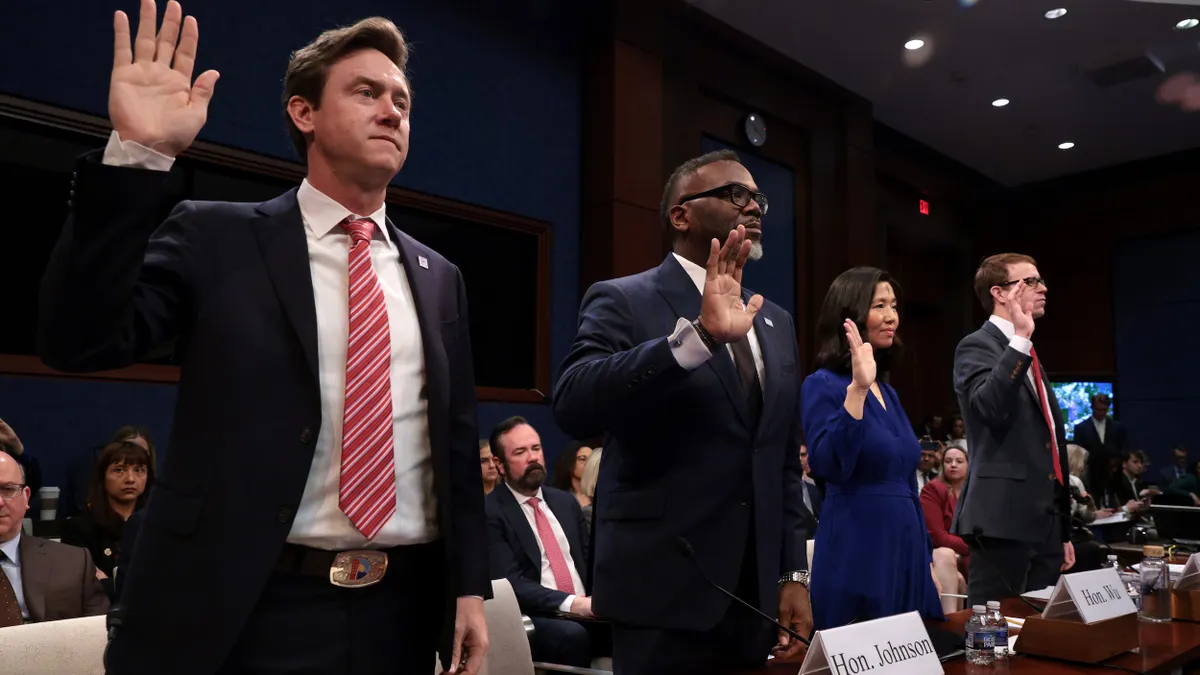
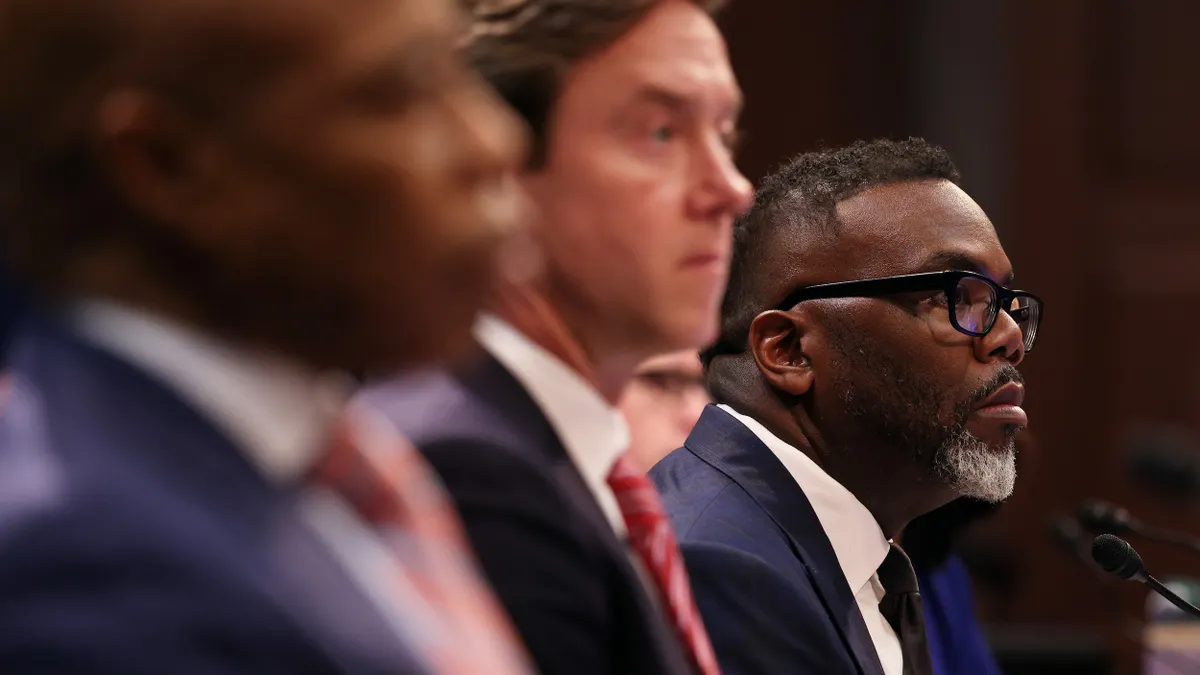
- Chicago Mayor Brandon Johnson and New York Mayor Zohran Mamdani said they would fight funding cuts in court. “We will be relentless until we restore every dollar that has been withheld by the Trump administration,” Johnson said in a statement. “Those are funds that belong to the people of Chicago, not the President.”
- Noting that federal courts have previously stopped the Trump administration from cutting funding to “sanctuary” jurisdictions, University of California Davis law professor Kevin Johnson said in an email that the Trump administration is effectively “seeking to relitigate the issue.”
Dive Insight:
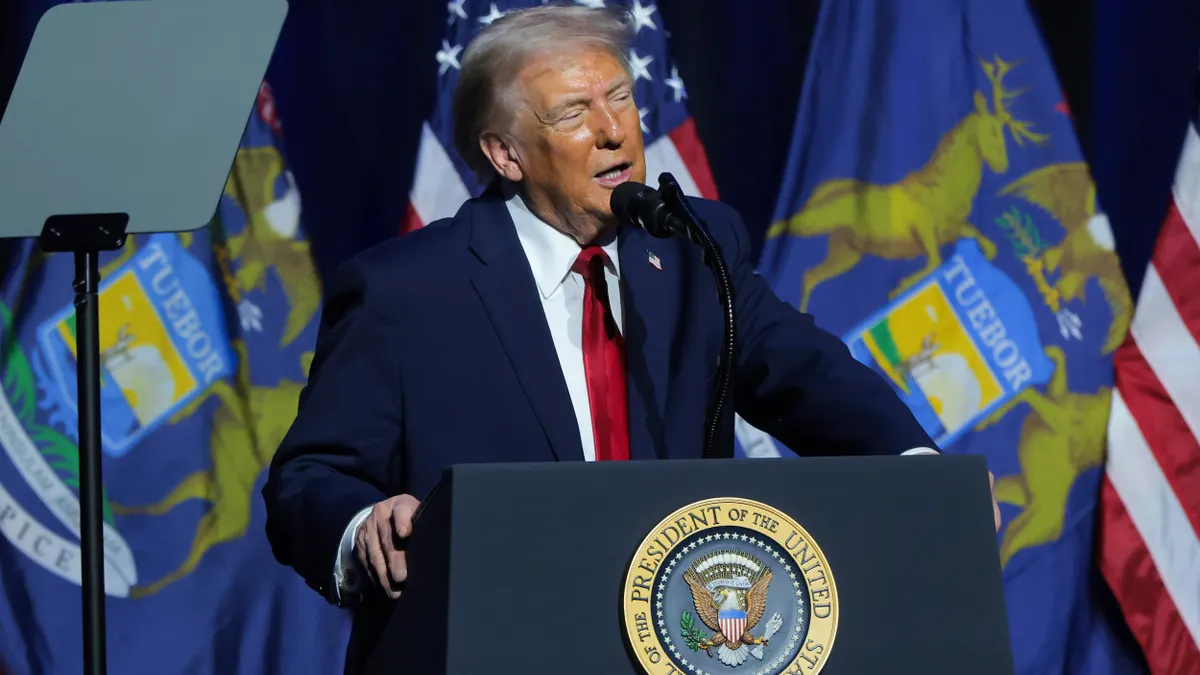
“Starting Feb. 1, we’re not making any payments to sanctuary cities because they do everything possible to protect criminals at the expense of American citizens, and it breeds fraud and crime and all of the other problems that come,” Trump said during a speech at the Detroit Economic Club Tuesday. He followed up with a Truth Social post confirming the statement on Wednesday morning.
Later that day, when reporters asked what kind of funding would be affected, he said, “You’ll see. It’ll be significant.”
Deputy Chief of Staff for Policy and Homeland Security Stephen Miller said on Fox News that the country would not subsidize “mass criminal activity and the mass theft of American taxpayer resources by individuals who have no right to be in this country at all in the first place.”
The White House and the Department of Justice did not reply to requests for further information.
Trump has made several attempts to cut funding to “sanctuary” cities. In 2018, during his first term, the 9th Circuit Court of Appeals ruled he could not refuse to disperse grants to San Francisco and Santa Clara County, California, without congressional authorization. Federal courts split, however, over whether he could freeze $250 million in annual funding to state and local law enforcement. The cases were being appealed when the Biden administration asked for them to be dismissed.
In his second term, Trump has signed 38 executive orders related to immigration and taken more than 500 actions on immigration, according to the Migration Policy Institute.
In February, Trump signed an executive order “to ensure taxpayer resources are not used to incentivize or support illegal immigration.” In April, he signed another executive order threatening to cut off funding and potentially prosecute “sanctuary” cities. Cities have filed multiple lawsuits.
U.S. District Judge William Orrick ruled in August that the administration could not deny funds to cities and counties based on their policies limiting cooperation with federal immigration efforts, calling it a “coercive threat” and “unconstitutional.”
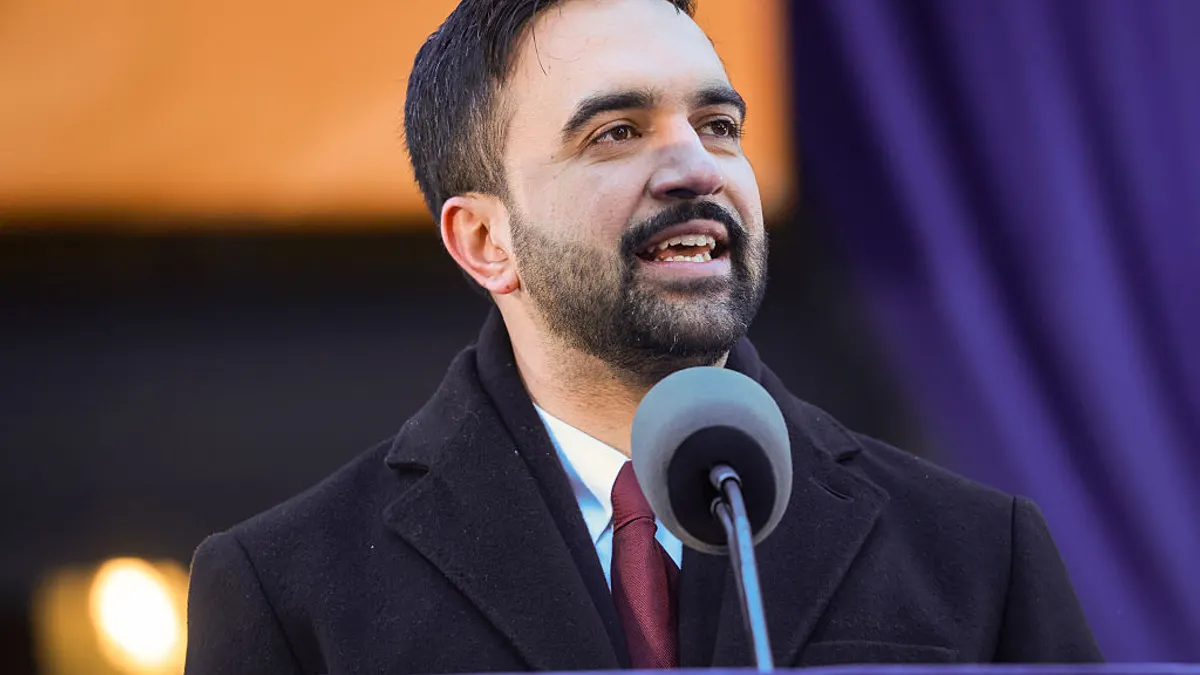
Mamdani told reporters he had reached out to Trump to express his “sharp opposition” to the proposed funding cut. “I've yet to hear back from the President, and this is the position I hold as the mayor of New York City: There are many threats that are made to New York City on a regular basis, and I am confident in our city's ability to fight those threats back, and we've also seen, whether it be in the courts or whether it be beyond that, our ability to win those fights,” he said.
“Chicago will never back down from a fight,” Johnson said. “To the President, our message is simple: we’ll see you in court.”