Dive Brief:
- Uber expects to have robotaxis in 15 cities by the end of this year, CEO Dara Khosrowshahi said on today’s earnings call. “We're very confident that AVs will be a net positive to the mobility sector.”
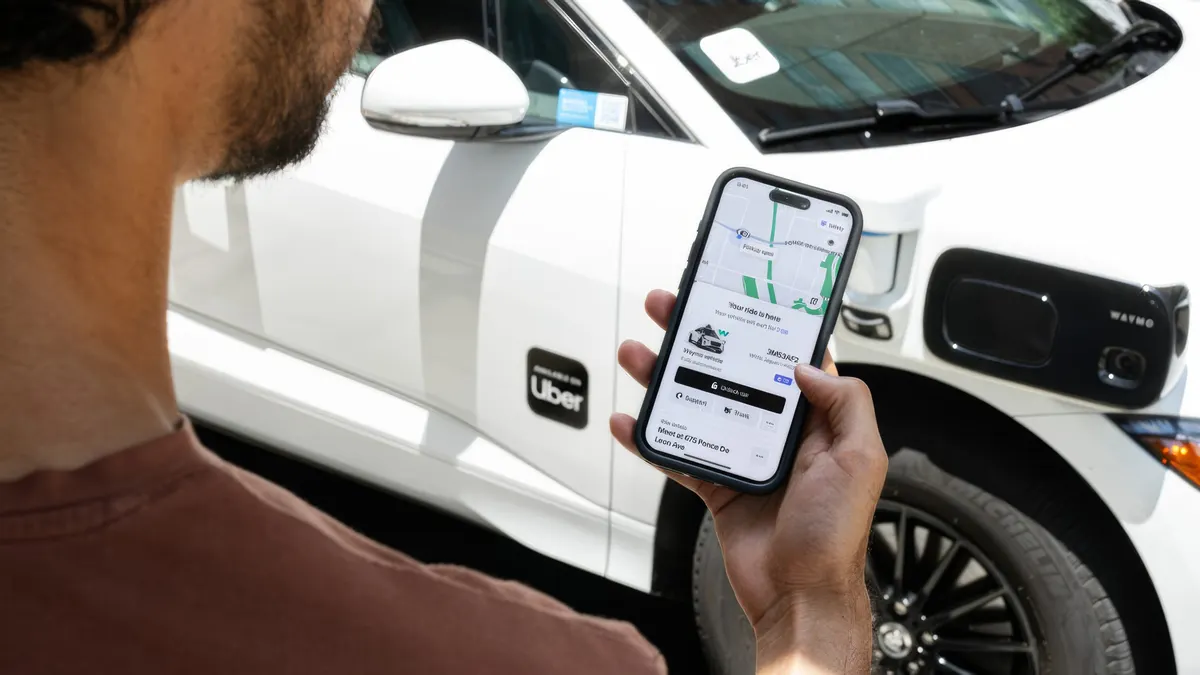
- He added that robotaxis are a “growth driver” in the cities where they operate, including San Francisco, Atlanta and Austin, Texas.
- While autonomous vehicles globally account for just 0.1% of rideshare trips on or off the Uber platform, “We're more convinced than ever that AVs will unlock a multitrillion dollar opportunity for Uber,” Khosrowshahi said.
Dive Insight:
Uber has collaborated with several companies in its quest to develop and expand its robotaxi offerings. Last month, Uber announced a partnership with electric automaker Lucid Group and autonomous driving technology developer Nuro to produce at least 20,000 robotaxis for global markets. The ride-hailing company also partners with Waymo and May Mobility, and with Nvidia, which has developed the technology to equip vehicles with high-level autonomous driving capability.
Khosrowshahi debunked some misconceptions about AVs in prepared remarks, the biggest one being that robotaxis will soon take over all ride-hailing trips, eliminating drivers. “Despite the incredible progress AVs are making around the world, and the enormous potential they hold, they are still far from capable of meeting the level of reliability and ubiquity that customers and cities expect,” he said.
For example, he pointed to the December San Francisco blackout that brought many Waymo vehicles to a halt, and to the absence of robotaxis in less affluent areas such as Oakland, California.
“This is not the kind of a technology that is going to replace [human drivers]; it's going to augment [them],” he said.
Nevertheless, Uber is placing a big bet on robotaxis: it intends to carry the largest share of AV trips globally by 2029. Khosrowshahi urged automakers “to start ramping [up] capacity” to meet the coming demand.