
In November, the Senate took a significant step toward strengthening the nation’s recycling and composting systems by passing the Strategies to Eliminate Waste and Accelerate Recycling Development, or STEWARD Act. The bipartisan legislation focuses on expanding recycling access, investing in community level infrastructure, and modernizing how recycling data is collected and measured across the country.
Better recycling outcomes require both physical infrastructure and the ability to understand how systems are performing. Many Americans lack access to reliable recycling services, and decision makers need better data to track progress and identify areas for improvement.
This focus on increased infrastructure and data represents real progress. But there is a critical layer missing from the national conversation. Even the most advanced facilities, fleets, and reporting frameworks depend on a factor legislation alone cannot solve: human behavior.
Recycling systems ultimately succeed or fail at the curb. Residents decide what goes in which bin, on which day, often based on limited collection information or guesswork. When rules vary by community, route, material, building type, or season, confusion is inevitable. That confusion shows up downstream as contamination, higher processing costs, and missed diversion goals.
The real bottleneck in recycling: human behavior
Contamination remains one of the biggest barriers to higher diversion rates. In most cases, it is not driven by bad intent. It is driven by uncertainty.
Residents want to do the right thing, but they are navigating highly localized programs with limited guidance. Printed mailers age quickly. Static websites are hard to search. Customer service teams are stretched thin. When answers are not available at the moment of decision, residents guess. If we want cleaner recycling streams and better ROI, then education, clarity, and trust must be built into the system.
Digital engagement platforms as essential infrastructure
Resident outreach and engagement technology is often treated as a communications add on. A “nice to have”. In reality, it functions as essential infrastructure.
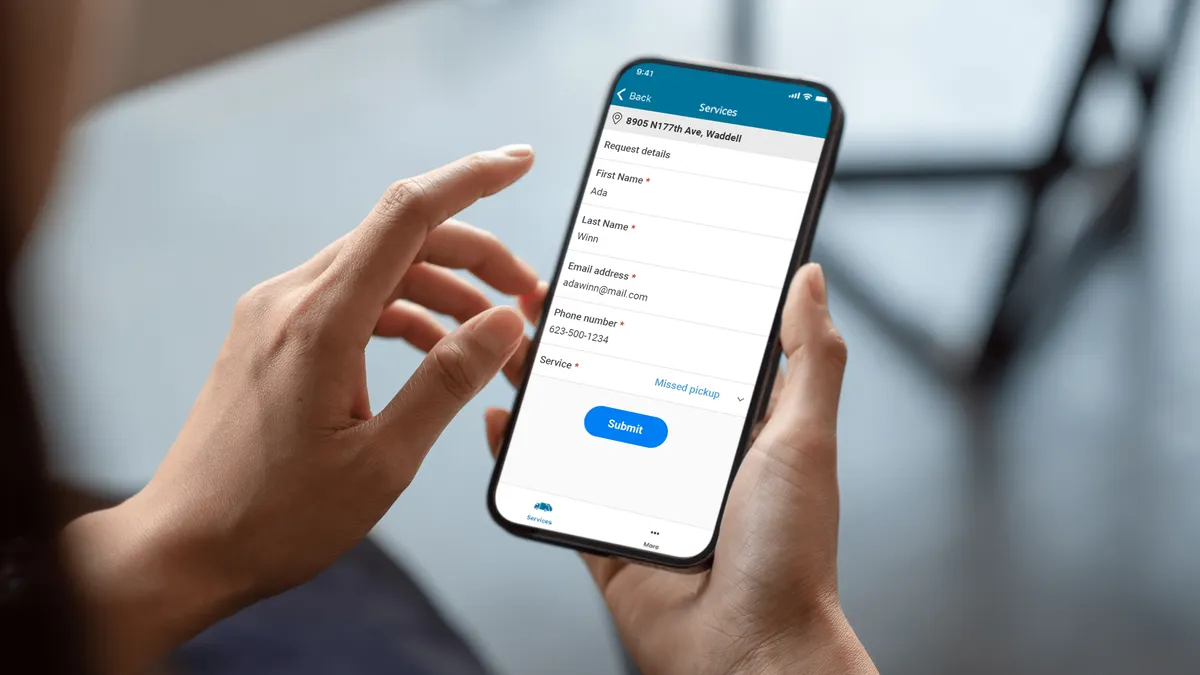
Routeware’s ReCollect solution was designed as the resident facing layer of modern waste and recycling systems. It is a digital, highly customizable tool that acts as a behavioral change platform, a local recycling intelligence system, and a community engagement engine – all in one.
Through personalized collection calendars, automated reminders, item specific disposal guidance, and real-time service alerts, residents receive accurate, localized information when it matters most. Feedback loops reinforce correct behavior over time and reduce guesswork.
At Routeware, we recently surpassed two billion recycling reminders delivered globally. That scale reflects millions of daily decisions influenced by timely, trusted information. It also reflects how central resident engagement has become to system performance.
Bridging operations and engagement
The most effective recycling programs connect operations and education. That connection is evident in the experience of the Southeastern Oakland County Resource Recovery Authority, or RRRASOC, which serves nine communities in Michigan. RRRASOC had strong operations and long-standing education efforts in place when it began exploring digital resident engagement tools. According to General Manager Mike Csapo, the organization recognized an opportunity to better meet residents where they are.
After introducing Routeware’s digital tools such as an item specific disposal search, digital collection calendars, and a resident app, RRRASOC saw a sharp increase in resident engagement with recycling information. Usage spikes followed targeted outreach to multifamily housing, where residents were more likely to rely on digital tools to answer disposal questions.
The operational impact was significant. RRRASOC estimates that the tools now deflect over 200 resident calls per day, saving several staff hours daily and reducing pressure on a small, mostly remote team. At the same time, recycling education combined with digital guidance contributed to a reported reduction in contamination of roughly 50 percent at certain drop off locations.
For RRRASOC, resident-facing technology closed the loop between data, education, behavior, and outcomes and created active participants in the recycling system.
The future of recycling is connected and community centered
Smart routing, fleet optimization, and automation all solve for efficiency. They ensure the right truck is on the right street at the right time. Resident engagement solves the challenge of participation and establishes lifelong sustainability habits. It ensures the right materials are in the right bin.
Neither effort is sufficient on its own. Together, they enable scalable, resilient recycling programs that can adapt to new materials, changing policies, and evolving community expectations. When recycling education and self-service tools are designed into a collection system from the start, real behavioral change is no longer a wish—it is an invaluable asset.
Learn more about Routeware ReCollect at routeware.com.