Technological advancement, climate challenges and evolving urban needs will be top of mind for city leaders in 2026. That’s what Smart Cities Dive readers and other experts told us when we asked for predictions about how cities might evolve this year. Technology was a common theme as AI streamlines administrative tasks and data drives everything from urban forestry to emergency response systems — but new technologies also introduce heightened security risks.
Read on for more on what’s expected in the year to come.
The following responses have been edited for clarity and length.
Walkability, resilient infrastructure and AI domination
In 2026, development will continue to focus on walkable, mixed-use urbanism and adaptive reuse. Recent redevelopment in Nashville, Tennessee, and West Palm Beach, Florida — where we have seen a concentration of height and density to support re-envisioned neighborhoods, walkability and high-quality public spaces at the ground level — exemplify this. The redevelopment in both municipalities reflects the continued planning shift toward downtown activation, pedestrian accessibility, form-based zoning and public/private collaboration.
— Jordana Jarjura, counsel, Government Law Group
One trend I see gaining momentum in 2026 is cities launching affordable housing projects and neighborhood-scale energy-affordability initiatives that replace natural gas infrastructure and heating and cooking equipment with high-efficiency thermal energy networks, window heat pumps and induction stoves. New York, Boston, Ann Arbor, Michigan, and other cities are already demonstrating that initiatives like these enable cities (and their residents) to lower their energy bills.
— Panama Bartholomy, executive director, Building Decarbonization Coalition
As cities, towns and villages continue to be asked to do more with fewer resources, local leaders will remain steadfast in delivering meaningful results, strengthening local economies and improving the quality of life for their residents.
— Clarence Anthony, CEO and executive director, National League of Cities
In 2026, infrastructure resilience will transition from being viewed as a series of isolated capital projects to a high-yield portfolio strategy. Local governments today are managing broad portfolios of energy, water and critical facility assets while navigating the “triple threat” of aging infrastructure, budget shortfalls and increasing climate risk. The major trend to watch for in 2026 will be how cities and counties choose to monetize their existing assets to bridge the funding gap.
— Shruti Gopinathan, utility programs analyst, Santa Clara County, California
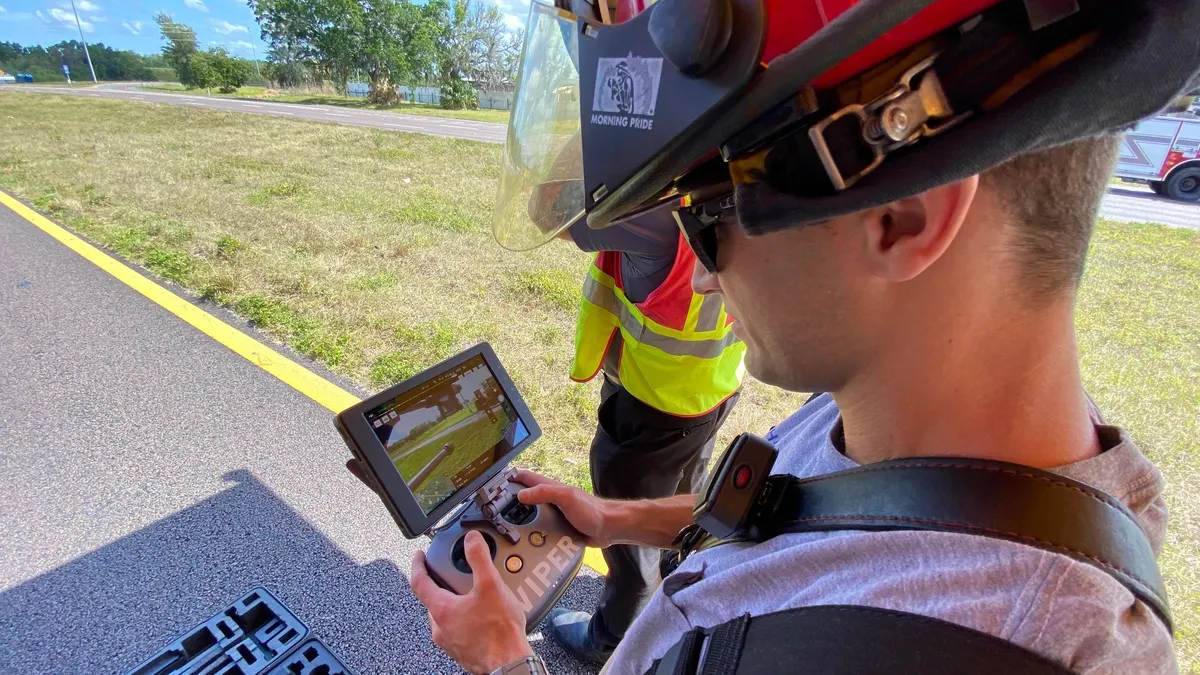
Urban forestry will be much more data-driven, fueled by advances in lidar, AI and drone technology that will help cities understand their tree canopy. These tools will reduce costs and improve accuracy compared with traditional ground surveys. Like other departments that manage assets like roads, bridges and utilities, urban foresters will leverage predictive analytics to prioritize planting and maintenance, making urban forestry more proactive than reactive.
— Hilary Franz, president and CEO, American Forests
AI development will dominate trends expected to impact cities in 2026, such as autonomous vehicles, upzoning and commuter rail service. Expect it to become standard for permitting, 311 services and multilingual support by city governments.
— Bill Kramer, real estate attorney, Brinkley Morgan
Cybersecurity as a public safety issue
Threats will continue to become faster and more convincing, including AI-driven phishing and deepfakes that can impersonate trusted leaders or create false urgency around payments or public safety incidents. At the same time, AI — including agentic AI used in call centers, service delivery and internal operations— will begin embedding in daily government work, acting on behalf of the organization. The challenge won’t be whether governments use AI, but whether they put the right governance, identity controls and human oversight in place to ensure these systems improve services without eroding accountability, resilience or public trust.
— Ryon Saenz, deputy chief information officer, Alexandria, Virginia
By 2026, cities will suffer their most damaging cybersecurity failures not from data theft, but from the loss of operational control over emergency response, transportation, utilities and permitting systems. Cybersecurity will no longer be a back-office IT function, but a frontline public safety issue with real-world consequences unfolding in minutes. Cities that continue to rely on fragmented, reactive defenses will face cascading failures across critical services. To remain resilient, municipal governments will need systems that can detect threats early and coordinate responses across departments in real time. This will make an agentic layer of operations not optional, but essential to governing secure, modern cities.
— Cesar Hernandez, founder, Omni Public; equity fellow, Harvard Kennedy School Center for Public Leadership
State and local governments will continue prioritizing [defending against] ransomware and legacy modernization, but their most dangerous gaps will remain in operations technology and IoT systems — the infrastructure powering transportation, utilities, and public services — where monitoring is limited and protections are weak. As attackers shift their attention beyond traditional IT networks, these blind spots will become harder to ignore.
— Gary Barlet, public sector chief technology officer, Illumio
Tech in law enforcement
We’re likely to see more cities invest in real-time crime centers to centralize their data and improve responses. As AI is layered onto those centers, there’s potential for advanced data analysis, especially for larger agencies that manage a lot of complex information. There are still open questions around data privacy and governance, as well as how AI-assisted outputs will be viewed in court or how they will impact case law. Agencies and cities will need to work closely to address these issues and make sure the technology is used responsibly and effectively in public safety.
— Doug Kazensky, senior solutions engineer, Vector Solutions
The landscape of emergency response technology will expand dramatically as the types of devices directly integrated with 911 systems diversify far beyond traditional communication tools. The best example is advanced automatic collision notification, which has enabled public safety answering points to receive critical data from a crash, such as speed, passenger count and impact details. With next-generation technology, this information will arrive natively as part of the 911 call flow.
— Joe Custer, CEO, Intrado Health and Safety
Transportation at a crossroads
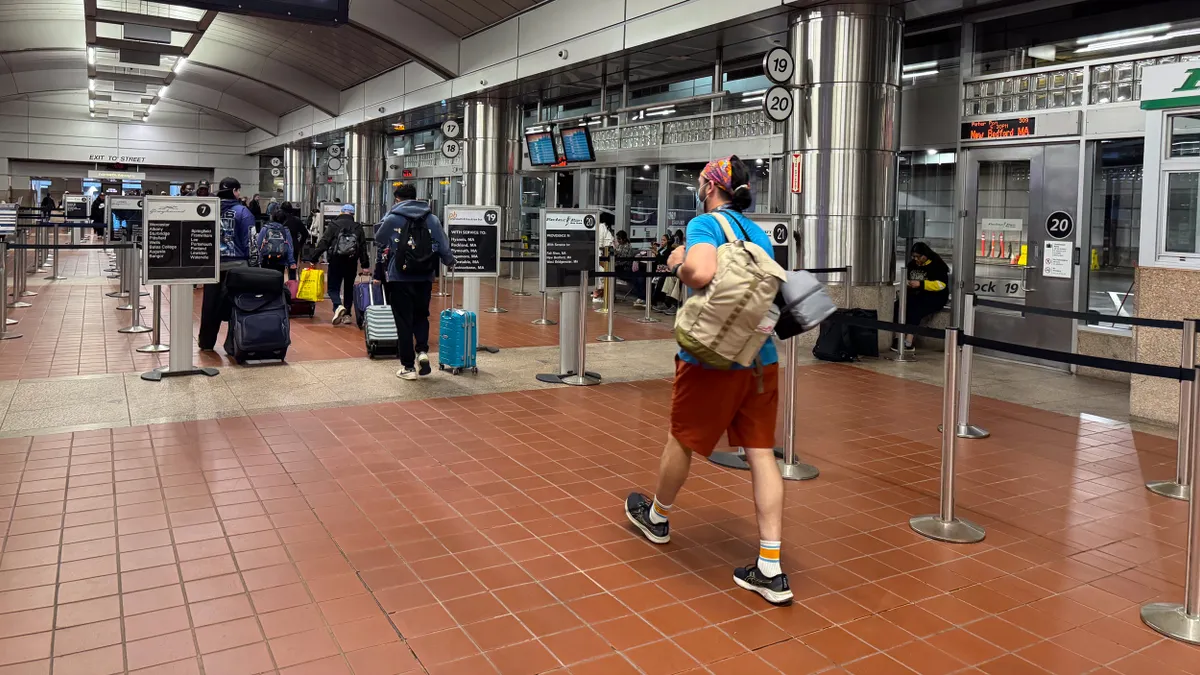
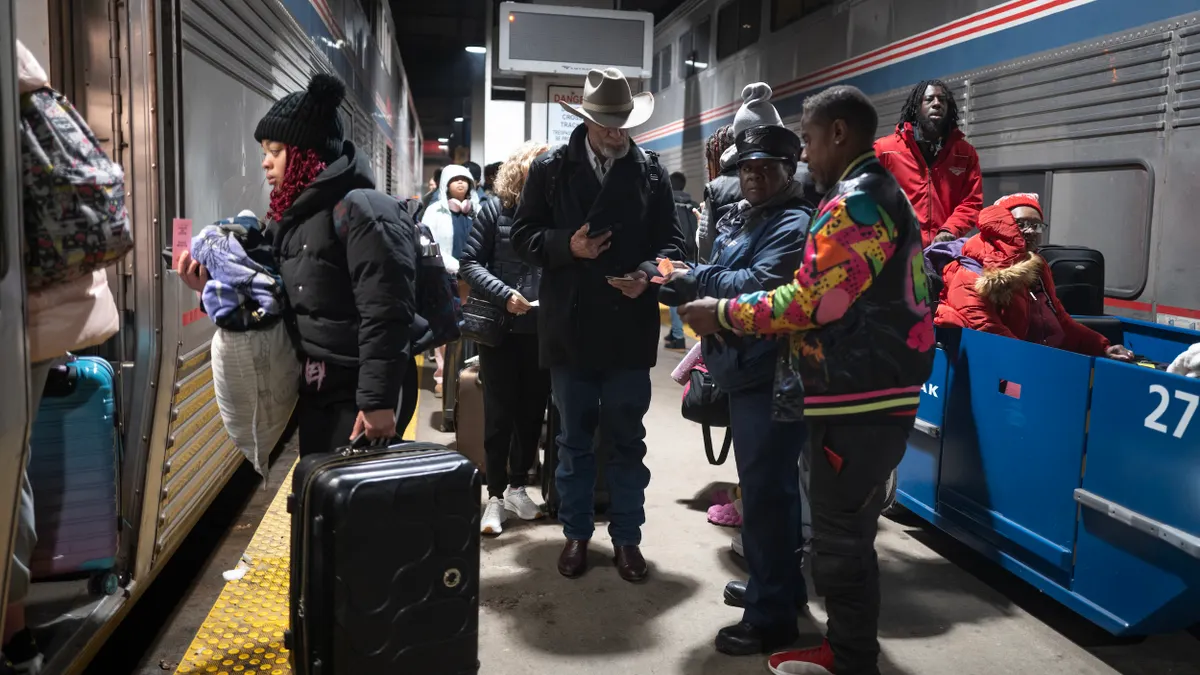
New equipment and a heightened push to operate “on time,” coupled with capacity shortages on airlines and Amtrak, lay the groundwork for another strong year in [intercity] bus travel in 2026. The industry has weathered the closure of numerous downtown bus terminals. We’ve reached a “new normal” in which passengers have become familiar with riding buses from transit hubs, train stations and other outlying facilities.
— Joseph Schwieterman, director, Chaddick Institute for Metropolitan Development, DePaul University
In 2025, U.S. commuter railroads completed electrification projects, expanded service and moved toward regional rail models en route to continued ridership growth. But all of that momentum could come to a screeching halt in 2026 if Congress does not act soon. Early this year, commuter railroads will have just 30 days to secure millions of dollars in additional excess liability insurance. That time period is far too short for such a complex process — especially when U.S. railroads are forced to procure much of their insurance overseas. If commuter railroads cannot secure coverage in time, they will be forced to cease operations.
— KellyAnne Gallagher, CEO, Commuter Rail Coalition
2025 marked a strong year of comeback for intercity bus travel, and we expect that momentum to continue. Travelers are rethinking how they move between cities, with affordability, reliability and flexibility increasingly driving decisions, especially as disruptions in other modes push people toward ground transportation that simply works.
We expect continued demand on shorter and mid-distance routes, where buses are often the most practical option. At the same time, more cities are recognizing the value of intercity buses and looking for ways to better integrate them into intermodal hubs that connect rail, airports, and local transit.
— Kai Boysan, CEO, Flix North America