As Congress works on priorities for the next multiyear legislation to fund highways, bridges and mass transit, it will need to find a mechanism to cover the costs of these programs.
Funding for previous surface transportation bills relied in part on fuel taxes from the Highway Trust Fund, but the fund repeatedly outspent its revenues. The Congressional Budget Office estimates the current HTF will run out of money in 2028, largely because the federal gas tax hasn’t increased since 1993.
“We're not really seeing a whole lot of deep thought into how to actually develop good policy in this space and almost no consideration of impact on consumers,” said Chris Harto, manager of sustainability advocacy for Consumer Reports.
Harto co-authored a CR report outlining five principles for policymakers to consider when evaluating the equity and viability of potential road funding. These include the proportionality of user fees; easy collection of user fees; fair contributions among commercial and consumer road users; protecting consumer privacy; and a solution that maintains revenue stability as future vehicles and fuel types change.
The report says the trust fund’s inability to cover transportation infrastructure projects stems from three factors: rising costs of building and maintaining highways, more fuel-efficient vehicles and electric vehicles. EVs accounted for a 2% reduction in the purchasing power of the federal gas tax, while inflation was responsible for 77%.
U.S. Rep. Sam Graves, R-Mo., chair of the House Committee on Transportation and Infrastructure, proposed a $250 annual registration fee for EVs – but that would leave the average EV driver paying more than three times as much in annual federal vehicle taxes as the average owner of a new gasoline-powered vehicle, according to a CR analysis.
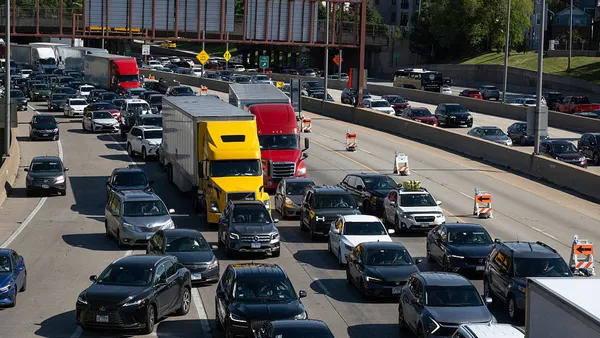
The CR report also found that fees paid by heavy-duty trucks do not contribute equitably, which it says should be remedied in the next surface transportation legislation. An 80,000-pound truck does about 300 times more damage per mile than a passenger vehicle, according to CR.
While CR does not endorse any one funding method, it laid out the pros and cons of six different approaches.
- Fuel tax: Low friction to collect, no privacy concerns, but politically difficult to increase.
- EV registration fees: Easy to collect at the state level, no privacy concerns, but do not consider individual driving habits or different types of EVs.
- Vehicle-miles-traveled fees: Accurately capture road use and can provide stable revenue if indexed for inflation but come with some privacy concerns.
- Public EV charging tax: No privacy concerns, but adversely impacts private EV owners who can’t charge at home and commercial users who don’t have access to fleet chargers.
- Tolls: Easy to collect and can be used to mitigate traffic congestion, but can be vulnerable to shifting driver behavior.
- Federal general fund: Easy but dependent on Congress to enact, does not account for individual road use and impact.
The National League of Cities supports gradual increases in federal fuel taxes, which would then be indexed for inflation in future years, Brittney Kohler, NLC legislative director of transportation and infrastructure, said in an earlier interview.
Transportation funding is not wholly reliant on the Highway Trust Fund. Additional appropriations from Congress add programs, increasing the total available funding. In President Donald Trump’s fiscal year 2027 budget request, released April 3, he asked for $26.6 billion in discretionary budget authority for the Department of Transportation, a $1.6 billion, or 6.2%, increase over the 2026 enacted level.