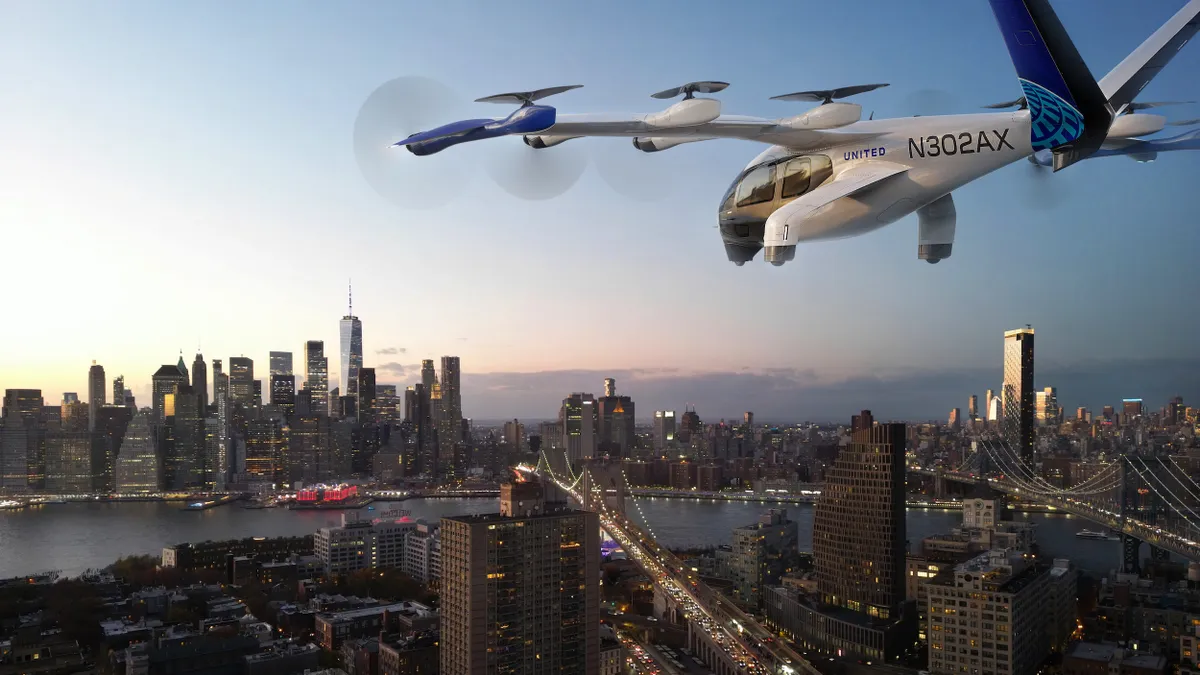
Members of Congress on both sides of the aisle expressed support for advanced air mobility during a hearing Wednesday. AAM includes air taxis, cargo drones and electric medical transport aircraft.
These technologies “can redefine how we transport people and goods, locally, regionally [and in] urban locations not previously served by traditional aviation,” Rep. Troy Nehls, R-Texas, said.
“This advanced technology has the potential to improve mobility options, particularly in dense urban environments like Indianapolis, boost local businesses and job opportunities and reduce surface congestion,” Rep. André Carson, D-Ind., said. “But to make this vision a reality, we must ensure all stakeholders, including labor, state governments and impacted local communities and legacy airspace users, remain at the table.”
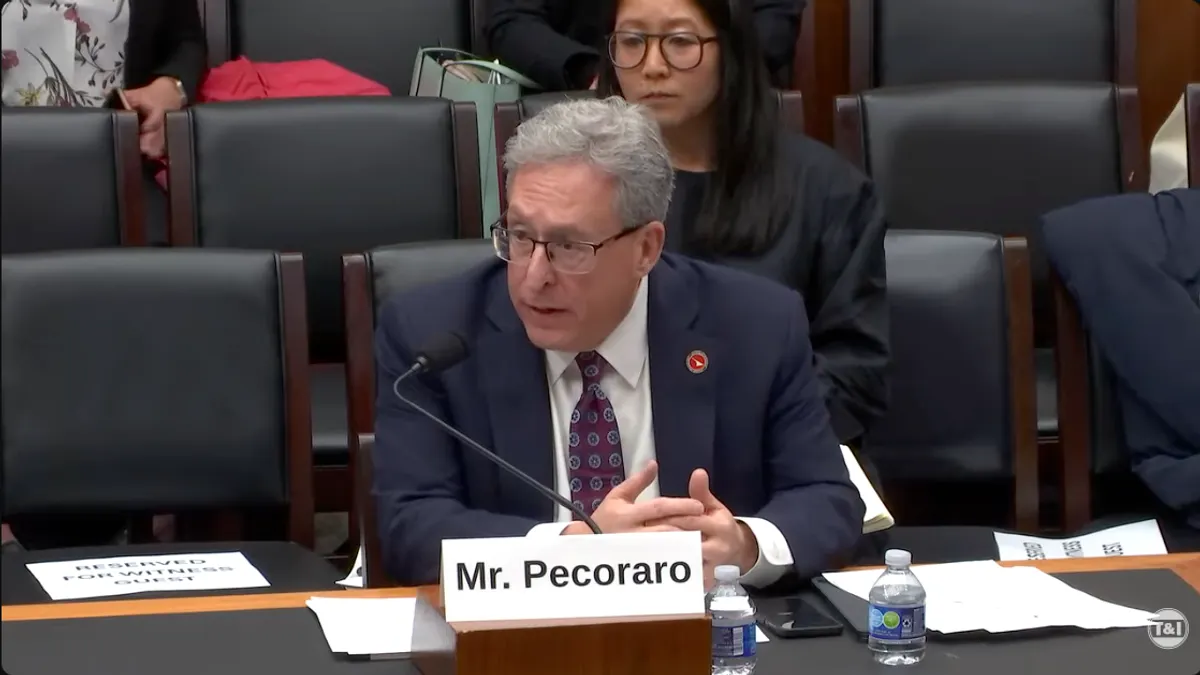
The House Committee on Transportation and Infrastructure Aviation Subcommittee heard from industry and state representatives on the future of advanced air mobility technologies. “States are preparing to enhance their role as the [Federal Aviation Administration’s] on-the-ground partner for AAM integration,” said Gregory Pecoraro, president and CEO of the National Association of State Aviation Officials.
NASAO established an AAM multistate collaborative to help states consider the policies and infrastructure needed to support advanced air mobility operations. Important issues include “policy harmonization between states,” Pecoraro said.
“The successful adoption of these technologies depends on community acceptance and the state's ability to prepare for future operations,” said Rep. Rick Larsen, D-Wash. “Therefore, the AAM industry and FAA must have early, transparent and meaningful engagement with states and local communities to ensure their priorities and concerns are addressed.”
The skeptic among Congress members was Rep. Scott Perry, R-Penn. “I appreciate what you're trying to do and what your group's trying to do, and I think we should be prepared … but we're talking about spending taxpayer dollars on something that's not here yet, while we have problems right now.”
Other speakers included Robert Rose, co-founder and CEO of Reliable Robotics, who pointed out the thousands of airports in the U.S. “There's now many airports in the United States that have lost service, some element of service, or lost service completely post-pandemic, and it's probably not going to come back,” he said. “Technology, more advanced automation and autonomy is going to allow us to return services back and revitalize these regional airports.”
One air taxi manufacturer developing fully autonomous aircraft is Wisk Aero, a Boeing subsidiary. “Autonomy is not a new or radical advancement in aviation, but rather an evolution of what already exists today,” said Wisk Aero CFO Tyler Painter. The company has announced plans to begin autonomous commercial flights in Houston, Los Angeles and Miami by 2030.
Nehls commended the bipartisan nature of the discussion in closing the hearing. “I think this is a step in the right direction,” he said.