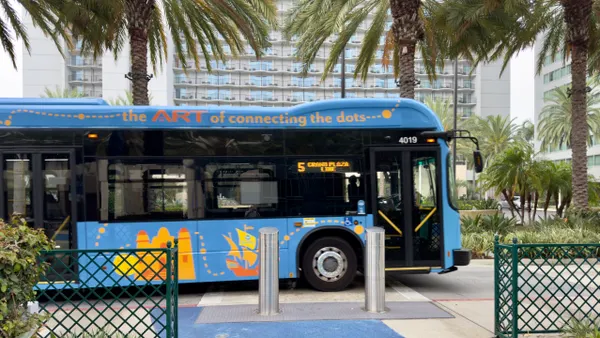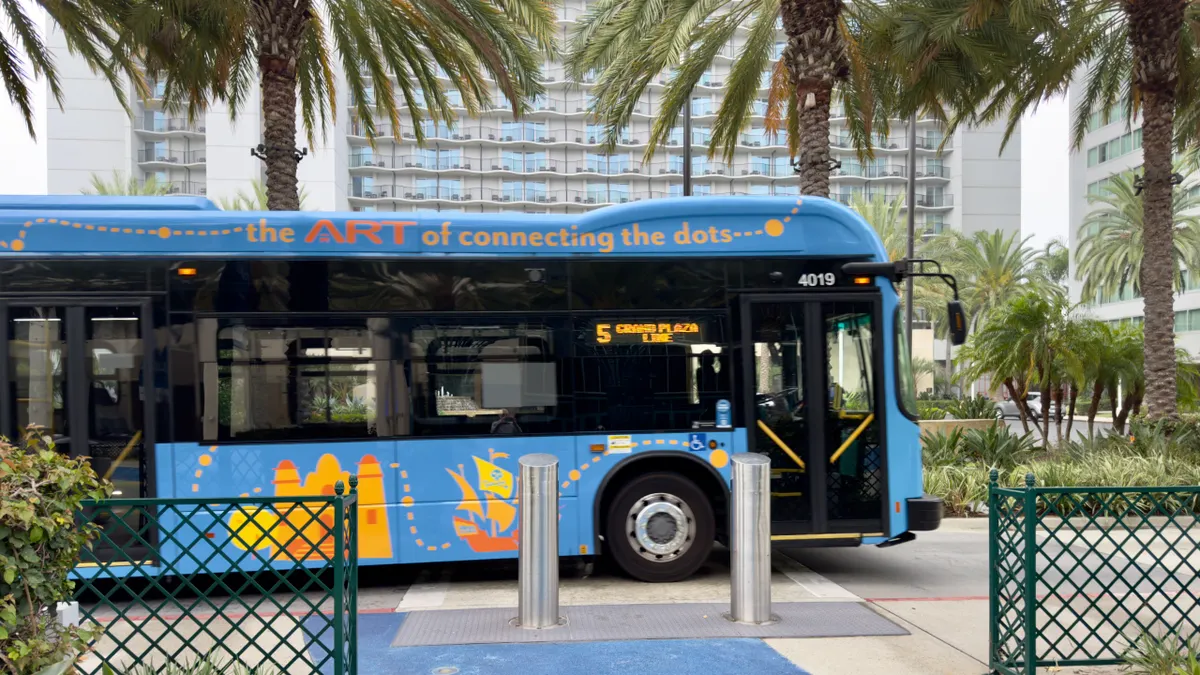
The Anaheim Transportation Network in California will shut down for good on March 31, a victim of years of budget deficits, according to the Orange County Register. The termination will leave 8 million yearly riders to find another way to get to work, resorts, hotels and other services.
The ATN, which aimed to become one of the first transit agencies in California to create an all-electric bus fleet, now needs to sell off its 74 vehicles, along with a charging station and another property. Its Anaheim Regional Transportation service consists of 10 bus routes serving Disneyland, the Anaheim Convention Center, sports facilities, shopping districts and the Anaheim Canyon train station.
The ATN’s buses, purchased with federal grants, must be sold to another public transit operator to avoid repaying the grants, the Register said.
ATN mainly relied on fares and payments from the Anaheim Tourism Improvement District, which area hotels pay into. It received $8.2 million from the district since July to cover monthly budget deficits of $730,000. The tourism district has agreed to purchase ATN’s two properties.
Last year, the city of Anaheim considered taking over the transit network, but that option fell through, according to the Register.
About 60% of ATN’s ridership comes from trips between Disneyland Resorts and nearby hotels. Some hotels are within walking distance of the resort, and some may offer shuttle service, but other visitors may have to rely on ride-hailing services such as Uber and Lyft. Some Orange County Transportation Authority bus routes go to the resort area.
Another 20% of the transit agency’s ridership comes from local communities, former ATN Executive Director Diana Kotler told Smart Cities Dive in a 2023 interview. The agency provided fare-free rides to those employed by local businesses, she said. Kotler left ATN in October, according to her LinkedIn profile.
The ATN was formed in 1996 to begin public transit planning efforts for the City of Anaheim. In 2002, the transit agency launched Anaheim Regional Transportation, its first service.
“There’s still a few unknowns here, but we have a good idea, come April 1, things will flow in the resort,” Anaheim city spokesperson Mike Lyster told the Register.