In the last census, Baltimore was the only major East Coast city that lost population, said Shanaysha Sauls, president and CEO of the Baltimore Community Foundation.
“Based on our location and affordable assets, we should be a thriving community in a relatively affordable state,” Sauls said. But 2020 U.S. census data shows that Baltimore’s population dropped 5.7%, while Philadelphia’s grew by 5.1% and New York City’s grew 7.7%.
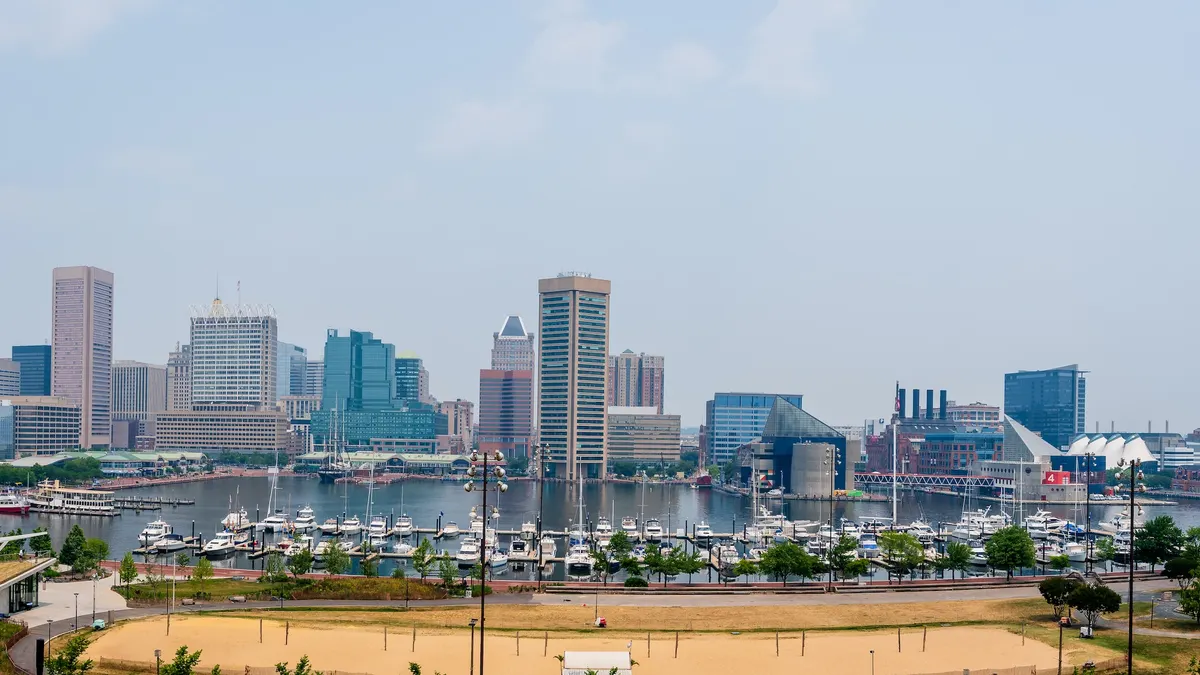
Crime, blighted housing and unstable leadership have been key contributors to Baltimore’s plummeting population, city leaders have said. But they believe new public-private investments in infrastructure, waterfront development, housing, and arts and cultural programs are reversing the decline and revitalizing the city.
“We seem to be having this moment where the stars are aligning and everyone is sharing the same values” regarding Baltimore revitalization, Sauls said. “I think the next census will show meaningful and significant growth, like the other postindustrial cities have already done.”
Laying the framework
According to Sauls, Baltimore began reversing its population exodus a couple years ago. Between 2023 and 2024, the estimated number of city residents increased from 567,517 to 568,271.
This goes hand-in-hand with Baltimore’s improved crime rate, said Mark Anthony Thomas, president and CEO of the nonprofit Greater Baltimore Committee.
“We have been in a vast fight with crime, which has been a historically defining challenge here,” he said. “Last year, we had our lowest homicide rate in 50 years” — about 120 deaths compared with the previous average of more than 300 a year over the last decade.
“This major reduction in crime has helped create the space to be more focused on other things,” like city revitalization efforts, Thomas said.
Stable government has also helped, he said. “For the first time in 20 years, we have a second-term mayor. We have a governor who’s pro-Baltimore and wants it to thrive.”
Another key factor is that fragmented business and economic development partners have organized in recent years and now have a unified focus on how the city should advance its economy and prioritize its investments, Thomas said.
“Pittsburgh’s revitalization was driven by public-private partnerships, but cities like Baltimore lagged behind, failing to appreciate why that organized coalition was important,” he said.
Port and infrastructure initiatives
The collapse of Baltimore’s Key Bridge in 2024 drew both public and private attention to the city’s role as a shipping port and the importance of funding infrastructure projects to increase the port’s economic impact.
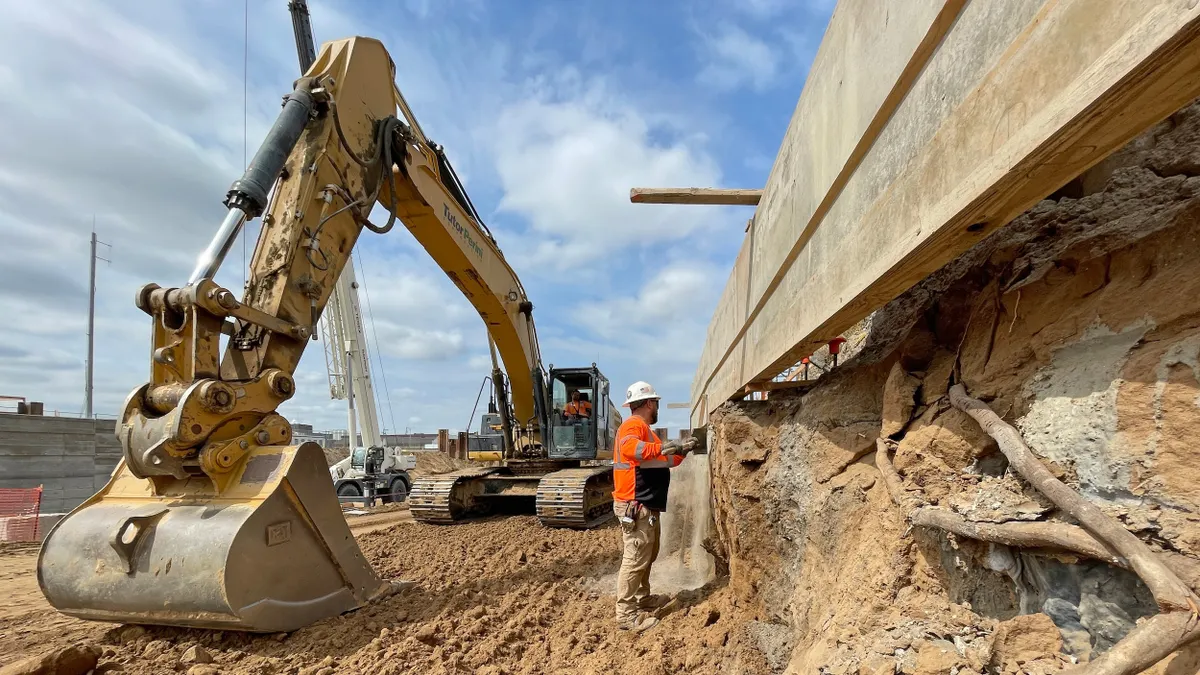
Baltimore’s port is the 17th largest in the country in total tonnage handled, according to the U.S. Department of Transportation. In the next couple of years, an expansion project spearheaded by companies based in Maryland and Switzerland is expected to increase the port’s container capacity by 70%, making it the third-largest container port on the East Coast.
The Sparrow’s Point Container Terminal project began in 2022 and is scheduled to be completed in 2028. By 2035, the developers project this port expansion will create about 8,400 jobs, add $57 million in annual tax revenues and boost the state’s gross domestic product by 12.9%.
The port is benefiting from a large new public-private partnership, the Maryland Tough Baltimore Strong Alliance, launched in response to the Key Bridge collapse.
“The alliance is uniting 130+ partners to raise $16 million while underscoring the port’s economic importance, prioritizing the bridge’s reconstruction and establishing an infrastructure committee to champion major investment,” according to the GBF.
Housing revitalization
Baltimore is home to more than 10,000 abandoned homes and vacant lots, said Sean Closkey, president of the nonprofit ReBUILD Metro. Over the last two decades, ReBUILD has invested more than $125 million in east Baltimore, helping build new homes on over 500 vacant properties, he said.
ReBUILD is also leading a $200 million public-private initiative to transform Baltimore’s Johnston Square area into a “thriving and income-diverse neighborhood,” cutting the vacancy rate by 40% in the last two years, Closkey said.
In September 2025, GBC and the city also launched what they call the “most ambitious housing development program” in the country.
“Backed by $1.2 billion in public commitments and an anticipated $5 billion in private financing, the 15-year plan will revitalize over 65,000 properties across Baltimore — with a focus on block-level renewal that pairs housing redevelopment with infrastructure, commercial corridors and public spaces,” GBC said in a statement.
Waterfront development
Public and private entities are investing about $3 billion to transform 230 acres of Baltimore’s waterfront property into a mixed-use district, expanding historic waterfront revitalization initiatives the city began more than a decade ago.
Current projects include:
- Harbor Point: A $1 billion private mixed-use project on 27 acres, anchored by T. Rowe Price’s new global headquarters, green space and residences. Phase III is nearly complete.
- Baltimore Peninsula: A $1.1 billion, 177-acre, 14 million-square-foot privately built development that includes Under Armour’s headquarters and a new University of Maryland business school campus. About 1 million square feet has been completed.
- Rash Field Park: A $35 million public-private project transforming 7.5 acres of Inner Harbor waterfront property into a recreation destination. Phase I is complete and Phase II is under construction.
- Harborplace: A $900 million, 20-acre private project that will include four new retail and office buildings, an amphitheater and about 900 residences. It’s expected to break ground in 2027.
Arts and culture investments
Cities like Nashville, Atlanta and Miami have combined their cultural image with economic development. Baltimore has high proximity to museums and art institutions, Thomas said, but it has less cultural cachet than those cities.
“We have a lot of modern, experimental art, great music, poets, national museums, historical facilities, but no narrative [about] them,” he said.
Private and public investors are working to change that. Key new initiatives include:
- The Pikesville Armory: A nearly $100 million public-private partnership to transform the historic site into an arts and recreation campus, including artist studios, performance spaces, public art and indoor and outdoor sports facilities.
- B&O Railroad Museum: A $25 million public-private redevelopment of the historic facility.
“What’s happening [with arts and culture] in Baltimore is not a collection of isolated projects — it’s the emergence of a full creative ecosystem at national scale, backed by billions of dollars in public and private investment,” Thomas said. “This moment builds on decades of cultural strength, but the scale is new, and it reflects growing investor confidence in Baltimore’s creative economy and its role in driving population growth, visitation and long-term economic momentum.”
Editor’s note: This article was edited to correct a statement from the Greater Baltimore Foundation regarding grant disbursement for the Maryland Tough Baltimore Strong Key Bridge Alliance and attribute the comment about Maryland’s population growth to Shanaysha Sauls.