Dive Brief:
-
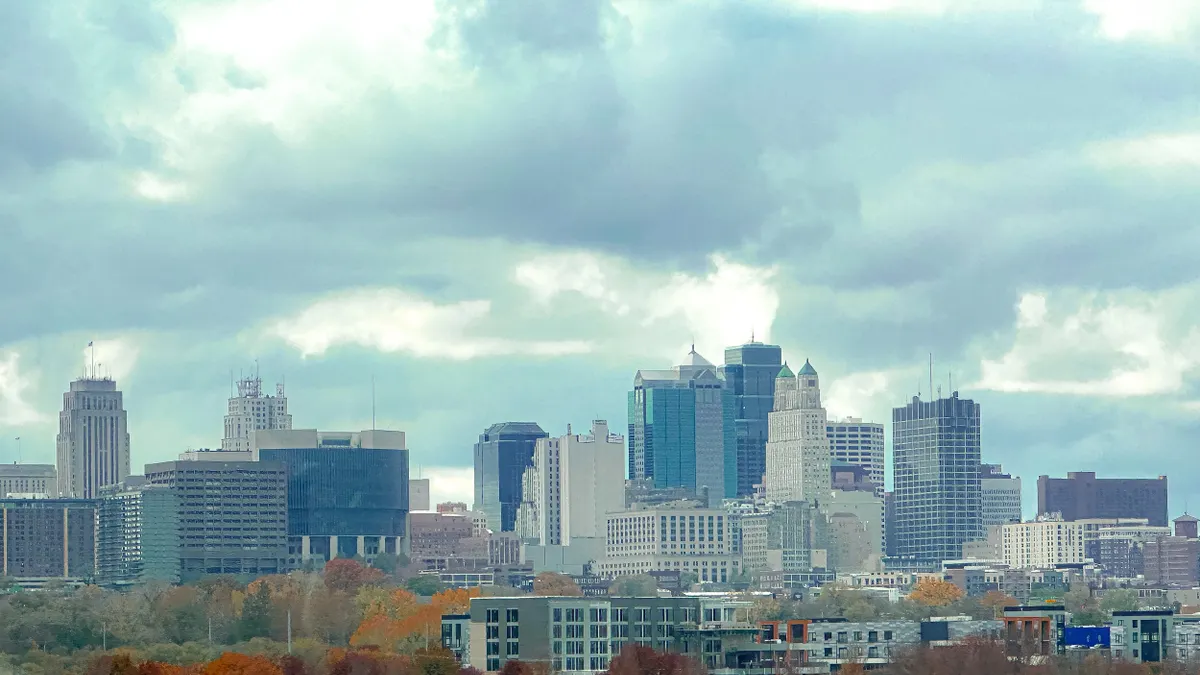
The Kansas City, Missouri, City Council adopted a stricter zoning code for data centers Jan. 15 and directed the city manager to evaluate the impact of data center development on the city’s environmental quality, consumer water and electricity rates and economic growth.
- The new ordinance reclassifies data centers as industrial facilities from commercial facilities, limits them to specific zoning districts and will require larger data centers to receive City Council approval and will-serve letters from Kansas City Water and Evergy, the primary electric utility for the Kansas City metro area, affirming they have the capacity and intent to provide service.
-
City Manager Mario Vasquez told the City Council that after meeting with city managers from across the U.S., “we seem to be at the cutting edge of regulation when it comes to this topic.” Vasquez said many other city managers have asked for copies of Kansas City’s ordinance.
Dive Insight:
Kansas City, Missouri, is home to 36 data centers. Until the new ordinance was passed, “data centers fell within an outdated ‘communications service’ category (i.e. radio, TV station) and were often lumped in with Large Format Uses due to their scale,” according to an article in the Kansas City Data Center Watchdog newsletter. “Without specific zoning requirements, data centers got approved without proper scrutiny to their unique, outsized harms,” the article states.
Councilmember Eric Bunch said the council had received “thousands of emails on this topic over the last couple of months.”
During a presentation to Kansas City’s Neighborhood Planning and Development Committee on Jan. 6, Chief Environmental Officer Jensen Adams said data centers in the city use six times as much energy as the municipal government uses. Estimating how the data centers will impact the city’s 2022 Climate Protection & Resiliency Plan goals “will depend in part on decarbonization of the grid or the role that data centers have in accelerating clean energy adoption, including on-site backup generation or battery storage that could double as a resource for grid-level demand management,” he said.
As tech companies invest billions of dollars to build data centers across the country to train and run AI platforms, the Trump administration is championing a national AI action plan “to sustain and enhance America’s global AI dominance.”
In December, a coalition of more than 230 national, state and local organizations sent a letter to Congress calling for a nationwide moratorium on the approval and construction of new data centers, calling their rapid expansion “one of the biggest environmental and social threats of our generation.”
Numerous U.S. communities are considering restrictions or moratoriums on data center development.
The New Orleans City Council on Jan. 28 placed a moratorium on future data centers while the City Planning Commission evaluates zoning definitions, standards and land use controls related to their uses, according to a City Council press release.
“Too often, the City of New Orleans is reacting to new technology when it’s already in our neighborhoods, rather than anticipating potential problems,” Council President JP Morrell said in a statement. The moratorium “turns a page on that narrative,” he said.
Madison, Wisconsin, has also passed a moratorium, and Birmingham, Alabama, and St. Charles, Missouri, have proposed moratoriums on data center development while they further study the issue.