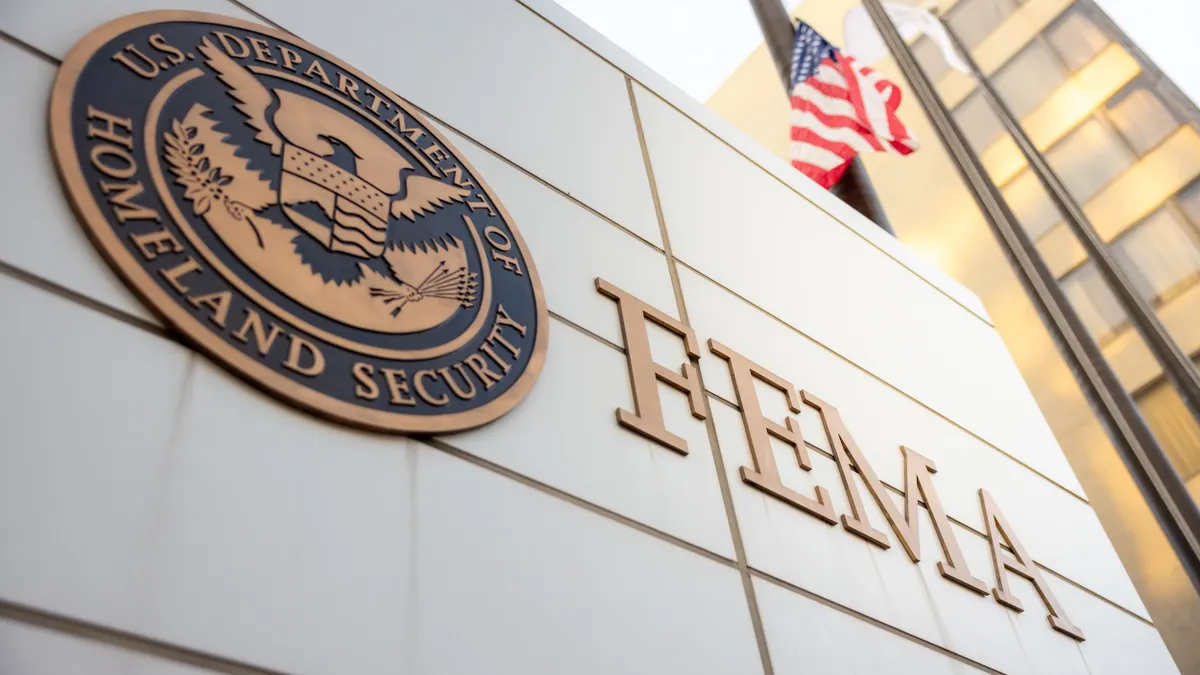
On Monday, the Carnegie Institute convened a panel of Federal Emergency Management Agency experts to talk about the agency’s future based on a highly anticipated FEMA Review Council report that was to be released last week. But after the abrupt cancellation of the meeting where that report was to be discussed Thursday, “we’re really left without a vision and without leadership about the way forward,” said Sarah Labowitz, the panel’s moderator.
“There was this feeling last week that the bottom had just kind of dropped out,” Labowitz, a senior fellow in Carnegie’s Sustainability, Climate and Geopolitics Program, said. “People are hungry for clarity and for leadership.”
Without the report, which former FEMA administrator Pete Gaynor described as a “North Star,” the emergency management community remains in limbo. Will staff continue to be cut? Will responsibility for disaster preparation and response shift to cities and states? Could the Fixing Emergency Management for Americans Act under consideration in the U.S. House of Representatives provide the reform and direction the community seeks?
“Where it leaves us now, at the end of the year, is still just wondering what is going to be next, what is going to be the future of FEMA as we go forward,” said former FEMA administrator Deanne Criswell. “It just leaves so much uncertainty as states and locals are trying to plan for their next year, as well as the federal government trying to plan for their budget.”
At the state and local level, Gaynor said, “everyone is just kind of holding their breath about making major investments.”
“It stifles innovation,” he said. “It stifles hiring.”
“A bright light”
Meanwhile, disasters continue to happen. “There’s never a dull day at FEMA,” Gaynor said. “There’s always something going on.”
So, in the midst of all the disarray at the federal level, local governments need to pick up the slack, the panelists said.
“We have not yet seen enough conversation about the budgetary and legislative capacities that states are going to need to develop to fill the gap,” Labowitz said.
“There's been a lot of conversation over this last year about pushing more responsibility down to the state and the local level,” said Danielle Aymond, disaster recovery and FEMA funding specialist at law firm Baker Donelson. “But let's be clear, the states and the locals have always had the responsibility. That has not changed, and whatever happens here, that will not change.”
Local governments should focus on partnerships — between local agencies, the private sector and the federal government — “to accomplish the goal that we're trying to achieve, and that's to help the people that have been impacted by disasters,” Aymond said.
State and city officials were rightfully nervous about making waves as it became clear that the Trump administration was determined to radically change FEMA, said Criswell. “Policy actually started changing rapidly. Then we moved into the next phase, which was staff turnover that started happening in the spring. And then by summertime, we saw regional administrators changing that had been in those positions for over 10 years and more.”
The bright spot in all that turmoil, Criswell said, is that emergency management, which has “been kind of an unsung profession,” is taking the spotlight. “I’m personally thrilled to see emergency management get this much attention and have so much analysis on it. It brings a bright light to the future.”
“Emergency management will be stronger”
“Over the last year, we’ve seen a lot of unnecessary anxiety and a level of uncertainty, especially among FEMA employees and emergency managers across the country,” said former FEMA Chief of Staff Michael Coen.
“FEMA is at a crossroads, but everybody in emergency management — these are the times we train for,” Coen said. “So, I do think that, in the end, emergency management will be stronger.”
Emergency managers’ work “matters more profoundly now than ever,” Gaynor said. He urged them to set aside headlines and politics so they can focus on delivering help to disaster survivors, “the ultimate measuring stick.”
“Stay steady, stay compassionate and stay mission-focused,” he said. “And really, thank you for serving, especially in these really, really hard days.”
Correction: This article was updated to correct Deanne Aymond's name.