Dive Brief:
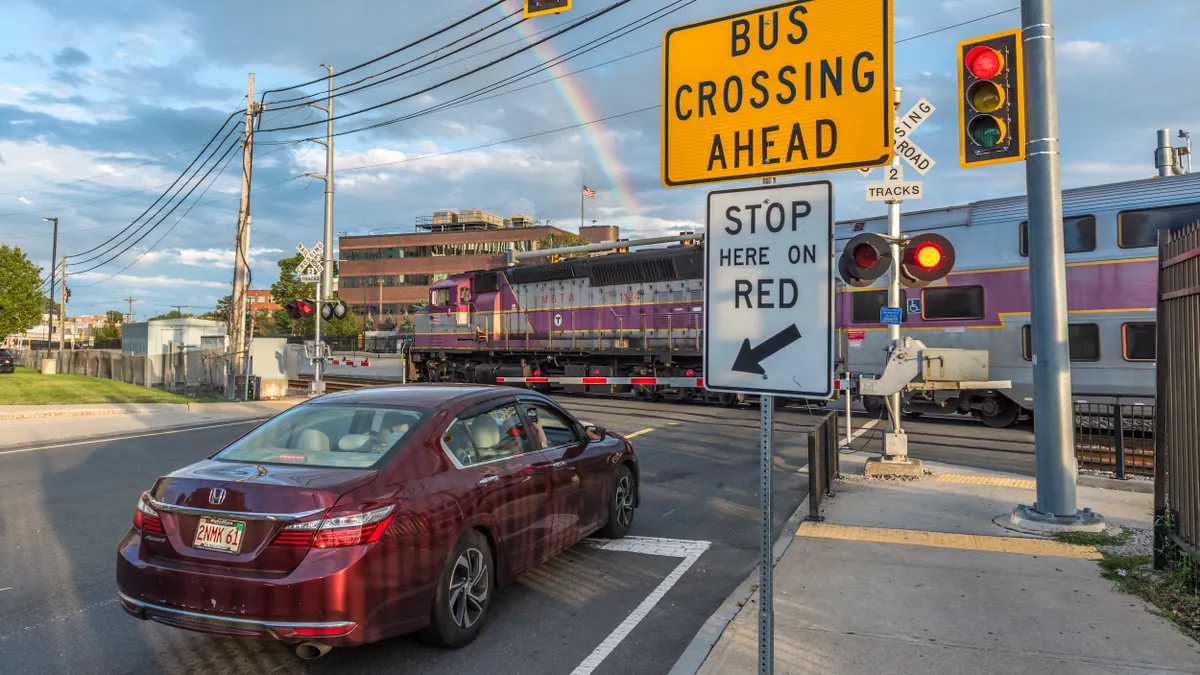
- The U.S. House Transportation and Infrastructure Committee advanced legislation to improve safety at rail crossings and help prevent related suicides in a Dec. 18 markup session.
- In 2024, 263 people were killed and 768 were injured where highways cross railroad tracks at grade, including 117 pedestrian deaths.
- The bill, introduced by Rep. Nellie Pou, D-N.J., and co-led by Rep. Mike Bost, R-Ill., passed unanimously and moves to the full House.
Dive Insight:
More than 200,000 highway-rail grade crossings exist in the U.S., according to the U.S. Department of Transportation. In September, the DOT made $5 billion in grants available, including funds for grade crossing improvements on intercity passenger rail networks.
“High risk railroad crossings remain a serious threat in communities in northern New Jersey and across our country,” Pou said in a statement. She said the bill “will require states, railroads and other stakeholders to work more closely together to reduce pedestrian deaths.”
If passed, the legislation would strengthen federal oversight of highway-rail grade crossing safety and direct states to explain how they would work with railroads and other stakeholders to reduce pedestrian deaths and suicides along railroad tracks. The bill would also require the Federal Railroad Administration to continue issuing updated reports on state progress every five years.
“Whether taking a trip in your hometown, exploring a new city or staying home, be vigilant when you are near tracks and trains,” Operation Lifesaver Executive Director Rachel Maleh said in a statement. OLI, a nonprofit, focuses on rail safety education.
For safety around railroad tracks and trains, the organization says drivers and pedestrians should expect a train at any time, avoid distractions and cross tracks only at designated rail crossings. In addition, drivers and pedestrians should not try to beat an approaching train or go around crossing gates. If a vehicle becomes stuck on the tracks, OLI recommends exiting it and immediately contacting emergency services.