In the past year, state and local governments have implemented numerous AI-based processes, transforming everything from traffic management and law enforcement to procurement and permitting.
“AI is affecting all of our cities,” Sunnyvale, California, Mayor Larry Klein — whose city sits in the heart of Silicon Valley — said during a press conference opening the U.S. Conference of Mayors Winter Meeting in Washington, D.C., on Jan. 28. And, he added, “we’re all in learning mode” and “looking at it with a wary eye.”
Agreeing that AI is “on the forefront of everything,” Rancho Cordova, California, Mayor Garrett Gatewood said during the press conference that the technology is “the future of governance as a whole.”
In the coming year, “the challenge won’t be whether governments use AI,” said Ryon Saenz, deputy chief information officer for Alexandria, Virginia, in a prediction for 2026, “but whether they put the right governance, identity controls and human oversight in place to ensure these systems improve services without eroding accountability, resilience or public trust.”
Read on to learn more about how experts see cities using AI to support their housing, transportation, climate resilience and city governance in 2026.
Housing gets fast-tracked
In the upcoming year, AI’s main role in housing will be to facilitate quicker action in the public and private housing sectors, said Julie Workman, partner and real estate practice vice chair with national law firm Saul Ewing.
“Local governments and developers alike are using AI to speed both the review and construction of projects,” she said. “This development may help to break through the typical logjams that delay development on both the front and back ends of projects.”
Workman said local government agencies like the Los Angeles City Planning department are experimenting with AI programs that can read developers’ plans, check them against zoning and building codes and automatically flag issues. This can reduce administrative review time for routine housing applications, freeing up staff to focus on more complex cases.
“Given the inherent delays in permitting and entitlement, even incremental improvements in the process can make a difference,” Workman said. “Slow, complex and inconsistent building approval processes hinder development, which in turn delays government tax revenues, impacts housing affordability and costs developers and homebuyers money.“
AI tools are also being developed to track zoning and land use requirements across multiple municipalities, Workman said. This can help local governments identify housing laws or policies that are unusual or burdensome compared to their peers and potentially streamline processes to remove roadblocks.
For long-range housing planning, Workman said AI can help researchers and agencies “stitch together data that has historically been scattered — such as zoning codes, [Department of Housing and Urban Development] plans or data regarding housing availability and homelessness — helping governments to understand where housing needs are rising, where supply is constrained and which populations are being served or left out of current systems.”
In addition, Workman said, AI tools that analyze predevelopment and construction data “can feed into budgeting, design and procurement, especially in public-private partnerships or affordable housing programs,” producing more reliable cost and scheduling estimates that can reduce risk for both governments and developers.
“With ongoing evolution and refinement, AI may just provide the long-awaited means for municipalities, developers and housing authorities to accelerate residential development without compromising safety or affordability,” she said.
Better transportation decision-making
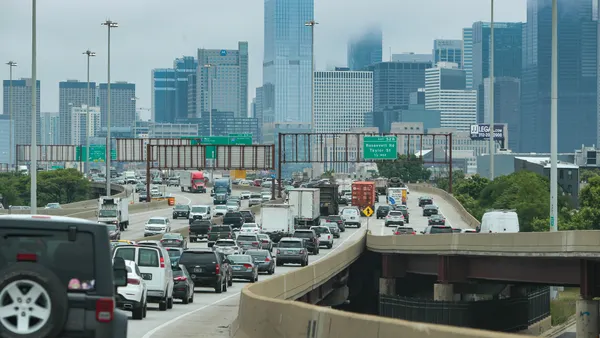
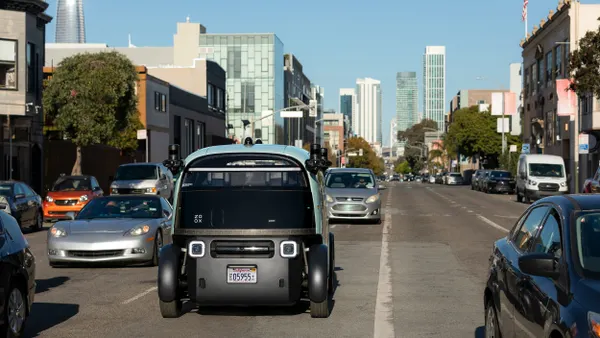
In 2026, AI transportation technology “probably won’t be headline-grabbing,” said Andrew Rogers, a managing partner at Boundary Stone Partners and executive director of the Modern Analytics for Roadway Safety coalition. “It’s not going to be like the Jetsons; it’s more likely that AI will quietly change how cities and states make transportation decisions.”
Rogers said one of AI’s chief roles in municipal transportation operations this year will be to help engineers, planners and other experts be predictive rather than reactive.
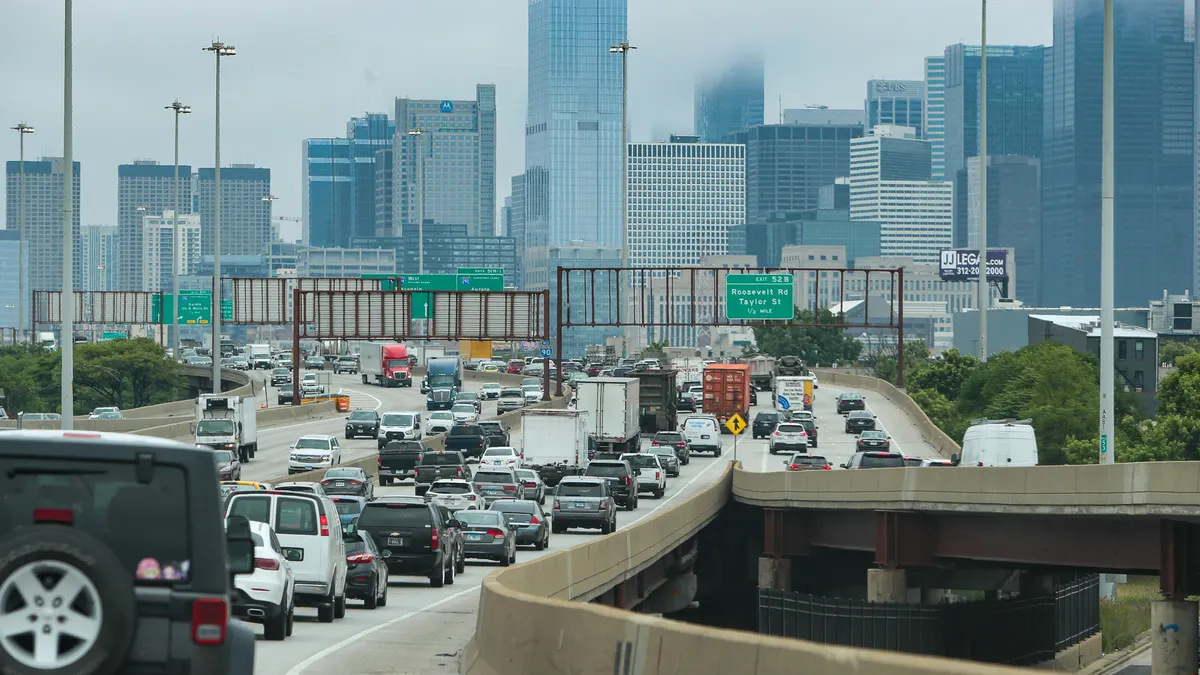
Traditionally, cities rely on lagging indicators like crash reports, traffic monitors and congestion data to help implement their transportation strategies, Rogers said. “But AI is flipping that model on its head. Traffic signals, cameras, maintenance records and other powerful data can be put through machine learning to identify the riskiest areas, the most congested [areas] and prevent crashes or costly failures before they happen.”
The result is that municipal transportation planners will be able to spend “less time reacting and more time prioritizing,” Rogers said. “They can be more precise with what they’re doing. This is incredible from both a safety standpoint and an economic standpoint.”
AI can also change how local governments get feedback on whether new transportation projects or policies are effective, Rogers said. Predictive tools can flag risk-analytics data like hard braking, speeding and harsh cornering in near-real time and “see if the change you made is right,” he said. “You don’t have to wait six months or a year or later for data — you can immediately course-correct. It’s a real game-changer.”
Rogers believes municipalities increasingly will use AI tools to evaluate the condition of their transportation assets, like roads. Engineers could attach lidar cameras to cars and drive down a highway, mapping the entire stretch, including conditions under the pavement. This allows them to target infrastructure that could fail, helping guide future priorities and funding requests.
AI may also increasingly be used across municipalities, Rogers said. “Let’s say Anchorage, Alaska, identifies a safety issue and redesigns its infrastructure. If the same problem is in Albuquerque, [New Mexico,] AI can say, ‘Hey, this has already been done somewhere else, and here’s how.’”
Insurance companies are driving much of this AI data collection, Rogers said, and the next logical evolution is to harness that data and make it useful for public agencies.
“It won’t be a pure replacement for the way we’ve been doing things, but it will make us more efficient, make us smarter and save lives, time and money,” he said.
Crunching the numbers on climate change impacts
AI has immense potential to boost communities’ understanding of their climate change risks and model the impacts of action. In the environment and climate space, AI also may be seen as a threat, however, because of the local impacts of data centers being built to support it.
Looking at beneficial uses of AI for climate adaptation, “the technology is there, but the question is whether the users are there,” said Shruti Gopinathan, a Palo Alto, California-based climate technologist.
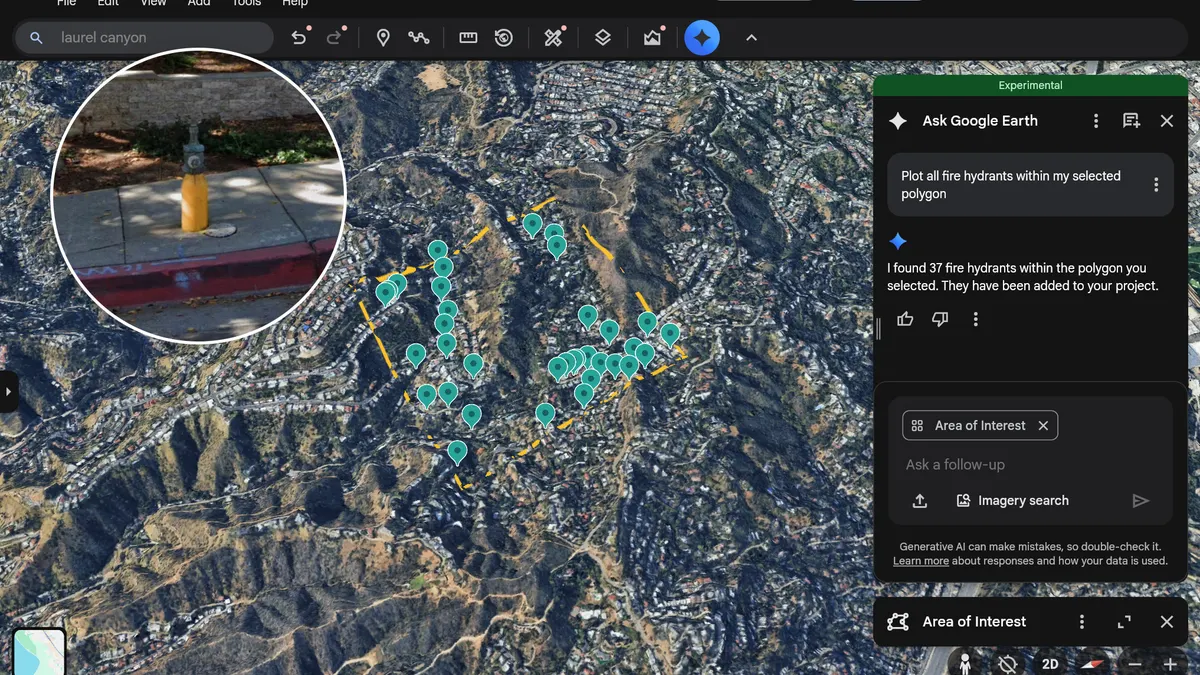
Gopinathan said there have been many developments in accelerated computing’s ability to process vast data sets and look at climate baselines. AI can automate municipal vehicle fleet emissions inventories and analyze fleet performance data. It can use satellite and weather data to run water-risk analyses. But all of that requires plenty of human intervention and interpretation.
“There’s no ChatGPT for climate,” she said. “Decisions on tackling the climate crisis at the regional and local level will vary. It will be very domain-specific and require a lot of human judgement.” Right now AI tools are more likely to be used by consultants working with local government managers, she said.
Consequently, she said, “I don’t think in the next year anything is going to change in terms of climate data and reporting [for municipalities] that’s going to be super drastic. They could be using AI for some level of analysis, but it’s not going to move the needle on climate action targets. It’s going to highlight some of the risks, some of the options, but it’s not going to cause any significant climate actions.”
On the negative side, sustainability leaders who participated in recent Urban Land Institute roundtables predicted that the rapid growth in AI data center construction will put pressure on cities and states that have carbon-emissions and water-conservation goals.
An October 2025 Pew Research Center report noted that a third of the more than 4,000 U.S. data centers are concentrated in only three states: Virginia, Texas and California.
Many of these data centers are warehouse-sized buildings that house at least 5,000 servers. Pew reports these “hyperscale” AI facilities use as much electricity per year as 100,000 households, which can significantly strain power grids.
In addition, “hyperscale data centers alone are expected to consume between 16 billion and 33 billion gallons of water annually by 2028,” according to the Pew report.
Privacy, equity and cybersecurity concerns
By 2027, 65% of cities worldwide will deploy AI agents across systems and data to orchestrate workflows and reduce workloads, according to IDC’s 2026 FutureScape report. This year, half of all state and local governments will feed data from decades of “protected records and siloed systems” into the large language models that serve as those agents’ core brains, according to the report.
These AI agents will be “drawing on fine-tuned LLMs to provide decisions informed by a city’s own history and conditions,” the report states. But they could also amplify outdated policies, biases and past inequities — and make sensitive data vulnerable to cyberattacks — if they’re not actively governed, experts say.
Cesar Hernandez, founder of the consulting firm Omni Public, said cities “need to start looking at interoperability and how AI agents can be safeguarded” because the opportunities for bad actors to take advantage of agentic AI are endless.
He envisions a scenario, for example, in which someone could easily pull publicly available voter information, including phone numbers, to target voters of a particular party with deepfake robocalls. Such calls could imitate public officials’ voices and provide false information about the location, time or requirements for voting, for example. “We need to start thinking about AI from a civic perspective. What should we be allowing people to do with it? What are the guardrails?” he said.
Hernandez predicted that cities’ most damaging cybersecurity failures this year will stem from “the loss of operational control over emergency response, transportation, utilities and permitting systems.” To remain resilient, he said, “municipal governments will need systems that can detect threats early and coordinate responses across departments in real time.”
Correction: This article has been updated to clarify Shruti Gopinathan's comments on the use of AI for climate adaptation.