UPDATE: Dec. 23, 2025: The Department of Justice on Monday sued Illinois Gov. JB Pritzker and Attorney General Kwame Raoul in U.S. District Court for the Southern District of Illinois over a recently enacted law that protects people during immigration enforcement actions, which it said is an “unconstitutional attempt to regulate federal law enforcement officers,” according to a press release.
“The Department of Justice will steadfastly protect law enforcement from unconstitutional state laws like Illinois’ that threaten massive punitive liability and compromise the safety of our officers,” Assistant Attorney General Brett Shumate of the Justice Department’s Civil Division said in a statement.
This is the DOJ’s second lawsuit against Illinois over immigration enforcement. In February, it sued Illinois and Chicago over “sanctuary city” policies. That case is ongoing.
The DOJ’s Civil Division has also sued New York, New Jersey and Los Angeles over policies prohibiting local law enforcement from participating in federal immigration enforcement efforts.
Dive Brief:
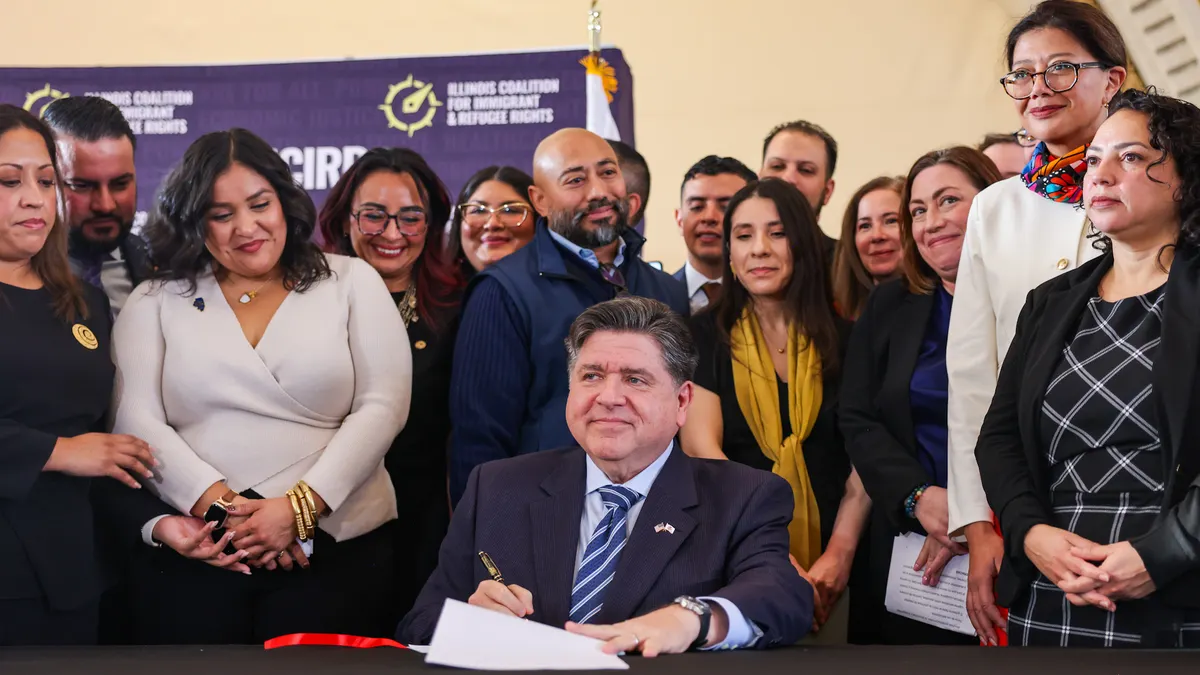
- Illinois Gov. JB Pritzker, a Democrat, on Tuesday signed legislation that makes it easier for residents to sue federal immigration agents, restricts immigration enforcement outside state courthouses and limits the information state-funded hospitals, public colleges and universities and day care centers can provide to immigration agents.
- “This legislation that I'm signing today will allow for a civil lawsuit against law enforcement officers who violate the Illinois or United States constitutional rights of the members of the public that they are supposed to be protecting,” Pritzker said during a Tuesday news conference. “No one, and I mean no one, is above the law, especially those wearing a badge representing the law.”
- Department of Homeland Security Assistant Secretary for Public Affairs Tricia McLaughlin said in an emailed statement that the law, HB 1312, violates the supremacy clause of the U.S. Constitution, which states that federal law overrides conflicting state laws.
Dive Insight:
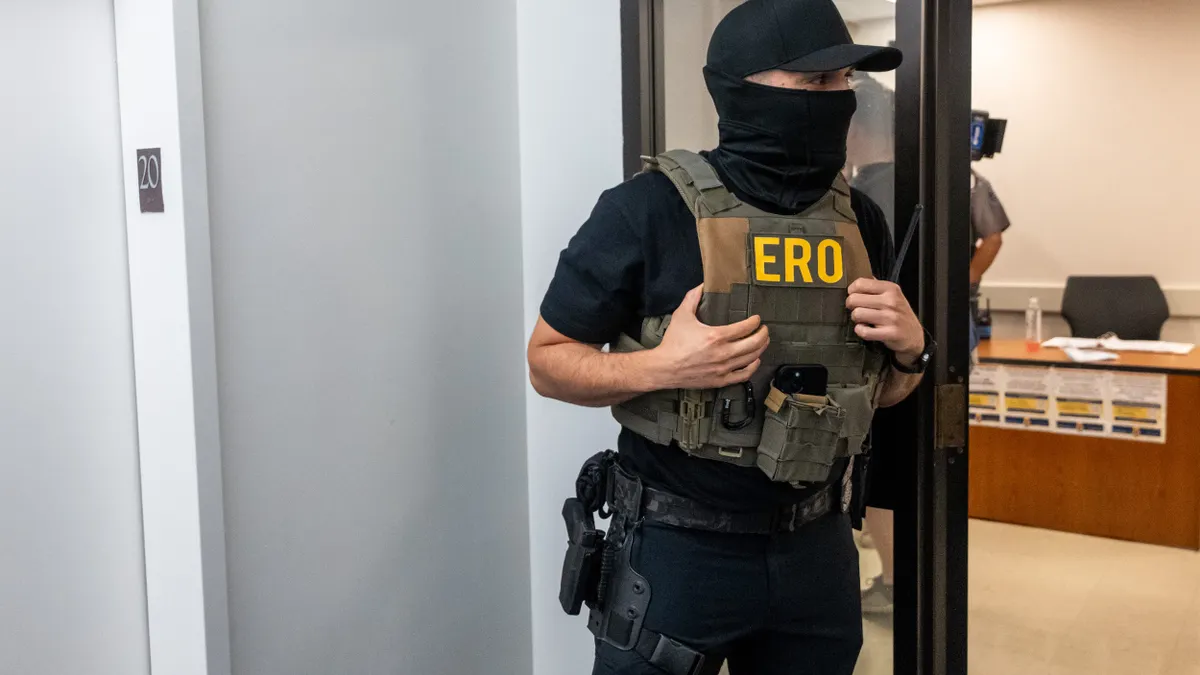
In September, DHS launched Operation Midway Blitz in Chicago, stating it was targeting “the criminal illegal aliens who flocked to Chicago and Illinois because they knew Governor [JB] Pritzker and his sanctuary policies would protect them and allow them to roam free on American streets.”
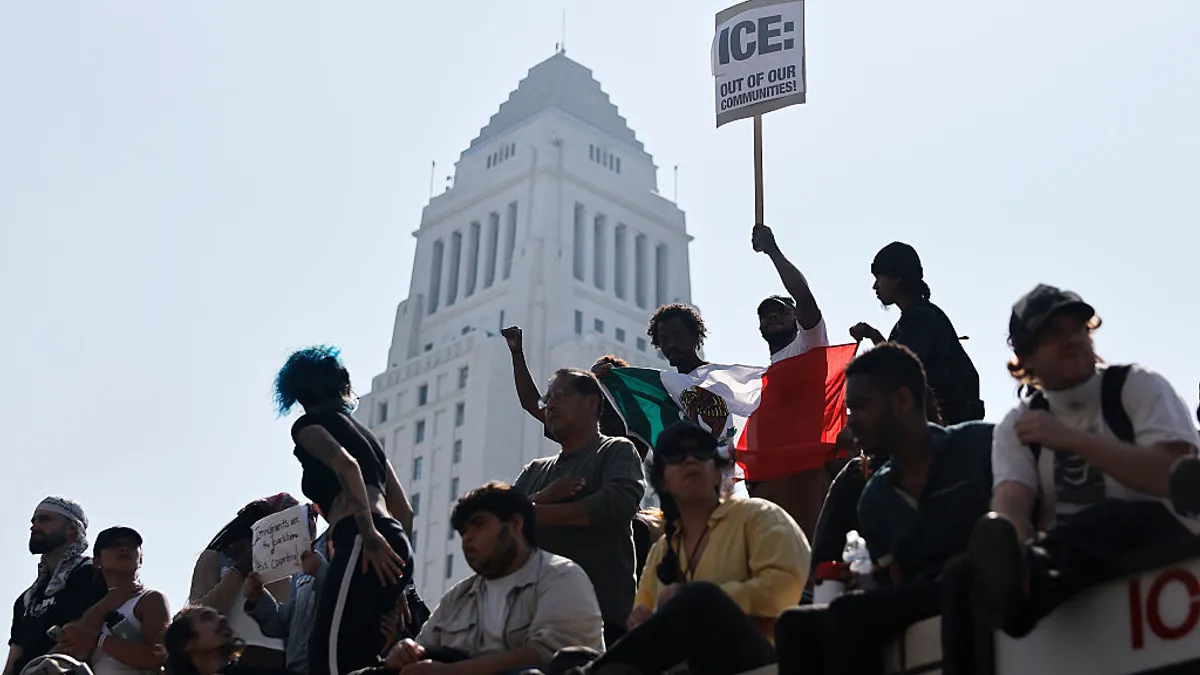
Local and state leaders have criticized the operation for its treatment of protesters, U.S. citizens and others caught up in enforcement actions.
Pritzker signed an executive order in October to create the Illinois Accountability Commission, charged with capturing the impact of what he called federal immigration agent abuses on families and the community and recommending actions to “prevent further harm and pursue justice.”
Illinois Senate President Don Harmon said in a statement that HB 1312, which takes effect immediately, provides “the victims of this chaotic federal assault a clear, legal path to go after their abusers and hold them accountable.”
U.S. Immigration and Customs Enforcement acting Director Todd Lyons on Monday sent a letter to Illinois Attorney General Kwame Raoul calling for him to honor ICE arrest detainers of more than 4,000 immigrants in the state’s custody. Detainers are ICE requests to state and local governments for information on or continued detention of arrestees to facilitate their deportation.
“Governor Pritzker and his fellow Illinois sanctuary politicians are releasing murderers, pedophiles, and kidnappers back into our neighborhoods and putting American lives at risk,” McLaughlin said in a statement.
DHS has repeatedly said it is targeting “the worst of the worst criminal illegal aliens.” Yet CBS News reported this week that according to the government’s own data, only 15% of the immigrants detained from the start of Operation Midway Blitz through Oct. 15 had prior criminal convictions, and only 3% have convictions for violent crimes. CBS reported that 67% of residents detained in the Chicago area have only civil immigration violations, such as overstaying a visa or crossing the border illegally.
Following nearly two months of aggressive immigration enforcement, most federal agents left Chicago in mid-November, but the Chicago Sun-Times reported that DHS plans to return to the area with four times as many agents in March.
Other cities with sanctuary policies are taking measures to protect residents from federal immigration enforcement.
In New York City, where ICE arrested 858 people in streets, courts, homes and ICE check-ins from July through Oct. 15 — a quarter of whom had criminal records — City Council members on Monday introduced a bill that would allow immigrants who are unlawfully detained to sue the city government.
As a team of ICE agents surged into New Orleans in early December in an operation DHS is calling “Catahoula Crunch,” the City Council created a “Know Your Rights” portal where residents can report alleged abuse or misconduct by federal agents.
Stephen Yale-Loehr, an immigration law professor retired from Cornell Law School, said “the dividing line between federal and state regulation of immigration has always been murky,” but “federal law has generally trumped state efforts to regulate immigration because courts have ruled that immigration touches on sovereignty and foreign relations.”
The Illinois law “presents a new twist on state immigration laws: a state effort to protect its residents from excessive immigration enforcement,” he said.
Yale-Loehr said he expects the federal government to challenge the law.