

UPDATE: Dec. 15, 2025: The U.S Department of Housing and Urban Development last week withdrew a notice of funding opportunity for grants that contained changes critics said could force as many as 170,000 people out on the streets.
The withdrawal came hours before a court hearing over a lawsuit filed over the changes announced in November to HUD’s Continuum of Care grants. Plaintiffs, which included local governments and nonprofits, argued the new NOFO would delay fiscal year 2025 funding contrary to legal requirements and slash funding by two-thirds, well below what Congress authorized.. The complaint also called new stipulations that recipients adhere to the Trump administration’s agenda concerning gender, immigration and diversity “unlawful.”
In a one-paragraph notice, HUD said it would make “appropriate revisions” to its new NOFO.
“The Department still intends to exercise this discretion and make changes to the previously issued CoC NOFO to account for new priorities,” HUD stated. “HUD anticipates reissuing a modified NOFO well in advance of the deadline for obligation of available Fiscal Year 2025 funds.” Current grants will begin to expire in January 2026.
Uncertainty around the pending changes and the timeline remain. U.S. District Court Judge Mary McElroy was critical of HUD’s last-minute withdrawal ahead of the court hearing Dec. 10, saying “It feels like intentional chaos,” NOTUS reported. The plaintiffs intend to move forward with the lawsuit, which asks for a temporary restraining order, according to Democracy Forward. The parties are expected to meet again Dec. 19 for a final ruling, according to NOTUS.
Dive Brief:
- Eleven local governments and nonprofit organizations filed suit against the U.S. Department of Housing and Urban Development on Monday alleging the agency illegally canceled grants for programs designed to combat homelessness.
- In November, HUD rescinded previously approved Continuum of Care grants and slashed dedicated permanent housing funding by two thirds. The move could impact housing for as many as 170,000 people, according to the complaint. Recipients of grants from the fund will be required to meet the Trump administration’s new criteria concerning gender, immigration and diversity, stipulations the plaintiffs called “unlawful.”
- HUD’s policy shifts “will destabilize communities across the country,” stated Renee Willis, president and CEO of the National Low Income Housing Coalition, one of the plaintiffs. “The harm to families and individuals who rely on these programs will be irreversible and felt for generations to come.”
Dive Insight:
Shortly after the federal government reopened following the shutdown, HUD announced its CoC grants would shift funding away from permanent housing and instead prioritize short-term housing programs.
Permanent housing advocates sounded the alarm about the move, arguing tens of thousands of CoC beneficiaries could be displaced.
HUD rescinded its two-year notice of funding opportunity for the grants Nov. 13, “mere weeks” before fiscal 2025 awards were expected to be disbursed, according to the complaint. The agency then replaced the NOFO — which was part of an approved two-year funding cycle — with its new one, “initiating a new competition” for awards, according to the complaint.
“This decision will severely delay essential funding for housing, as HUD now says it will not make any new awards until May at the earliest,” the lawsuit states. “But programs across the country have grants expiring as soon as January — and will now be left without funding for months.”
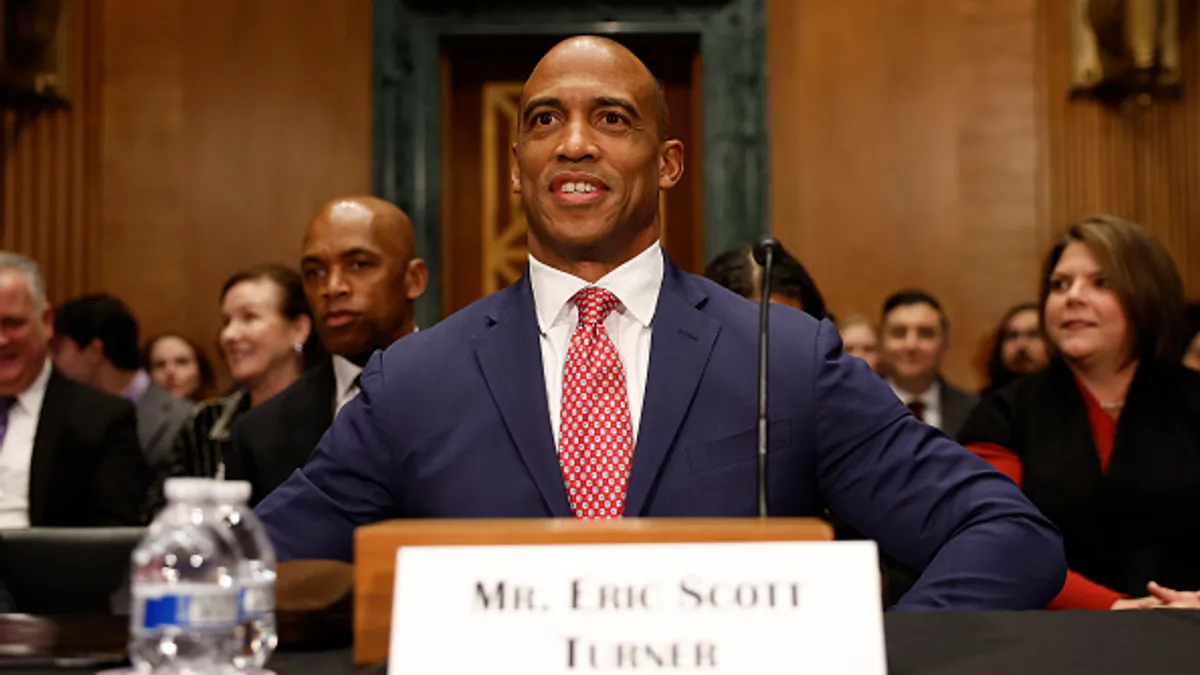
HUD Secretary Scott Turner criticized CoC as “a slush fund for nonprofits” and said the shift toward transitional housing and services will promote self-sufficiency and address mental illness and drug addiction.
“We don’t want more people [to be] homeless, more people on the streets, more people dying of drug addictions. We want people to live in dignity,” Scott recently told Fox News.
The city of Boston, a plaintiff in the lawsuit, stands to lose $29 million for permanent supportive housing projects that would shift to services-only, temporary housing projects, according to a press release. The changes could leave more than 1,100 people in the city homeless, Mayor Michelle Wu stated.
"Permanent supportive housing has been a key to tackling homelessness and keeping Bostonians stable and safe in our community,” Wu said.
The complaint was filed in the U.S. District Court of Rhode Island, and plaintiffs are seeking declaratory and injunctive relief. Along with Boston and NLIHC, plaintiffs include Cambridge, Massachusetts; King County, Washington; Nashville; San Francisco; Santa Clara, California; Tucson, Arizona; and nonprofits Crossroads Rhode Island and Youth Pride.