Dive Brief:
- The Ohio Department of Transportation and Honda completed a two-year pilot project showing how real-time connected vehicle data can identify roadway hazards such as potholes, faded lane markings, rough roads and damaged guardrails, the company said Thursday.
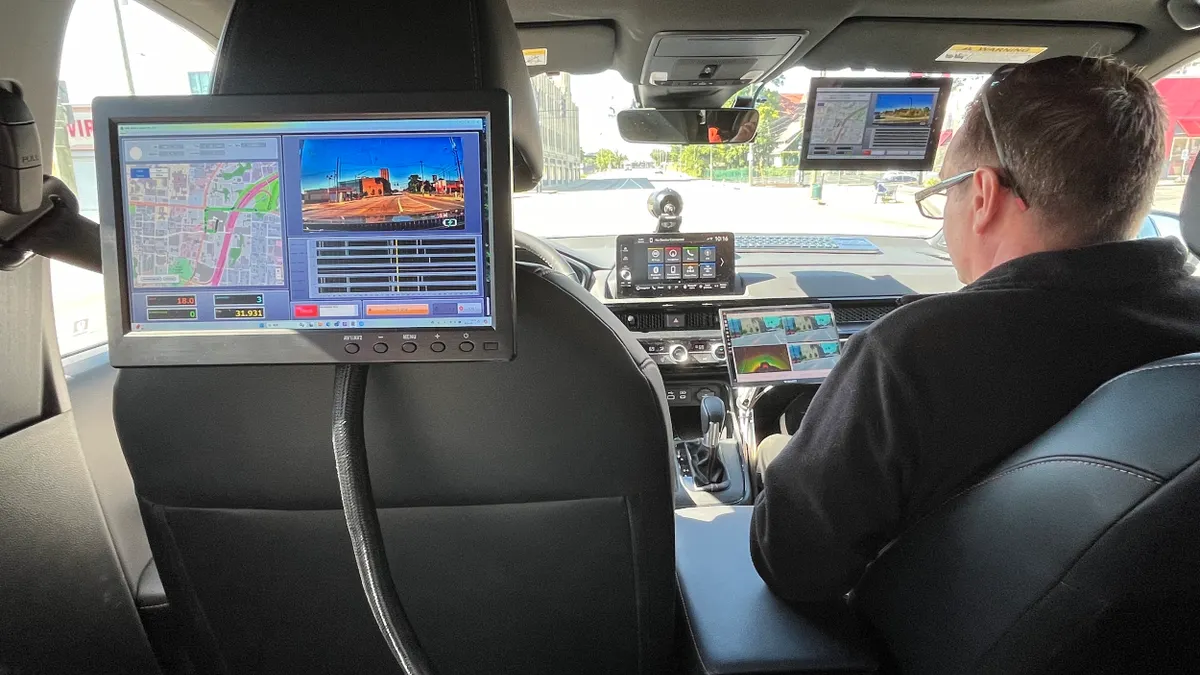
- ODOT personnel monitored some 3,000 miles of roads in central and southeastern Ohio in Honda vehicles equipped with advanced vision and lidar sensors for the project. The pilot also involved i-Probe, Parsons and the University of Cincinnati.
- The project demonstrated that automated road condition detection could save ODOT over $4.5 million annually.
Dive Insight:
Test vehicles transmitted road conditions to ODOT operators through web dashboards Honda and Parsons developed. Operators compared that data to the agency’s ongoing visual inspections. The pilot program was 99% accurate for damaged or obstructed signs, 93% accurate for damaged guardrails and 89% accurate, on average, for potholes, according to Honda data.
The test vehicles operated in rural and urban areas at different times of the day under varied weather conditions, the automaker said in a news release.
The technology “creates a safer environment for our workers while they gather the critical information and data needed to ensure Ohio’s highways are maintained,” ODOT Director Pam Boratyn said in a statement. The system can reduce the need for manual inspections, thereby improving safety for maintenance crews, Honda said.
While this pilot involved only state-owned vehicles, Honda plans to allow vehicle owners to opt in to provide anonymized roadway data collected as they drive. “We’re opening the door for drivers to become partners in safety,” Sue Bai, chief engineer, sustainability and business development at American Honda Motor Co., said in an email. “By opting in to share their vehicle-generated data with state DOTs, customers can help build a powerful, crowdsourced network that identifies road deficiencies and improves safety for everyone sharing the road.”
Project partner Parsons provided transportation management systems expertise; i-Probe analyzed data from vehicle sensors; and the University of Cincinnati helped integrate the sensors, led development of the damage detection feature and provided system maintenance to ODOT during the trial operation.
The next phase of the project will focus on scaling the prototype system for real-world operations, Honda said.