

Dive Brief:
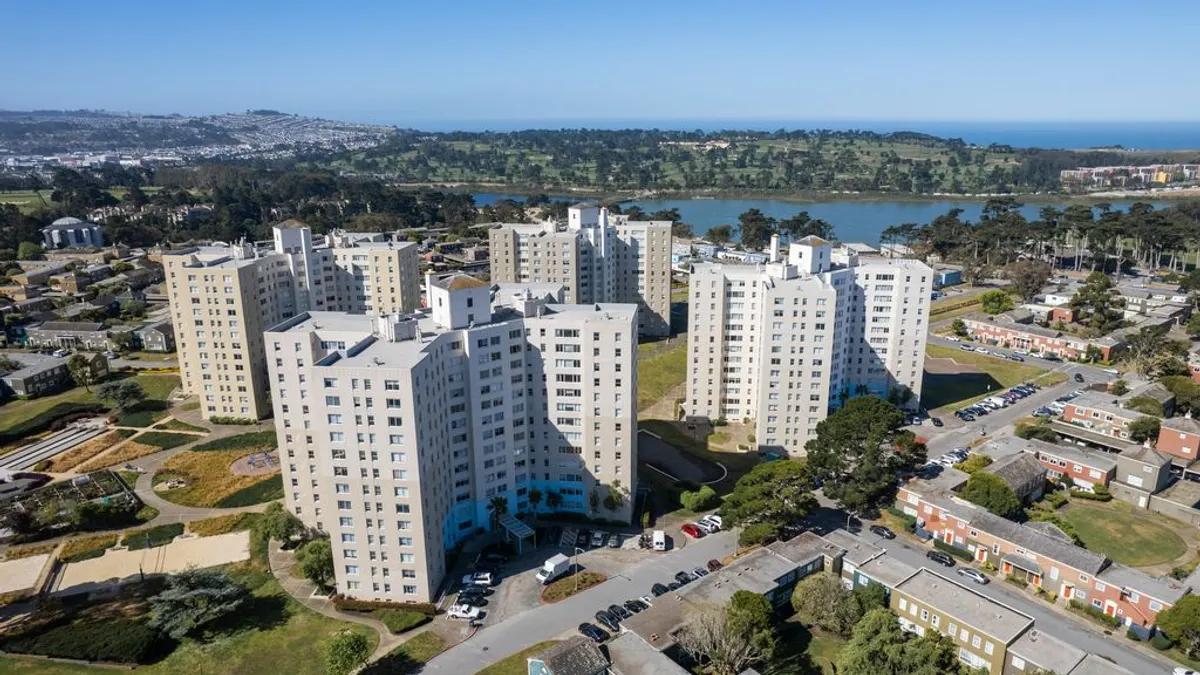
- San Francisco approved a family zoning plan this month that opens the door to increased housing and density in the city’s north and west sides.
- Per state law, if the city didn’t adopt a plan to permit more housing by Jan. 31, 2026, Mayor Daniel Lurie warned, the state would step in with its own ideas.
- The new zoning creates capacity for 36,000 units, according to the city, roughly 43% of the 82,000 it needs by 2031 to meet state requirements. However, an October study by San Francisco’s chief economist predicts the change would generate only 14,600 new housing units, at best, over the next 20 years.
Dive Insight:
San Francisco, one of the most expensive housing markets in the country, had its back against the wall when it came to rezoning. The family zoning plan is a path to maintain city control, Lurie said.
“With the signing of the Family Zoning Plan, we are creating a generational roadmap for how our city builds housing — so the next generation of San Franciscans can build their lives here. And we will do it the San Francisco way,” Lurie said in a statement.
The zoning allows building two to four higher stories in areas near shopping, transit and major streets. High rises will be permitted in limited areas.
“This is an historic effort to course-correct for decades of policy that limited housing options for a large part of San Francisco,” Supervisor Myrna Melgar said in a press release.
Critics of the plan argued that hundreds of residents could be displaced by new housing and that more tenant protections are needed, Fox KTVU reported.
While Chief Economist Ted Egan forecasted far fewer housing units than the plan’s promised 36,000, he said the new zoning’s overall economic impact would be positive, increasing the city’s GDP between $560 million to $940 million.
“The proposed rezoning would lead to a significant increase in the city’s housing supply, and have broadly positive effects on housing prices and the city’s broader economy,” according to the study.