Dive Brief:
- Los Angeles, Honolulu, San Francisco and New York City ranked as the U.S. cities with the highest congestion levels in 2025, according to TomTom’s annual traffic index, released today.
- Traffic congestion increased globally last year, but the location technology company rates the United States as the least congested country among 54 studied for the report.
- Cities face an ever-growing number of vehicles on the road, along with e-commerce delivery vehicles, flexible work patterns and more frequent extreme weather events, “adding unprecedented stress” to U.S. transportation systems, according to TomTom.
Dive Insight:
Commuting patterns in the U.S. have changed, TomTom says. “New policies are reshaping traffic patterns in major cities; work-from-home norms continue to stretch and redistribute the traditional rush hour, and climate-driven disasters are increasingly testing the reliability of road networks,” the report states.
Traffic planners now have access to real-time traffic data alongside traditional measures, such as loop detectors and spot traffic counts, to manage roadways more effectively, according to TomTom.
U.S. cities and states all handle traffic congestion differently, the report found, reflecting differences in their geography and infrastructure. Here’s how three U.S. cities and states address growing traffic congestion.
New York City implemented congestion pricing last year, a demand-management model that seeks to shift travel to public transportation and raise funds for the transit agency’s capital investments. Traffic is now moving faster on bridges and tunnels into and out of Manhattan, according to the New York Metropolitan Transportation Authority, while transit ridership into the tolling zone grew 8% on buses and 9% on subways through September.
Some traffic may have been rerouted, but local conditions, such as deliveries and short urban trips, continued to put pressure on overall congestion, TomTom says in its report. “Still, the net effect remains positive on the city’s most important corridors, where efficiency and reliability improved in ways consistent with early transit ridership gains.”
Austin, Dallas, Fort Worth, Houston and San Antonio are among the Texas cities with the worst congestion levels. These are largely auto-centric cities, and the state has responded by widening freeways, improving interchanges and intersections and adding tolled roads. However, these investments can be offset by demand growth, new construction and shifting travel patterns, TomTom says.
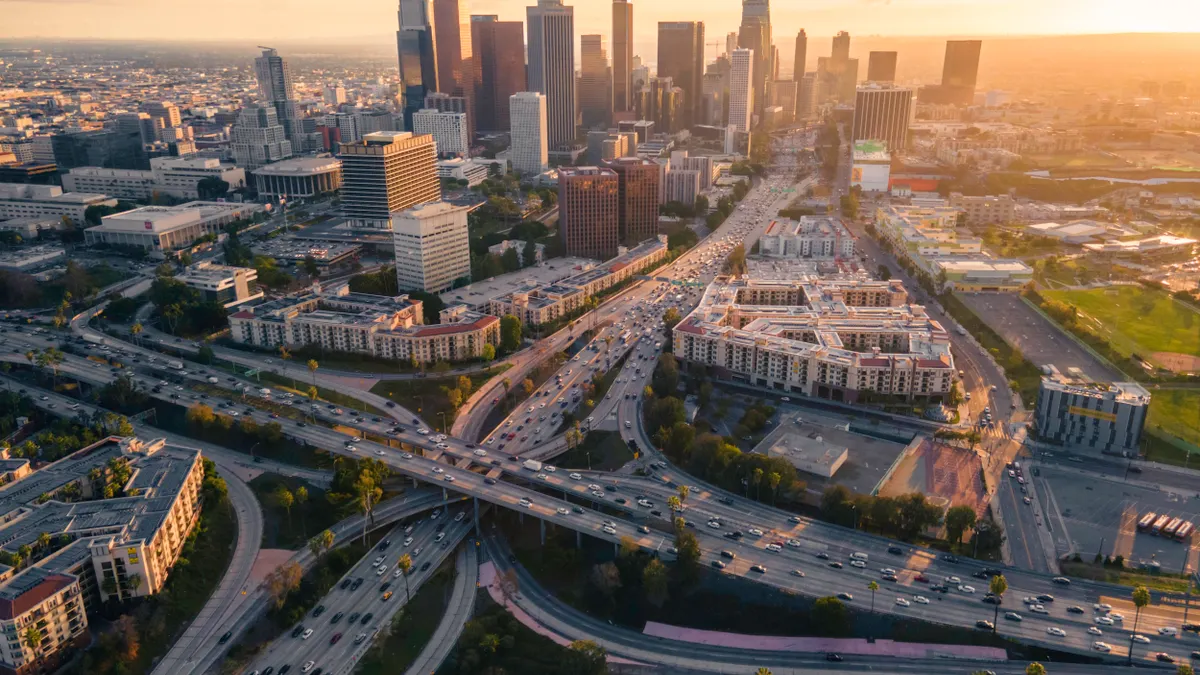
Los Angeles, while ranking as the most congested U.S. city, is also one of the fastest-moving cities in this year’s report. That’s due to its network of freeways, which comprise 63% of roads in the city center. And while LA has also built light rail, subways, bus rapid transit lines, and biking and pedestrian infrastructure, drivers crawl at average speeds under 20 mph during morning and evening rush hours.
“Travel behavior is dynamic, and congestion emerges in different places, at different times, and for different reasons,” the report says.