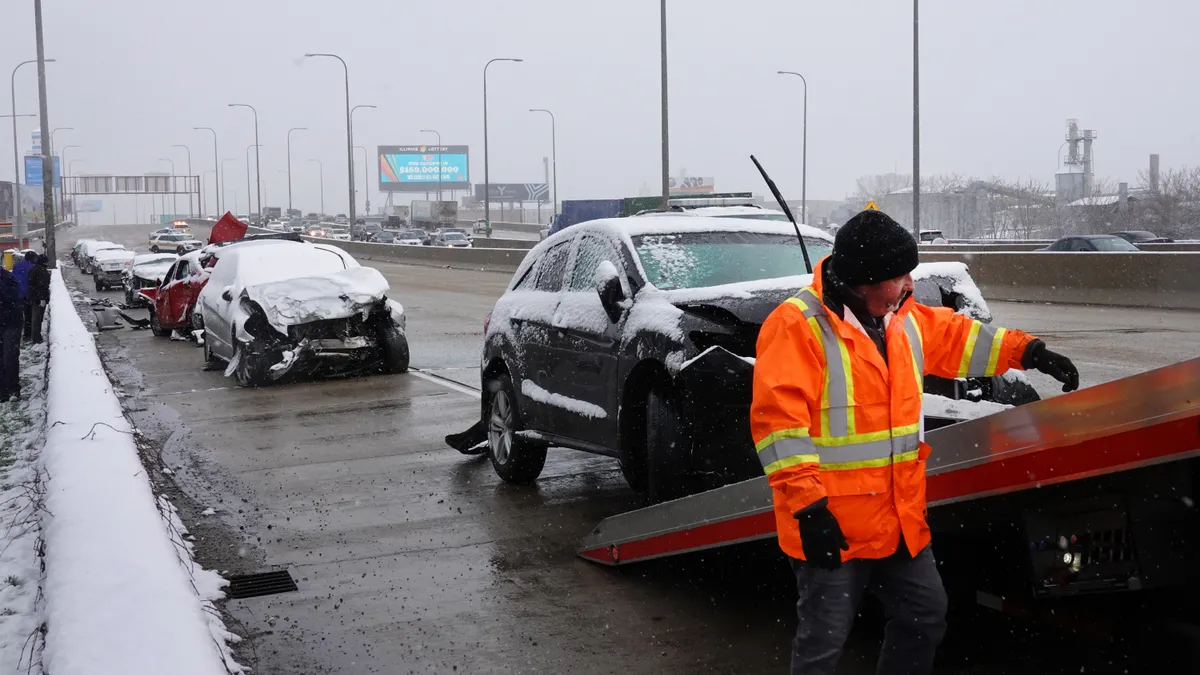
Traffic deaths declined 12% from 2024 to 2025, according to a preliminary estimate from the National Safety Council, but fatalities due to drowsy driving may be 10 times higher than official estimates, according to a new report from the Governors Highway Safety Association.
The NSC estimates the U.S. saw 37,810 motor vehicle deaths in 2025, compared with a revised count of 42,789 in 2024.
In an email, it cited “increased adoption of safety technologies, expanded use of evidence‑based enforcement strategies, infrastructure investments stemming from federal and state safety initiatives, and strengthened collaboration through the Road to Zero Coalition” as factors contributing to the year-over-year decline in deaths. The coalition, an initiative of the NSC in conjunction with the U.S. Department of Transportation and other stakeholders, supports the Safe System Approach to preventing roadway deaths.
NSC data show that nine states and the District of Columbia saw traffic deaths fall by 15% or more, while eight states saw traffic deaths rise by 3% to 25% year over year. The NSC does not categorize whether deaths were pedestrians, bicyclists, motor vehicle occupants or other road users.
Drawing attention to drowsy driving risks
Dangerous driving behaviors continue to account for many fatalities and injuries. Among those behaviors is drowsy driving.
For a report the Governors Highway Safety Association released today, researchers applied a new model the AAA Foundation for Traffic Safety developed on 2017-2021 data from the U.S. Fatality Analysis Reporting System. The model determined that 17.6% of fatal vehicle crashes involve a drowsy driver. Applying that model to 2023 data, the report estimates that 6,326 deaths resulted from driving while tired in 2023 — 10 times more than the raw FARS data reports.
“It's a serious issue, and we're not talking about it … like we talk about drug impaired [or] drunk driving, [or] even distracted driving,” said Caroline Cash, GHSA chief communications officer.
Drowsy driving is often under-reported because of the absence of physical evidence following a collision, and the driver is likely awakened by the impact of a crash. Three of five adults admit to having driven while drowsy, GHSA says. Drivers aged 16 to 24 are more likely to drive drowsy than older drivers, and parents of children under age 18 are among those most likely to drive while tired, the report states.
Long-haul truck drivers and night-shift nurses are also more susceptible to driving while drowsy, the GHSA reports. Black and Hispanic drivers, and drivers with a high school education or less, self-reported driving while drowsy “significantly more often than their counterparts,” the report states.
The GHSA recommends good sleep hygiene to reduce the risk of drowsy driving, including exposure to natural bright light, avoiding alcohol and caffeine before bed and sleeping in a quiet, dark, cool environment. Cash said those making a long-distance drive should take regular breaks at rest areas and for meals.
Late-model vehicles often have advanced driver assistance systems, such as lane-keeping assist and automatic emergency braking, to prevent accidents. Some vehicles have driver-monitoring systems that detect signs of drowsiness like yawning, excessive blinking or irregular driving patterns, alerting drivers through warning sounds or other means.
“Drowsy driving is preventable,” Cash said. The report suggests steps, including raising awareness of the problem, instituting workplace policies that allow for better sleep and making roadway improvements such as adding rumble strips to alert drivers.