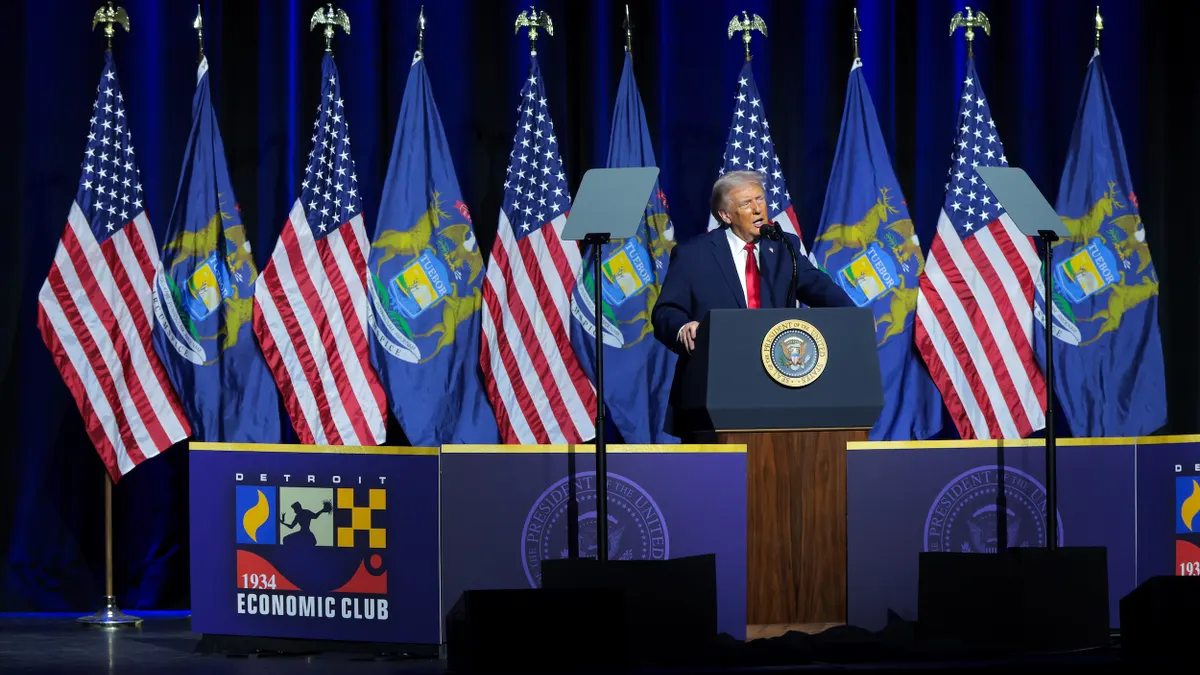
Earlier this month, President Donald Trump announced that his administration would halt federal payments to cities and states with policies that limit cooperation with federal immigration enforcement, starting Feb. 1.
Chicago Mayor Brandon Johnson and New York Mayor Zohran Mamdani immediately vowed to fight any funding cuts in court, and legal experts pointed out that federal courts prohibited Trump from halting federal funds to 34 so-called “sanctuary jurisdictions” in August.
But Nadav Shoked, a professor at the Northwestern University Pritzker School of Law, warns city leaders not to underestimate Trump’s threat. The administration could find ways to work around legal impediments, he said. Here’s how — and what city leaders should be doing to prepare.
The following interview has been edited for length and clarity.
SMART CITIES DIVE: President Trump has attempted to withhold federal funding to “sanctuary” cities before. Could he succeed this time?
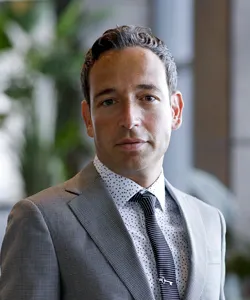
NADAV SHOKED: Right now, we don't know if they are going to try to do anything because, at this point, it’s a very open-ended announcement coming from the president himself rather than from the agencies or lawyers that would have to do it and defend it. It's very tough to jump to a conclusion from that. But I would not automatically write off the likelihood. If the federal administration is smart about it — and whether one likes this current administration or not, they're clearly being smart about things in a way that they were not in 2017 or 2018 — there are tons of levers that they can use to take money from local governments.
What does that look like?
If the administration picks a specific program with a federal enabling statute that leaves leeway to the pertinent administrator — whether it's the secretary of transportation or the attorney general — to pick who actually gets a specific grant, it’s not going to be very difficult for them to decide that they're not giving it to Chicago or decide that they're adding a requirement that you have to aid [Immigration and Customs Enforcement] in order to get this money.
Say a police-related grant specifically says that it hinges on the federal government verifying that those police forces are acting in accordance with federal standards. In this case, the Department of Justice could just say, if you're not battling immigration, you're not functioning as a police force, hence we're not giving you the money. So, both sides will want to really, really focus on the details of the individual grants that are being singled out.
So, the administration can’t cut off all federal funding starting Feb. 1?
The way I understand it is that they're just not going to award specific grants. They haven't said which specific grants. The reason there's so much uncertainty is because, even though we're inching very close to Feb. 1, they haven't said which grants are the ones that they're going after. It’s not like the fiscal year starts and you're not going to get anything for 2026. The way I understood it is just that starting at this date, none of the federal agencies are going to approve any grant applications from “sanctuary” cities. But we still need to know what grants we’re talking about.
Won’t the courts stop them as they have before?
It really depends on how sophisticated the federal government is in picking its targets. And my sense is that they're much more sophisticated now than they used to be. What we've been seeing this year is much more legal sophistication on the part of the administration than before. So, lawyers for a city at this point have to be on the top of their game because yes, the administration is doing outlandish things, but they're backing it up with real arguments — sometimes winners, sometimes losers, but never nonsense arguments, which is what historically we were more used to.
How should local governments prepare?
Read your grants carefully — not just the grants, but the specific statutes under which those grants are issued — and see how many of them are actually granted to you through very open-ended criteria. Tons of money is very opaque or flexible in how it’s awarded to individual cities.
There are a lot of grants, a lot of money, that the relevant authority can really give to whomever it pleases. There's no real way of saying, oh, a project in Kentucky is really more worthwhile than one in West Virginia. So, if you're the federal government today and you really dislike Chicago for your own reasons, which might or might not be legitimate, it's not that difficult to start just not approving all those grants. If you really want to make a city hurt, just take away that soft money. But then, you don't get the political upside because you’re not announcing it.
So, this is about political optics?
It's convenient for the Republican federal government to say, “We're at battle with blue cities,” even if it’s actually not taking all that much from them. But because they’re announcing it, it's politically worthwhile. The same works on the other side. It's politically worthwhile for Chicago's mayor to say, “Oh, I'm battling Trump,” or “I'm battling [Attorney General Pam] Bondi.” So, a lot of what you're seeing now on both sides is political posturing.
Do cities have any legal recourse at this point?
A judge would immediately throw it out, saying you don't know if they're actually going to do anything. How can you sue ahead of time? And even if you want an injunction against them doing something, they haven't said what they're going to do because they haven't said which grants. Had they announced that starting Feb. 1, grant XYZ is not going to be awarded anymore, then you can start suing. There's nothing you could sue about for now.