The Trump administration made sweeping changes to federal transportation, housing and climate funding and policy while testing the boundaries of local autonomy and authority in 2025.The relentless pace is likely to continue in 2026 as the administration upends the process of how federal funds are allocated — and rescinded.
Despite that widespread uncertainty, “local leaders will remain steadfast in delivering meaningful results, strengthening local economies and improving the quality of life for their residents,” Clarence Anthony, the National League of Cities’ CEO and executive director, said in response to Smart Cities Dive’s call for predictions about the coming year. Many other predictions had one factor in common: technology, most notably artificial intelligence, and how communities might apply it across transportation, resilience, city operations and more. (We’ll have more to say about the outlook for city use of AI later this month.)
Those two threads connect many of the eight trends the Smart Cities Dive team will be watching in the year to come. Which trends shaping U.S. cities are you following in 2026? Let us know at [email protected].
Air taxis are set to take off.
With the backing of the U.S. Department of Transportation and the Trump administration, air taxis are moving toward public flights this year.
In December 2025, Transportation Secretary Sean Duffy released a 10-year, 40-point national strategy to advance developments in air taxis and other new aircraft for cargo delivery, disaster response, medical transportation and law enforcement, calling it “a bold strategy to unlock the future of our skies and unleash this next chapter of aviation safely and efficiently.”
States are eager to assist the FAA in integrating advanced air mobility into the system, Greg Pecoraro, president and CEO of the National Association of State Aviation Officials, said in the announcement of the strategy.
Archer Aviation plans to launch a network of air taxis in Southern California in time for the FIFA World Cup matches in Los Angeles this year. Joby Aviation completed more than 850 test flights of its electric air taxis in 2025.
While air taxis will begin operations as piloted aircraft, autonomous operations are expected later. In November 2025, Joby flew its hybrid turbine and electric autonomous VTOL aircraft for the first time. Boeing subsidiary Wisk Aero completed the first flight of its sixth-generation, autonomous eVTOL aircraft in December 2025. It plans to begin autonomous commercial flights in Houston, Los Angeles and Miami by 2030.
More cities will see robotaxis on their streets.
In 2025, robotaxis became mainstream, and 2026 may be the year they roam cities far and wide.
Waymo operated over 20 million fully autonomous trips with public riders and now operates driverless service in 10 U.S. cities, including along freeways and to certain airports in California and Arizona. The company said it expects to add more than 20 additional cities in 2026, including London and Tokyo.
Traditional ride-hailing services Uber and Lyft don’t want to be left behind. CEO Dara Khosrowshahi said in November he envisions creating “a hybrid future, seamlessly integrating human drivers and autonomous vehicles into a single marketplace, giving us unmatched flexibility and efficiency.” Lyft CEO John Risher also plans a “hybrid network” that includes human drivers and AVs. In some cities, Uber and Lyft already partner with AV companies like Waymo.
Amazon’s Zoox robotaxi subsidiary began offering public rides in Las Vegas in September and plans to begin full service soon in San Francisco, Miami and Austin, Texas. It has announced plans to enter Los Angeles, Miami and Washington, D.C.
Tesla began offering driverless rides in Austin and in the San Francisco Bay Area with a human monitor on board. Tesla CEO Elon Musk said in October that Tesla robotaxis would be in “about eight to 10 metro areas by the end of the year,” but that hasn’t happened.
Experts anticipate federal regulatory action and legislation, along with a possible executive order, to support the development of autonomous vehicles in the U.S.
Intercity train and bus travel continue to grow.
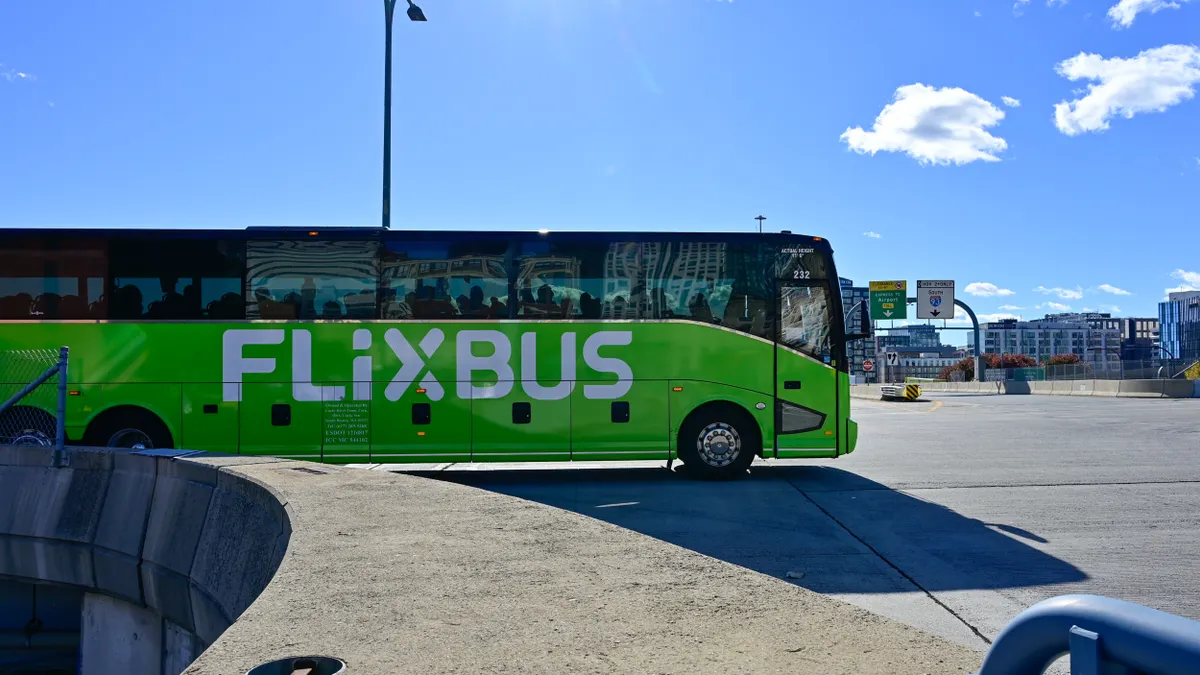
Intercity travelers in the U.S. increasingly chose Amtrak and scheduled bus lines in 2025. That’s expected to continue this year, experts said.
Train riders boosted Amtrak’s ticket revenue and set an all-time ridership record of 34.5 million customer trips in fiscal year 2025. The railroad restored service between New Orleans and Mobile, Alabama, after a 20-year absence and carried 213,000 passengers on the first full year of its Borealis service between Chicago and the twin cities of Minneapolis and Saint Paul. Amtrak anticipates 37 million riders in fiscal year 2026.
Intercity buses reach more than three times as many destinations as Amtrak and carried about 75% more passengers in 2023, the latest available data year. “Intercity bus services have evolved into leaner, market-driven alternatives, offering faster travel and lower fares in many key corridors,” a December 2025 Reason Foundation report concluded.
Cities are investing in new or upgraded intercity bus stations. Boston’s South Station bus terminal opened a new wing in November, increasing capacity by 60%. The Port Authority of New York and New Jersey’s Midtown Bus Terminal near Times Square will be replaced with a new 2.1 million-square-foot, $10 billion facility on the same site, and Chicago Mayor Brandon Johnson announced plans to acquire and rehabilitate the city’s existing Greyhound bus terminal.
Tensions between the Trump administration and Democratic-led cities are the new norm.
President Donald Trump deployed or moved to deploy National Guard troops in more than a half-dozen cities led by Democratic mayors in 2025 in response to protests against high-profile immigration enforcement surges or to address what he described as rampant crime. Following six months of legal conflict, a Dec. 23, 2025, Supreme Court ruling curtailed deployment to Los Angeles, Chicago and Portland, Oregon — for now. Troops remain in Washington, D.C., where the National Guard reports directly to the president, and in Memphis and New Orleans, where Republican governors requested their presence.
Paul Gowder, a professor at the Northwestern Pritzker School of Law, told Smart Cities Dive he worries the ruling is “basically just an invitation for Trump to go straight to the Insurrection Act,” which allows him to use the military to quell domestic violence or rebellion, the next time he wants to send the National Guard troops into cities that don’t welcome it.
The administration continues to deploy federal immigration agents into “sanctuary cities” that have state or local laws that limit law enforcement’s voluntary cooperation with federal immigration enforcement. In January, the Department of Homeland Security sent nearly 2,000 federal agents to Minneapolis-St. Paul, Minnesota, in what it called its largest immigration enforcement operation ever. A federal agent shot and killed a resident on the first day of the surge.
Trump pledged on social media that troops will return to Los Angeles, Chicago and Portland, calling it “Only a question of time!”
Uncertainty surrounding federal housing assistance will continue.
The Trump administration’s sweeping changes to federal housing grants are likely to continue during the administration’s second year, as will an array of lawsuits challenging them.
The U.S. Department of Housing and Urban Development in 2025 attached new strings to federal housing assistance, including stipulations that recipients align with the administration’s views on diversity, gender and immigration.
HUD has also pledged to phase out “housing first” policies for addressing homelessness and instead prioritize transitional housing and support services, a shift advocates have said could leave tens of thousands of grant beneficiaries unhoused amid a national housing crisis.
“HUD’s decision to defund permanent homeless housing, which San Francisco has relied on for decades, will push our most vulnerable citizens out of their homes without a place to go,” San Francisco City Attorney David Chiu said in a statement. “We will continue to oppose these efforts and stand up in court for San Francisco’s values, funding, and communities.”
Other cities are also pushing back. Numerous lawsuits filed by states, local governments and nonprofits have temporarily put a pause on some of HUD’s major policy changes. HUD has pledged that more revisions are on the way. Cities, faced with already shrinking budgets, must find ways to adapt to the uncertainty.
FEMA’s future, EPA’s mission are up in the air.
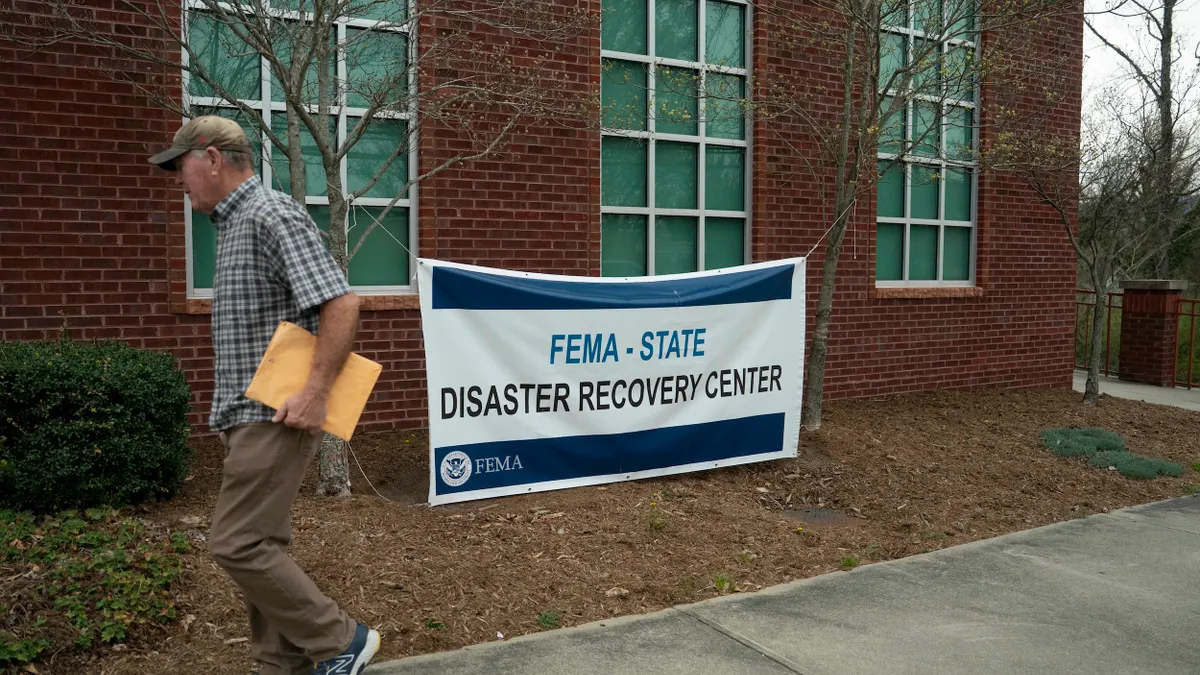
The Trump administration made significant funding and staffing cuts as well as policy and regulatory changes to the Environmental Protection Agency and the Federal Emergency Management Agency in 2025, leaving city officials scrambling to make up for diminished federal support on climate and resilience initiatives.
In its efforts to reshape FEMA, the Trump administration cut staff, shifted more responsibility for disaster preparedness to state and local governments, canceled resilience programs and increased the threshold a disaster must reach for a state to request federal assistance.
Via executive order, President Trump also commissioned a review council to create a report on FEMA’s future. In December 2025, the council abruptly canceled the report’s release, “leaving so much uncertainty as states and locals are trying to plan for their next year,” former FEMA administrator Deanne Criswell said during a webinar to discuss the agency’s fate.
Cities, counties and emergency management organizations will be watching closely as the FEMA Act of 2025, a bipartisan bill to reform the agency, modernize disaster assistance programs and change how aid is delivered to communities, makes its way through the U.S. House.
At the EPA, the Trump administration cut staff and gutted funding for greenhouse gas reduction, household solar and environmental and climate justice programs. The agency also proposed rescinding the 2009 “endangerment finding” that underpins greenhouse gas regulation under the Clean Air Act, greenhouse gas emissions reporting and stricter limits on fine particulate matter set by the Biden administration.
Local governments and nonprofits have filed multiple lawsuits alleging the administration is violating federal law by terminating congressionally allocated funds and altering grant conditions. They’ve had some wins, but much of the ongoing litigation will determine how local budgets and autonomy will be affected.
Encampment bans continue to gain momentum.
Homelessness reached record highs in the U.S. in 2024. In 2025, encampment bans — a more forceful strategy to address homelessness in cities — picked up speed and will likely see continued momentum in 2026.
A 2024 Supreme Court ruling empowered cities to outlaw homeless encampments, and cities have introduced more than 320 bills criminalizing the act of sleeping outdoors since then. The White House last summer threatened to withhold funding from local governments that don’t criminalize “urban camping and loitering.”
California Gov. Gavin Newsom has been one of the most outspoken advocates for clearing homeless encampments in his state, which has the nation’s largest population of unhoused people. “There’s nothing compassionate about letting people die on the streets,” Newsom said in May. “The time for inaction is over. There are no more excuses.”
Whether such measures reduce homelessness remains to be seen, but in 2026, data collected since the first bans were upheld may provide more clarity. A study last year found that criminalizing behaviors associated with people experiencing homelessness failed to reduce homelessness.
Rising home insurance rates exacerbate the housing affordability crisis.
Median home prices in the U.S. reached an all-time high last summer. The effort to establish more housing options to bring down costs will continue for most cities in 2026, but surging homeowners insurance rates threaten to exacerbate the affordability crisis.
Climate change is largely credited with driving the rise in insurance costs, and the frequency of extreme weather events is increasing. The Palisades and Eaton fires in California last January damaged 18,000 structures, including 11,300 homes, leading to $6.94 billion paid out to policyholders as of Feb. 5, 2025.
Insurers operating in highly regulated states like California recoup those costs with premium hikes in less regulated states such as Virginia and New Hampshire, according to a Harvard Business School report.
State Farm announced in 2025 that homeowners insurance rates in its home state of Illinois would jump 27%. State leaders accused the insurer of passing the cost of disasters elsewhere onto Illinoisans, which the company denied.
Spencer Glendon, an executive fellow at Harvard Business School who studies climate change, said homeowners insurance was not built to address catastrophic events.
“Society has to figure out what to do about those risks, not expect insurance to solve them,” Glendon stated in the HBS report. “Instead of trying to regulate or deal with the iansurance industry, what we really need to be doing is maybe reconsidering where we live and build, and make buildings that are more resilient, if it's possible.”
The housing affordability crisis is making that less likely. A recent report by Texas A&M University found that housing affordability is forcing people to move to areas associated with more extreme weather, like Texas and Florida.
States may explore more regulation of insurance companies to curb soaring rates, as in California, where companies must receive state approval before increasing premiums.