Lily Kong is president of Singapore Management University and a cultural geographer who researches urban transformations and social and cultural change in Asian cities.
As ecological and economic disruptions increasingly complicate urban life around the world, more than 100 city leaders, scholars and industry partners gathered in Vienna in summer 2025 to ask a pressing question: What does it mean for a city to be resilient in today’s world?
At the City Dialogues event, co-convened by Singapore Management University and Urban Innovation Vienna, participants agreed that urban resilience is no longer optional. Cities must equip their residents to withstand shocks and thrive in an evolving urban environment. From Singapore to Vienna and beyond, experiments are underway to put theory and ideas into practice and inspire urban centers that want to scale resilience strategies with sustainability at their core.
Too often, urban resilience is narrowly understood as preparedness and recovery: how cities respond to pandemics, natural disasters or economic disruptions. These remain essential considerations, but cities must also proactively be regenerative, replenishing what has been depleted, and restorative, caring for the communities at their core.
Self-sustaining ecosystems
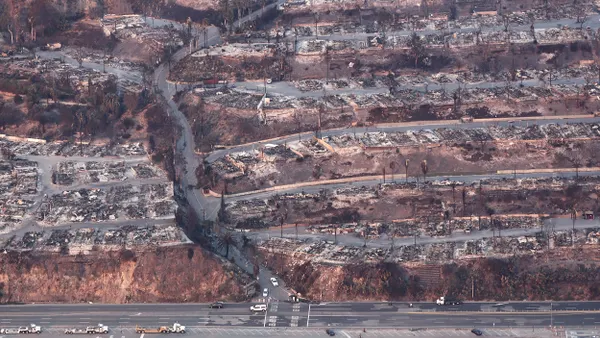
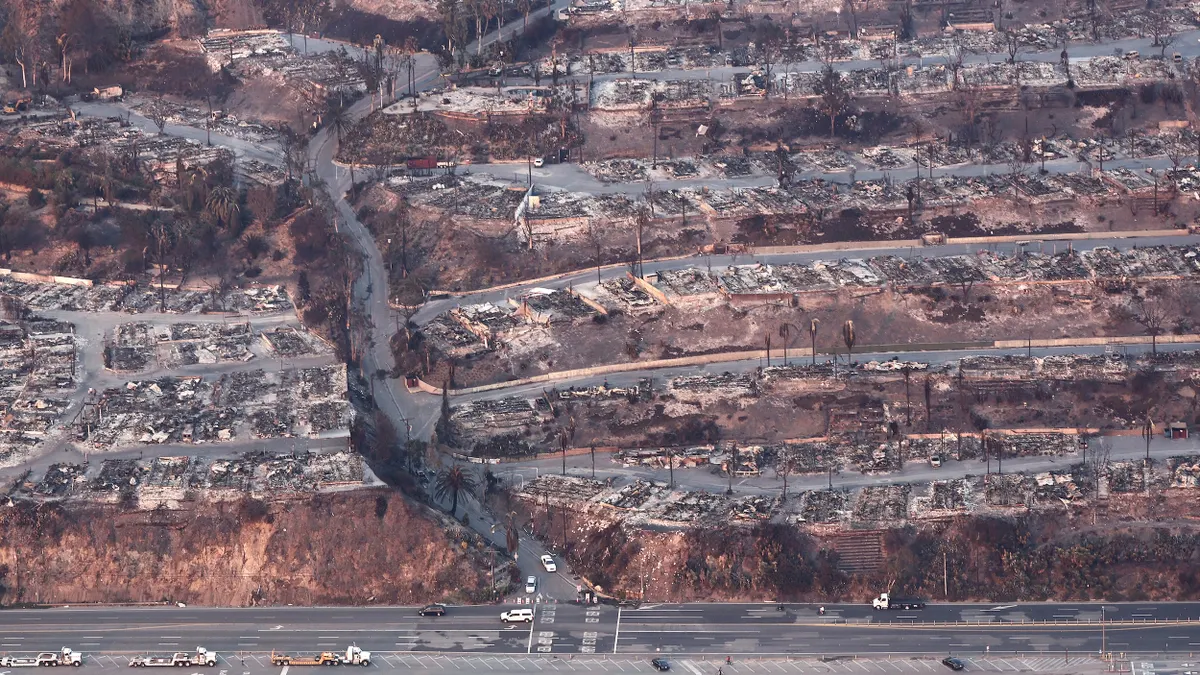
Resilient cities anticipate, adapt and respond effectively to disruptions. This involves attention not only to physical infrastructure, but also to social cohesion and institutional foresight. New York City’s work on coastal defenses after Hurricane Sandy and Los Angeles’ heat action plan to cope with record high temperatures show resilience as more than a feat of engineering. These examples prove that resilience also depends on foresight and coordination across communities and institutions. The Economist Impact's 2023 Resilient Cities Index ranks New York and Los Angeles (the only two U.S. cities in the index) at the top of the table, noting they are well-prepared for shocks in terms of their critical infrastructure, environment, socio-institutional dynamics and economy. However, the preparedness strategies of even the most resilient cities are tested in the event of severe ecological disasters such as the wildfires that ravaged Los Angeles in 2025.
Regenerative cities do not merely bounce back after a shock, but replenish depleted ecological and social systems. In the U.S., the Ecopolis Iowa City project, which was conceptualized in the aftermath of Hurricane Sandy in 2008, has sparked conversations about renewal, seeking to reimagine urban life in response to ecological disasters. Elsewhere, the 15-minute city concept illustrates regeneration in practice: it envisions neighborhoods designed so that work, services and recreation are within easy reach, reducing transportation emissions while restoring livability.
Embedding sustainability into urban design is fundamental to ensuring cities flourish in a world of climate uncertainty and resource constraints. Integrating green infrastructure, circular economy principles and resilient energy systems from the outset transforms sustainability from a retrofit into a core design driver. By designing for sustainability, urban areas can become self-sustaining ecosystems that not only minimize harm but actively contribute to planetary health and community well-being, aligning urban growth with the regenerative goals that many nations have pledged to achieve.
Restorative cities are centered on their people. These cities prioritize residents' emotional, psychological and social well-being. Researchers at Singapore Management University's Urban Institute apply interdisciplinary approaches to understand how different populations — older adults, migrants, caregivers and others — experience and navigate the city. Singapore’s studies on aging in place, where older residents remain in their familiar neighborhoods with appropriate support, remind us that dignity, care and connection are as central to a city’s future as roads or data cables.
Resilience, regeneration and restoration mutually reinforce each other. Together, they shape cities that can withstand crises, sustain life and nurture residents.
Communities of meaning
Beyond those 3Rs, a fourth concept emerged during City Dialogues: the sensitive city, or a city that listens. Such cities use data and technology not only for optimization, but to understand how people feel, experience and interact in shared spaces. They recognize that vulnerability is unevenly distributed and resilience without equity can deepen exclusion.
Sensitivity then, is not antithetical to resilience, but rather its necessary complement. It reflects a posture of humility, reflexivity and empathy in urban governance.
Our conversations from City Dialogues remind us that no single institution or sector can tackle urban complexity alone. The challenges we face are deeply interconnected, and responses must be as well.
Ultimately, the value of urban resilience lies not only in the ability to recover from crises, but in the capacity to anticipate them with foresight, adapt with resolve and rebuild with care. In this way, scalable resilience enables cities to confront complexity with confidence.
If resilience is about responding to disruption, regeneration calls on us to replenish what has been depleted: our ecosystems, resources and shared futures. And restoration reminds us to care for the emotional, psychological and social well being of those who call our cities home.
Together, these orientations offer more than a defensive posture. They invite us to imagine cities not just as engines of growth, but as communities of meaning.