Dive Brief:
- New York City is investing $68 million to build Brooklyn’s first Bluebelt system, which uses nature-based solutions to reduce flash-flooding, in Prospect Park, New York Mayor Eric Adams announced last week.
- The plan calls for upgrading Prospect Park Lake’s drainage infrastructure to lower water levels in less than 36 hours and building new ponds and rain gardens to collect rainwater.
- Average annual rainfall in New York City is projected to increase by up to 14% by the 2050s and 22% by the 2080s, and the number of extreme rainfall events is expected to increase, according to a New York City Panel on Climate Change Assessment.
Dive Insight:
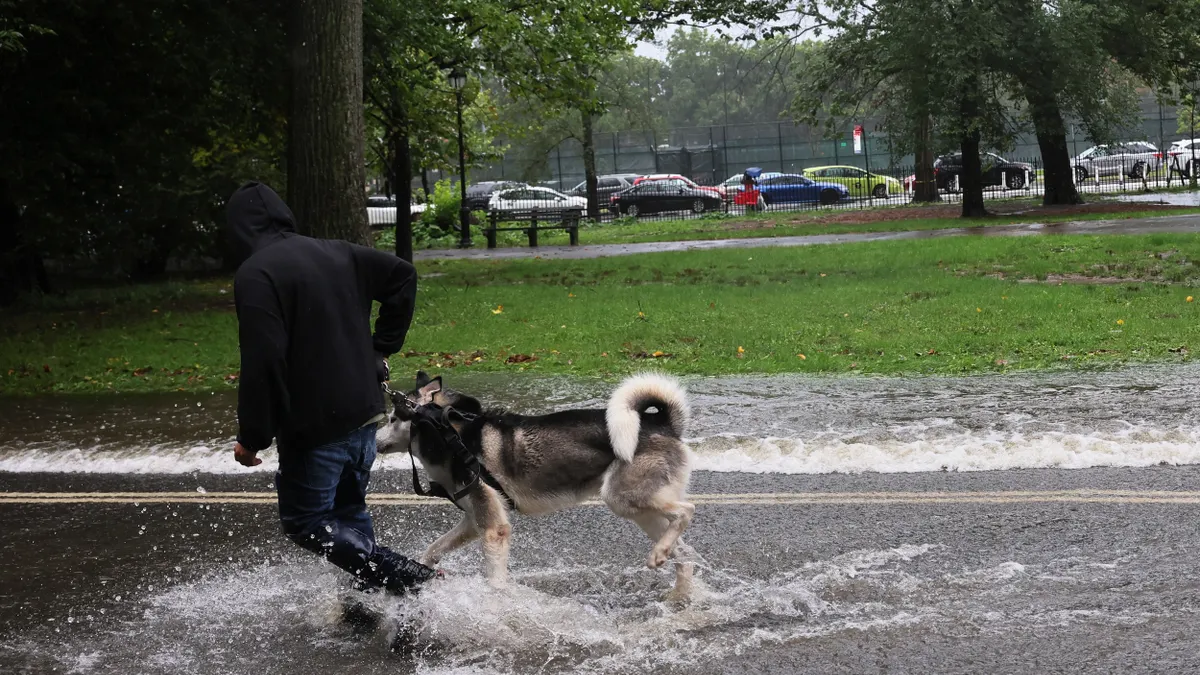
Extreme rainfall has increased by about 60% since the 1950s in New York City and throughout the Northeast, according to the Fifth National Climate Assessment. Adams said in a statement that the Bluebelt will provide a solution to “better manage intense rainfall.”
In July, two slow-moving storms dumped torrential rain on the city, causing evacuations and transit and road closures. On Oct. 30, another record-setting rainstorm caused more havoc and led to two deaths. A spokesperson for the city’s Department of Environmental Protection said in a statement that the October storm “continues the recent pattern of short but wildly intense downpours that have become increasingly common in recent years.”
The Prospect Park Bluebelt is the result of a year-long DEP study of flooding in the Brooklyn communities surrounding the park and how stormwater moves through the park. During intense storms, rainwater often rushes over the ground instead of into the 60-acre lake, which causes flooding, the study found. In addition, the lake’s limited capacity to absorb floodwaters can cause it to overflow and strain the sewer system.
DEP, NYC’s Department of Parks & Recreation and the Prospect Park Alliance will collaborate on upgrading the lake’s drainage infrastructure, building a new pond and a continuous stretch of rain gardens that will slow and filter rainwater as it drains to the lake and restore a pond that was filled in north of the Prospect Park Zoo to collect rainwater from Flatbush Avenue.
The project is intended to complement the $20 million Lakeshore Restoration Plan, which will reconstruct Prospect Park Lake’s shoreline with green infrastructure for stormwater management.
NYC Parks Commissioner Iris Rodriguez-Rosa said in a statement that public parks can be used as “natural infrastructure making our city more resilient.”
“By using Prospect Park to manage stormwater, we’re turning one of Brooklyn’s most cherished public spaces into a powerful tool for climate resilience,” DEP Commissioner Rohit Aggarwala said in a statement.
NYC’s first Bluebelt system was completed in Staten Island in 2023. The $110 million project drains and naturally filters stormwater into catch basins and storm sewers before it is discharged into the lower New York Bay, according to a press release.
Nature-based solutions utilizing “green and blue infrastructure” such as trees, grass and ponds are on average 50% more cost-effective and deliver 28% more added value than engineered solutions, according to the World Economic Forum.
Cities that use wetlands and rain gardens to absorb water and prevent runoff, a concept known as “sponge cities,” are gaining traction as a response to urban flooding, Atlantic International University reports.