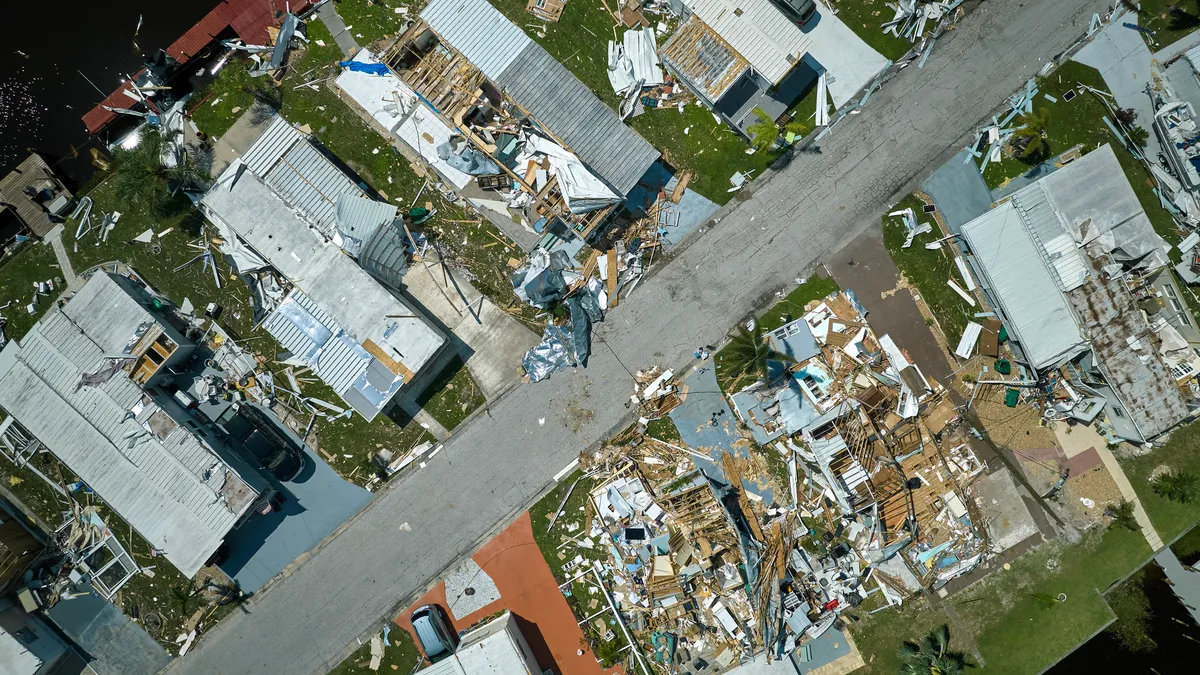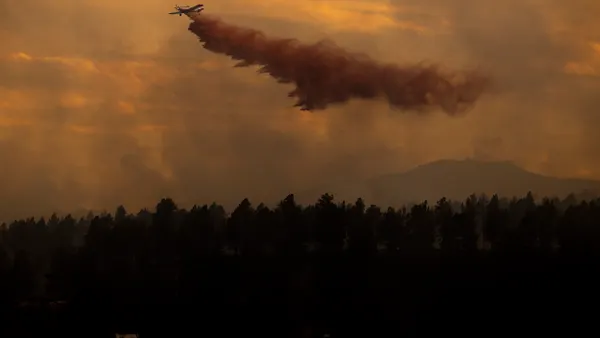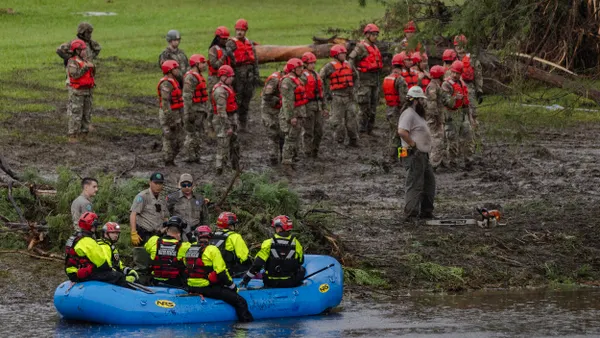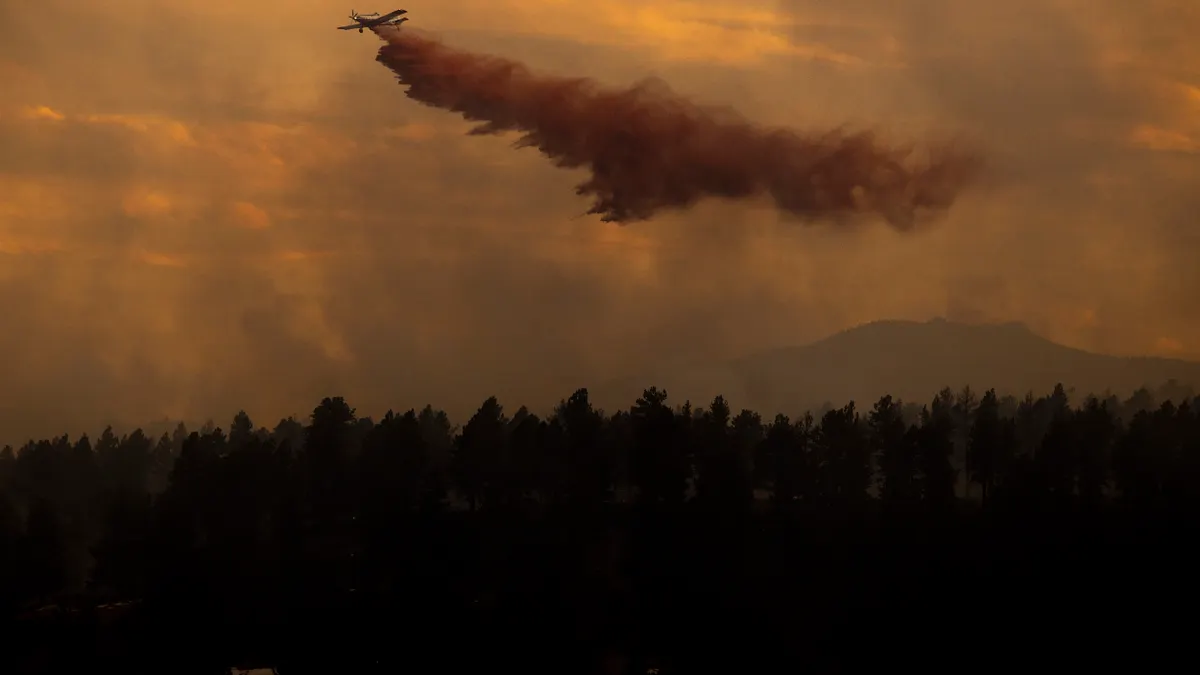
As the U.S. prepares for simultaneous blizzards, a heat wave, tornadoes, fires and floods this week, scientists and Colorado officials are fighting to save the National Center for Atmospheric Research, which has made forecasting those threats possible since 1960.
The National Science Foundation, which funds NCAR, announced in December it was “reviewing the structure of the research and observational capabilities” operated by NCAR and soliciting feedback “for rescoping the functions of the work” the center performs. Office of Management and Budget Director Russell Vought posted on social media that the White House planned to break up NCAR because it is “one of the largest sources of climate alarmism in the country.”
Closing NCAR would have “a horrible impact on the local level, simply because so much of the research that moves weather forecasting forward comes out of NCAR,” Robert Dale, chair of the International Association of Emergency Managers USA Weather Caucus, told Smart Cities Dive in December.
Meteorologists and science advocates responded last week to a letter NSF sent in January soliciting feedback on its “intent to restructure critical weather science infrastructure” at NCAR by March 13.
“As scientists, we take great exception to [Vought’s] egregious claim that NSF NCAR is a source of ‘climate alarmism’ — nothing could be further from the truth, as this institution is crucial for providing bedrock, cutting-edge weather, ocean, space weather, earth, and climate science to help protect people and our national defense and economy,” the Union of Concerned Scientists responded.
Breaking up NCAR “will harm meteorological research and innovation in the United States with severe consequences to current and future efforts of the weather enterprise to protect life, property, and the nation’s economy,” the American Meteorological Society wrote.
NSF has been soliciting bids to take over management of NCAR’s various components from the University Corporation for Atmospheric Research, a consortium of universities that manages NCAR, according to an article in Science. NSF has asked the University of Wyoming to take over an NCAR supercomputing center in Cheyenne and said it will move two NCAR-operated research aircraft to NASA or NOAA, Science reported.
NSF’s January letter sought “expressions of interest” for management and operations of weather-related observational platforms, modeling and science and ownership of the NCAR Mesa Lab in Boulder, Colorado, for public or private use. Selling the Mesa Lab could be difficult, if not impossible, because Boulder residents voted in 1961 to extend city water to the property only on the condition that the land is “used to carry out the purposes and functions” of UCAR, NCAR or NSF, Boulder Reporting Lab reported.
Local impacts
Colorado Reps. Joe Neguse and Jeff Hurd and Sens. Michael Bennett and John Hickenlooper led a coalition of lawmakers in a response to the NSF letter submitted Friday. The bipartisan coalition “underscored concerns about how fragmenting NCAR’s capabilities, including divesting its research aircraft or supercomputing center, would affect national weather forecasting capabilities, national security functions, and the long-term return on federal investment,” according to a press release.
Neguse has also called for an investigation into allegations that OMB officials may have discussed transferring parts of NCAR’s space weather program to a private company before the public comment process concluded.
In a letter opposing efforts to dismantle NCAR, privatize its programs or reorganize its functions, Boulder County Commissioners Claire Levy, Marta Loachamin and Ashley Stolzman said the Boulder Office of Disaster Management for Boulder County and the City of Boulder “utilize the pass-through work that NCAR does in research, modeling, and climate forecasting locally in our preparedness and response to natural hazards.”
“NCAR is a world-class institution that not only provides invaluable weather information but that is also an economic engine for Colorado, employing more than 800 people,” the commissioners stated. “In addition to the grave consequences to climate research, closing NCAR would severely impact Boulder County’s economy.”