Dive Brief:
- The first comprehensive assessment of how drug use affects transit in five U.S. cities found that transit workers are being forced to become de facto public health responders and exposure to overdoses, assaults and biohazards is traumatizing frontline staff.
- “On transit systems across the United States, rising rates of drug use along with deteriorating safety conditions for customers and staff have become increasingly pressing and complex issues for transit agencies to solve,” the Federal Transit Administration-funded report states.
- The five transit agencies that took part in the study — Chicago, Denver, Los Angeles, Philadelphia and Portland, Oregon — “universally stressed the need for sustained and broad support services: recovery, housing, increased staffing for outreach and enforcement, and harm reduction,” David Cooper, principal of Leading Mobility and a co-lead of the study, said in a statement.
Dive Insight:
Since the pandemic, drug use on public transit has become increasingly visible, eroding public confidence and perceptions of safety and prompting riders to avoid transit altogether or avoid certain times and routes, Jamaal Schoby, staff officer for the Transportation Research Board, wrote in the Transit Cooperative Research Program report.
“What we’re seeing on transit is a reflection of broader challenges—homelessness, drug use, and limited support services,” Emily Grisé, assistant professor at the University of Alberta School of Urban and Regional Planning and a co-lead of the report, said in a statement.
The study recommends a combination of harm reduction, enforcement and systemic change to address the problem. It identified seven “areas of opportunity” to help transit agencies address drug use.
1. Develop an agency-specific policy for naloxone deployment.
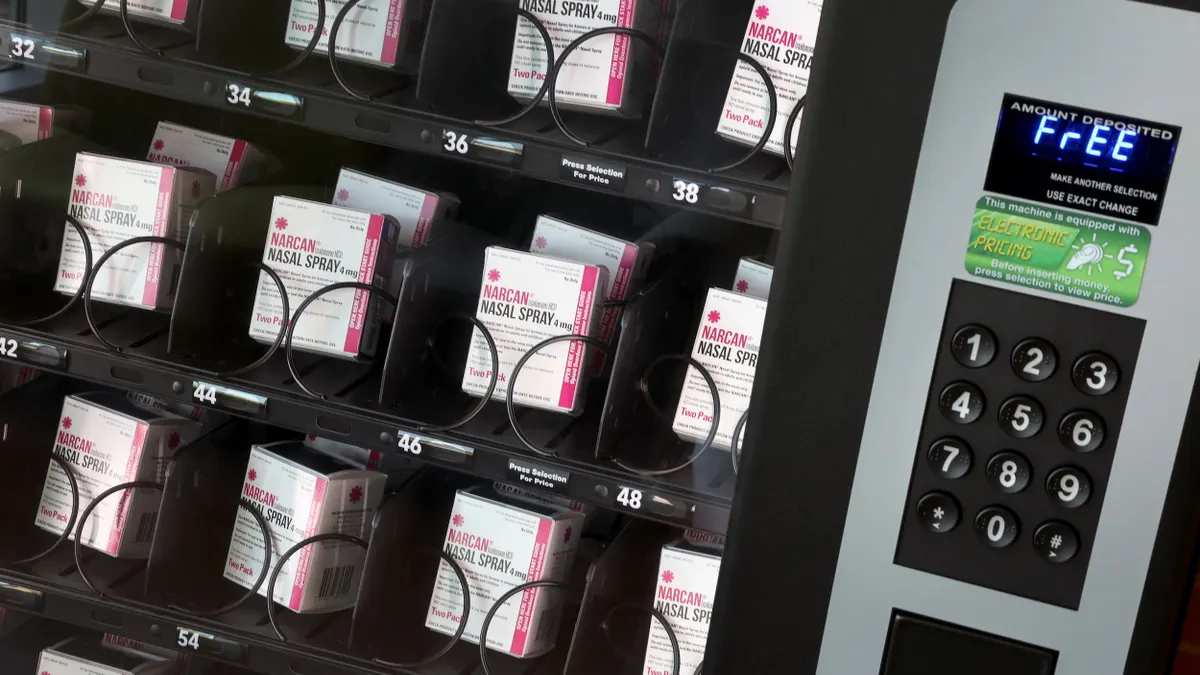
Agencies are equipping staff with the opioid antagonist, which reverses overdose, and making it available within systems. The Chicago Transit Authority launched a pilot program with vending machines providing free access to naloxone and other harm-reduction supplies, including fentanyl test kits.
2. Make physical design changes in stations that deter drug use.
Crime Prevention Through Environmental Design principles include enhanced sightlines, improved lighting and security cameras, reconfiguring passenger circulation patterns, keeping elevator doors open and removing structures that have high rates of vandalism or loitering. Denver’s Regional Transportation District and LA Metro have deployed these methods.
3. Align transit agency codes of conduct with evolving laws on drug use.
Enhancing public awareness of laws and transit policies can make enforcement more effective, the report states. LA Metro is making code-of-conduct signage that informs passengers about acceptable behavior and makes guidance on enforcement more visible throughout its system.
4. Review outreach programs to better understand the needs of people experiencing homelessness.
The report suggests locating support and substance-use clinics near transit and implementing mobile outreach programs across transit systems. Philadelphia’s Southeastern Pennsylvania Transportation Authority’s Hub of Hope at an underground commuter rail station offers critical services and supplies to people experiencing homelessness. Law enforcement officers and outreach workers can redirect people there from other stations.
5. Partner with outreach organizations that employ certified peer specialists.
People who have lived experience with drug use and/or mental health issues “can create more credible and effective outreach,” the report states. SEPTA takes a “deliberate staffing approach” to include Certified Peer Specialists for its outreach programs.
6. Establish consistent data-collection practices across agencies.
Data collection regarding drug use on transit “is often sparse and inconsistent,” the report states. Agencies must set clear, quantifiable objectives to guide data collection and track progress. “Integrating data with public health, law enforcement, and outreach organizations can improve data accuracy and address drug use more effectively,” it states.
7. Improve information sharing and communications between transit agencies, outreach providers, law enforcement and support organizations.
Because drug use on transit is “deeply intertwined” with homelessness and mental health, a multidisciplinary approach incorporating “extensive communication and information sharing” is essential, the report states.