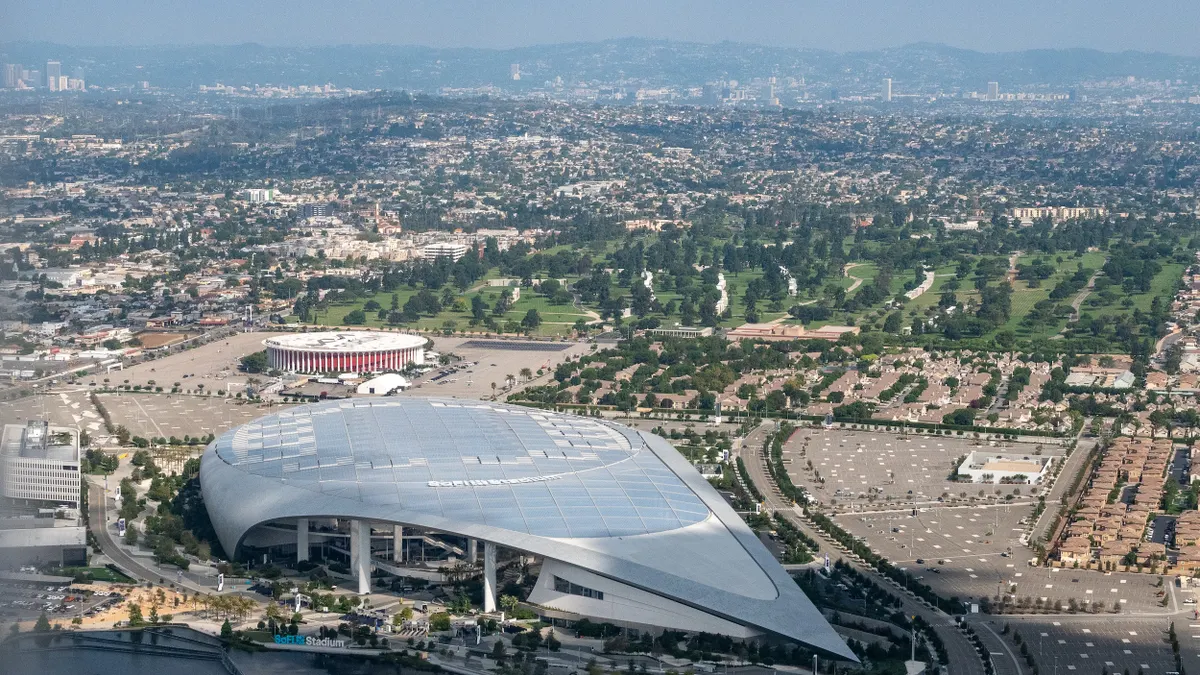
Transit agencies and transportation officials are preparing for an influx of international tourists and soccer fans when the 2026 FIFA World Cup kicks off in 11 U.S. cities on June 12.
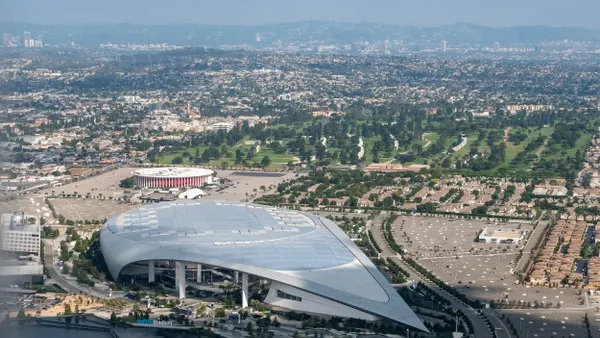
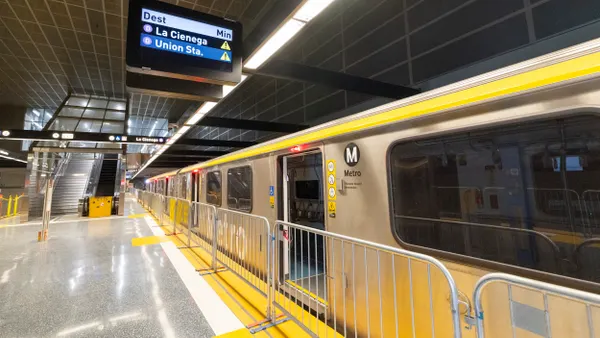
The Los Angeles County Metropolitan Transportation Authority will begin bus service to arrive at Los Angeles Stadium up to three hours before kickoff and continue outbound service up to 90 minutes after the match ends. It’s also coordinating with more than 10 regional transit providers and charter bus companies to bring fans to and from the stadium.
A bus rapid transit line under construction will help New Jersey Transit bring spectators to New Jersey Stadium for seven matches, while additional train service on the Meadowlands Rail Line will run before and after each match. The Metropolitan Atlanta Rapid Transit Authority, Houston Metro, Boston and other World Cup cities are adding trains and buses to handle the expected crowds.
Smart Cities Dive asked three transportation experts how cities and transit agencies can best prepare for the surge of visitors and soccer fans. Here’s what we heard.
Increase service and prepare for breakdowns
Dani Simons, vice president for communications and public affairs for transport supplier Alstom, laid out three key issues transit agencies need to plan for, starting with adding more service before and after scheduled games. That may require running beyond normal service hours and running some express trains and buses, she said. Along with more operators, “You also have to make sure you have customer service teams available,” she said.
Adding service may mean a maintenance program before the games start so more buses and rail vehicles will be available, or borrowing buses from nearby transit agencies outside the event area, Simons said.
Simons urged transit operators to strategically deploy maintenance staff and equipment at stations or along bus routes to prevent having to take vehicles out of service for repairs. These personnel would be “skilled staff who are in place and empowered to make decisions to do any kind of preventative action to ensure fleet availability remains high,” she said.
Simons also underscored the importance of delivering a positive experience for passengers. It could be a turning point for some transit agencies, she said. “These games are times when people actually might change their travel behavior, and you hope to make that a delightful experience so that they make [public transportation] more part of their regular routine.”
Plan for traffic congestion and road closures
“Two-thirds of the games are being played on weekdays,” which means daily commutes will overlap with stadium traffic, said Ahmed Darrat, chief product officer for transportation intelligence company Inrix. “You're going to end up seeing significantly more traffic happening right before the games in these areas, and unless agencies come up with ways to keep people out of individual vehicles … you're going to see a lot of gridlock right before the matches,” he said.
Curb management will be important for taxi and ride-hail vehicle dropoff and pickup, Darrat said. Cities should also plan to accommodate scooters and e-bikes.
The matches are likely to draw international and U.S. dignitaries, which may result in road closures for their motorcades.
Darrat recommends that delivery trucks coordinate with stadium and city officials to avoid adding to congestion.
Enable real-time traffic data for law enforcement
“The law enforcement agencies want to have a sense of how those emergency routes are going to be affected by an event,” said Brandon Orr, associate vice president of product at Urban SDK, a geospatial AI technology company. Officials want to know which roads will become most congested and which streets they can close to improve transit or pedestrian access.
Orr said four of the 11 World Cup cities are using Urban SDK’s data for transportation planning and traffic engineering.