Dive Brief:
- Police chiefs from St. Paul, Hennepin County and Brooklyn Park, Minnesota, held a press conference Tuesday calling for more supervision of and accountability for federal immigration agents and coordinated efforts to ensure the agents’ actions don’t undermine the public’s trust in law enforcement.
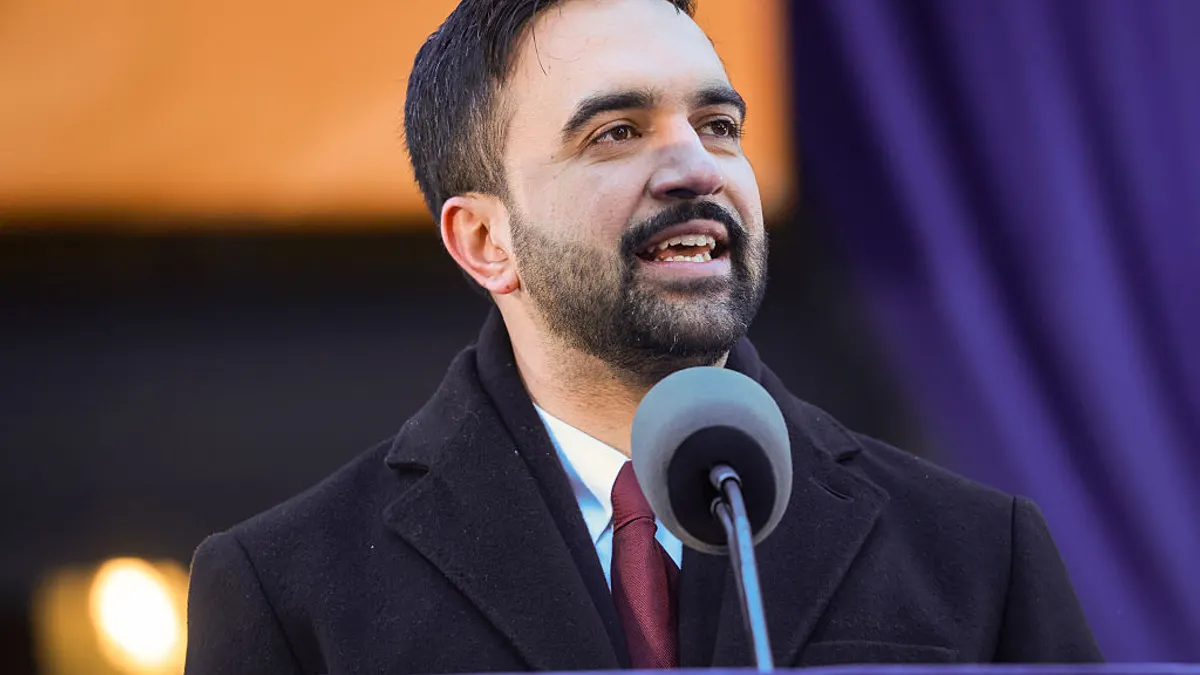
- The Department of Justice on Tuesday issued subpoenas seeking documents from Minnesota Gov. Tim Walz, Minneapolis Mayor Jacob Frey, St. Paul Mayor Kaohly Her, Minnesota Attorney General Keith Ellison and Hennepin County Attorney Mary Moriarty for an investigation into whether the elected officials have impeded federal immigration efforts in the state, according to media reports.
-
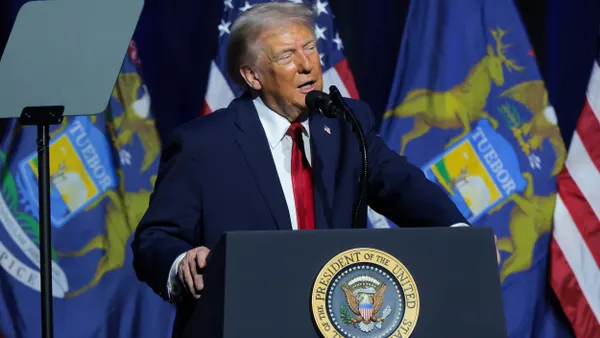
Frey posted on X that the subpoena is “an obvious attempt to intimidate me for standing up for Minneapolis, local law enforcement, and residents against the chaos and danger this Administration has brought to our city.” The Democratic Mayors Association said in a statement that President Donald Trump “has weaponized the government” against mayors across the country.
Dive Insight:
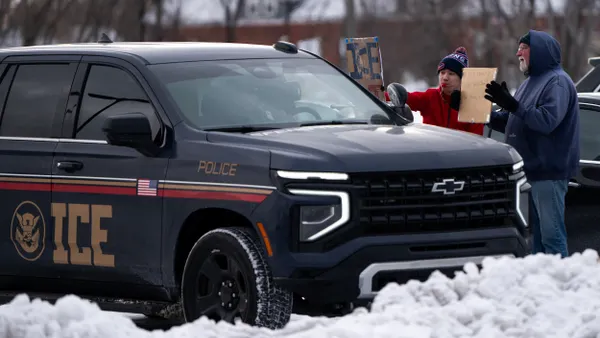
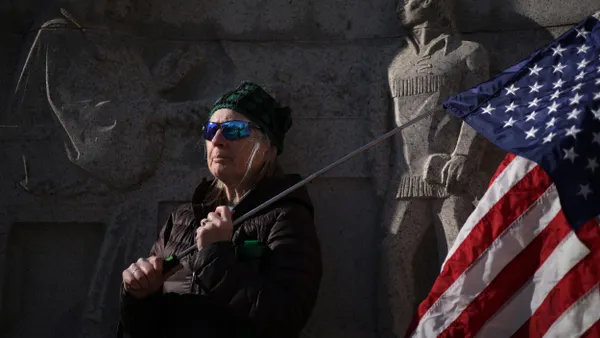
Protests against federal immigration agents’ tactics have been ongoing in Minnesota since the Department of Homeland Security deployed thousands of federal law enforcement agents to the Twin Cities area earlier this month. The protests have intensified since an Immigration and Customs Enforcement agent shot Minneapolis resident Renee Good on Jan. 7.
Minnesota state and city officials sued the Trump administration on Jan. 12, alleging federal immigration agents’ actions have violated the Constitution, undermined public safety efforts and interfered with the cities’ and states’ abilities to protect and care for residents.
In an address to Minnesotans on Jan. 14, Walz called the surge “a campaign of organized brutality against the people of Minnesota by our own federal government.” He said “armed, masked, undertrained ICE agents” are going door to door and ordering people to point out where their neighbors of color live, pulling people over and demanding to see their papers and “grabbing Minnesotans and shoving them into unmarked vans.”
Walz urged residents to “establish a record of exactly what’s happening in our communities” by recording ICE agents’s actions. “Help us create a database of the atrocities against Minnesotans, not just to establish a record for posterity, but to bank evidence for future prosecution,” Walz said.
John Kincaid, a government and public service professor at Lafayette College and director of its Meyner Center for the Study of State and Local Government, said the Justice Department’s subpoenas of the elected officials are “highly unusual” because those “are usually reserved for acts of corruption or civil rights infringements and are usually issued after an extensive investigation.”
During investigations into the 2020 presidential election, the Justice Department under President Joe Biden subpoenaed local election officials suspected of election interference, Kincaid said, so they’re not unprecedented. But he believes these “will probably prove to be peculiar to the Trump administration” and “won’t mark an enduring change in federal relations with states and cities.”
“Sanctuary cities have no legal obligation to cooperate with ICE,” Kincaid said. “They will encounter legal trouble only if they try to obstruct ICE agents, although ‘obstruction’ is a matter of definition that may have to be settled by a court.”
During the police chiefs’ press conference Tuesday, Hennepin County Sheriff Dawanna Witt said she is “seeing and hearing about people in Hennepin County [being] stopped, questioned and harassed solely because of the color of their skin.”
“We cannot let people in our communities think that our local law enforcement leadership is okay with the actions that we simply know are not only wrong, but illegal,” she said.
Witt said local law enforcement “has been doing the hard necessary work to rebuild trust within our communities” since “Minneapolis and Hennepin County became ground zero for civil unrest” during protests over the killing of George Floyd in 2020.
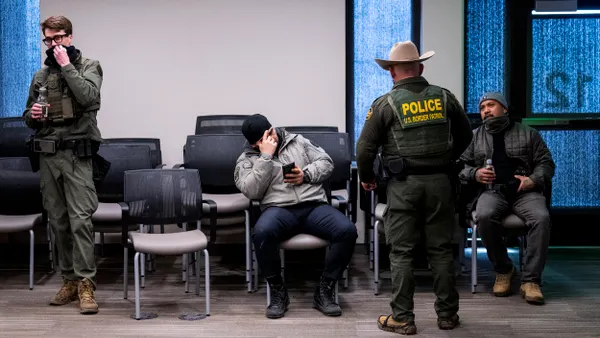
Emphasizing that he does not believe “the leaders in Washington, D.C., fully understand what some of their groups are doing here on the street and how much damage they’re causing,” Brooklyn Park Police Chief Mark Bruley said the chiefs convened Tuesday’s press conference because the federal agents’ actions are “impacting our brand as police officers, our brand of how hard we work to build trust to police in a way that builds legitimacy in what we do.”
“When people armed with rifles that have just ‘police’ across their vest get out and act a certain way, of course, our public thinks that’s us,” he said.
“We understand that there is a feeling right now that if you stand up and say something, there might be a retaliation against you,” Bruley said. “None of us want that. None of us are suggesting that there isn’t a legitimate, lawful authority to operate here as federal agents. But we are trying to come together to say, can we please find a pathway forward? Can we find a way to make sure that we can do these things without scaring the hell out of our community members and freaking everyone out?”
The Department of Justice did not respond to a request for further information on the subpoenas.
Editor’s note: This article was updated to include comments from John Kincaid.