

Dive Brief:
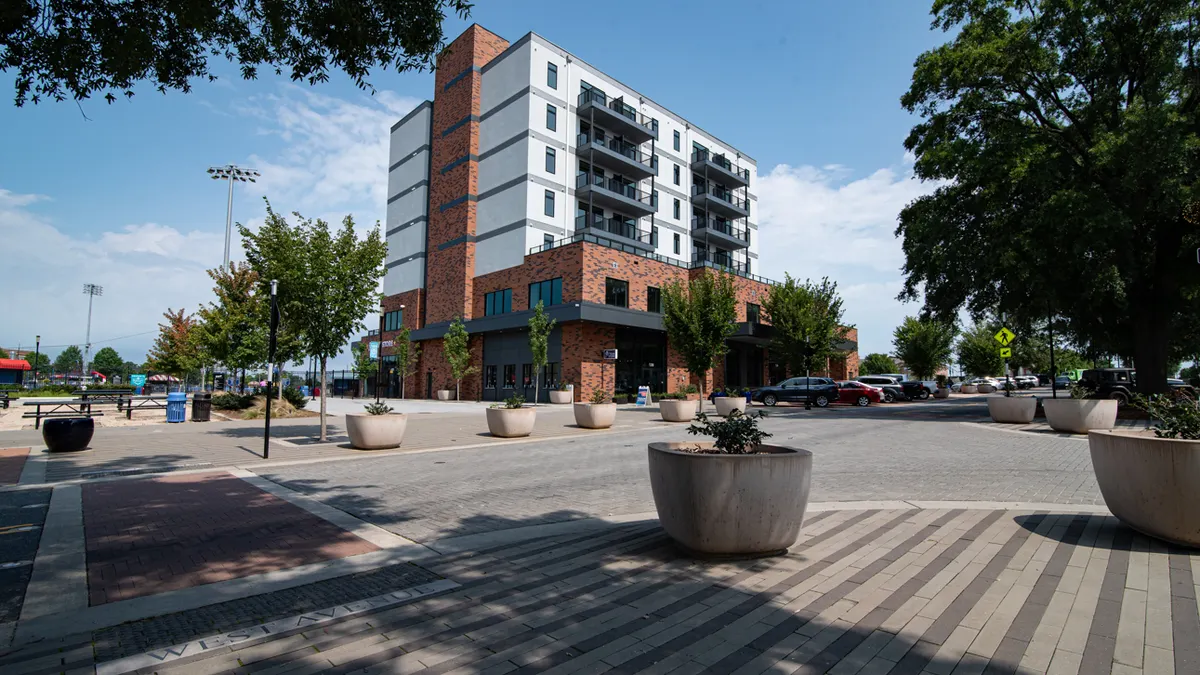
- North Carolina this month passed legislation that prohibits local governments from requiring a minimum number of off-street parking spaces for new developments in most of the state, excluding municipalities on the coast.
- Gov. Josh Stein called the law “another tool in the tool box” to build more housing and make housing more affordable in the state. “This change will lower rents for people,” Stein said in a July 6 news release.
- The state joins a growing number of local governments that are reducing or eliminating parking mandates to encourage more housing development, including Raleigh and Durham, North Carolina.
Dive Insight:
While thousands of local governments have embraced parking minimum reforms, statewide measures are also ramping up.
California banned parking minimums for new developments in 2022 for projects located within a half-mile radius of a major transit stop.
Washington last year passed a parking reform measure that prevents some local governments from requiring more than half a parking space per multifamily unit or more than one parking space per single-family unit.
A single parking space can add tens of thousands of dollars to the cost of a new housing development and take up land that could otherwise be used for more housing, experts say.
“Parking reform — often the elimination or sharp reduction of minimum parking requirements — has proven to be one of the most impactful and widely adopted tools for improving project feasibility, particularly for infill and small-scale development,” Nicholas Julian, director of land use at the National Association of Home Builders, said in an email to Smart Cities Dive.
North Carolina’s legislation takes effect in January 2027.