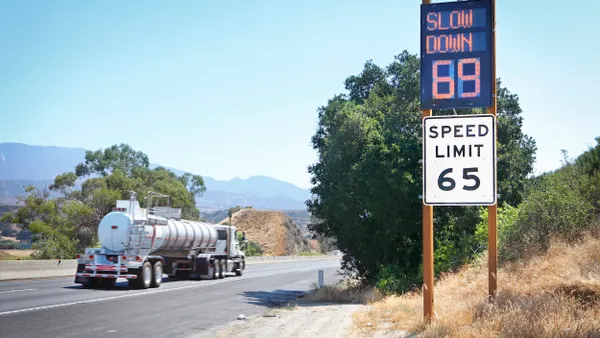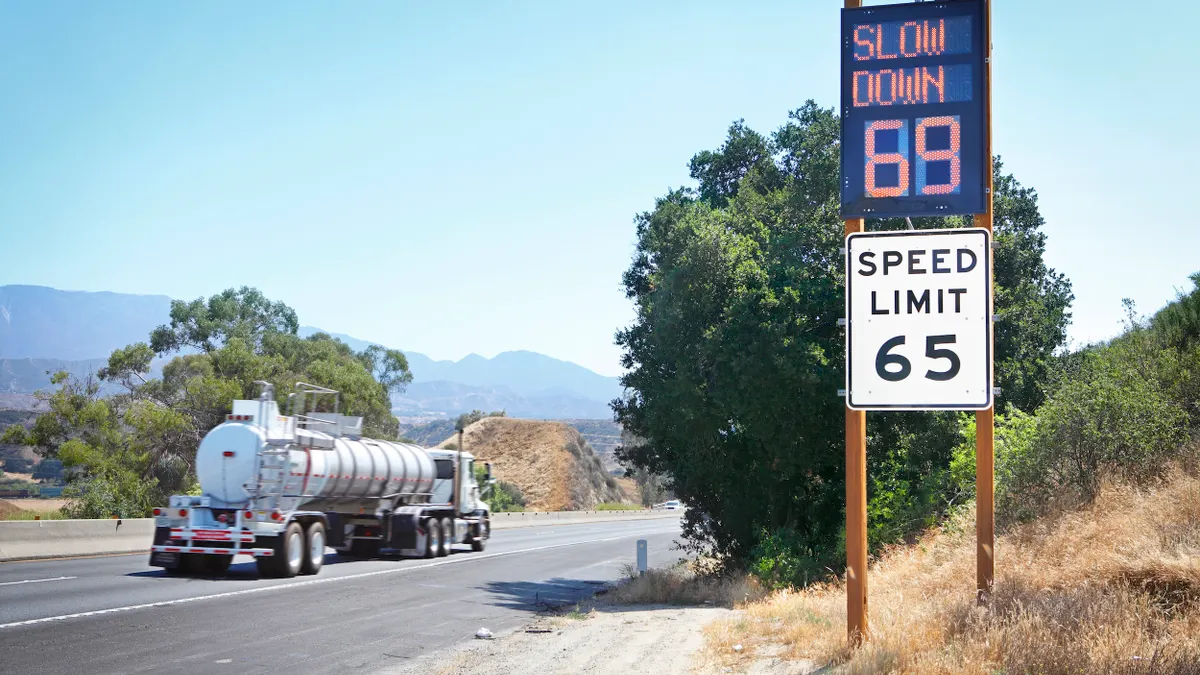
In 2023, nearly 12,000 people died in speeding-related collisions in the U.S., according to National Highway Traffic Safety Administration data. But when the California state legislature passed a bill in 2024 that would require all vehicles sold in the state be equipped with passive intelligent speed-assistance systems that would alert drivers whenever they exceeded the speed limit by more than 10 mph, Gov. Gavin Newsom vetoed it.
Speed-assistance technology is already available in many vehicles equipped with advanced driver-assistance systems and is mandated in the European Union for model year 2024 and later vehicles. What would it take for drivers in the U.S. to accept it?
The Mineta Transportation Institute and San Diego State University conducted a study of California drivers' attitudes toward these systems, seeking to determine how they would realistically work in the state, Nusheen Baradaran, a graduate student in civil engineering at SDSU, said Wednesday during a webinar.
Baradaran explained there are four types of intelligent speed-assistance, or ISA, systems: those that continuously display the speed limit; those that warn the driver when the vehicle exceeds the speed limit; those that take control but allow for driver override; and those that automatically reduce the vehicle’s speed to the posted limit.
MTI and SDSU’s survey of 286 California drivers found that acceptance of speed- assistance systems declined as driver control decreased. “Most drivers reported that ISA would reduce speeding behavior,” Baradaran said. Furthermore, they expressed concerns around privacy and how governments or insurance agencies might use the data.
Successful implementation of speed-assistance systems would start with incentives, generally through lower insurance rates, beginning with pilot programs in high-risk corridors and integration with the vehicle’s advanced driver-assistance system, Baradaran said. “Once the driver trusts the said system, acceptance will follow,” she said.
Consumer awareness would also help boost adoption. “If the respondents were educated about ISA systems, they were more willing to adopt the system,” Baradaran said. These technologies “should be framed as a supportive safety system rather than a form of control on the driver.”