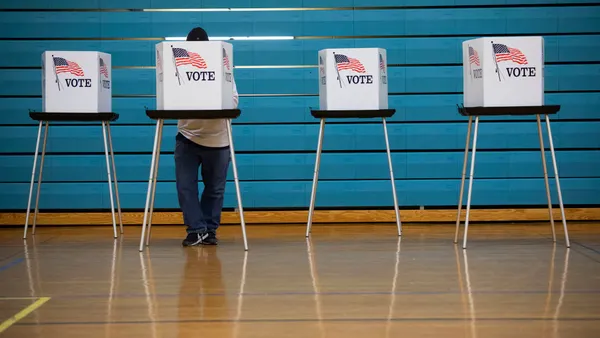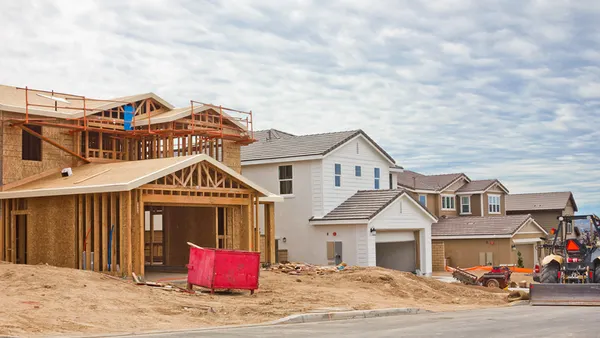


Voters in three states Tuesday approved by significant margins four measures to spur housing affordability and development. A ballot measure in Massachusetts remains too close to call, and another is pending in California, according to Ballotpedia.
The six state-level housing policies in contention were the most in a single election year in two decades.
Here’s where things stand.
California
Approved: Proposition 1
Voters approved $11.25 billion in bonds for the state to fund affordable housing programs, with slightly more than 60% of the vote as of Friday. The measure sets aside $1.25 billion specifically for veteran housing initiatives.
At a time when nearly half of college students are experiencing housing insecurity, the measure also allocates $175 million for University of California student housing.
“The passage of Proposition 1 is a vital step in addressing the state’s housing crisis,” UC President James Milliken said in a press release. “As the University of California works with the state to enroll more California students, the demand for affordable student housing has risen. This historic investment will enable the construction of necessary and new housing on our campuses.”
Approved: Proposition 37
More than 60% of voters signed off on a homebuying-assistance bond measure that establishes a second mortgage program for qualifying homebuyers and allows the California Housing Finance Agency to issue up to $25 billion in loans for certain homes.
Pending: Proposition 45
A proposal to amend the state’s landmark California Environmental Quality Act to streamline procedures for certain projects, including housing, remained undecided Friday morning. The proposal would establish deadlines and reduce the scope of legal challenges courts can consider regarding developments.
With 68% of the votes counted, the measure was leaning toward being rejected. The measure received significant pushback from environmental groups.
Hawaiʻi
Approved: RISE bond amendment
More than 67% of voters approved a state constitutional amendment that authorizes counties and municipalities to issue Resilient Infrastructure for Shelter and Equity bonds for housing development, according to MultiState Elections. Counties and municipalities can repay the bonds through future growth in property tax revenues, as opposed to real property tax rates that have debt limits, giving local governments more flexibility.
Massachusetts
Pending: Question 7
The only state ballot proposal that would directly impact local zoning remained largely split in Massachusetts. “No” votes have a slight edge with 50.65%, according to Ballotpedia.
The measure would require local governments to allow single-family housing on residentially zoned land that is at least 5,000 square feet and has access to public sewer and water services, among other characteristics.
Localities would still be able to “reasonably regulate” some aspects of the single-family housing, including height and parking requirements, distance from neighboring buildings and whether they can be rented on a short-term basis.
Rhode Island
Approved: Question 2
Voters firmly supported issuance of $120 million in bonds for projects to increase and preserve affordable housing in the state, with more than 61% saying “yes,” according to Ballotpedia.
A minimum of $25 million of the bond will be allocated for housing intended for homeownership, and 10% is slated for public housing development.