Dive Brief:
- The U.S. Department of Transportation opened applications for $4.7 billion in grants for rail projects along Amtrak’s Northeast Corridor and for $2 billion to modernize passenger and freight rail across the United States.
- The funding comes from the Federal-State Partnership for Intercity Passenger Rail grant program and the Consolidated Rail Infrastructure and Safety Improvements program, both funded by the 2021 Infrastructure Investment and Jobs Act.
- Separately, Amtrak asked rail car manufacturers to bid on a contract to begin replacing nearly 50-year-old cars on its long-distance trains.
Dive Insight:
Even as President Donald Trump’s fiscal year 2027 budget proposal cuts Amtrak funding by 82% and zeroes out funding for the Intercity Passenger Rail grant program, the DOT is moving projects ahead with funding from Biden-era legislation and congressional appropriations.
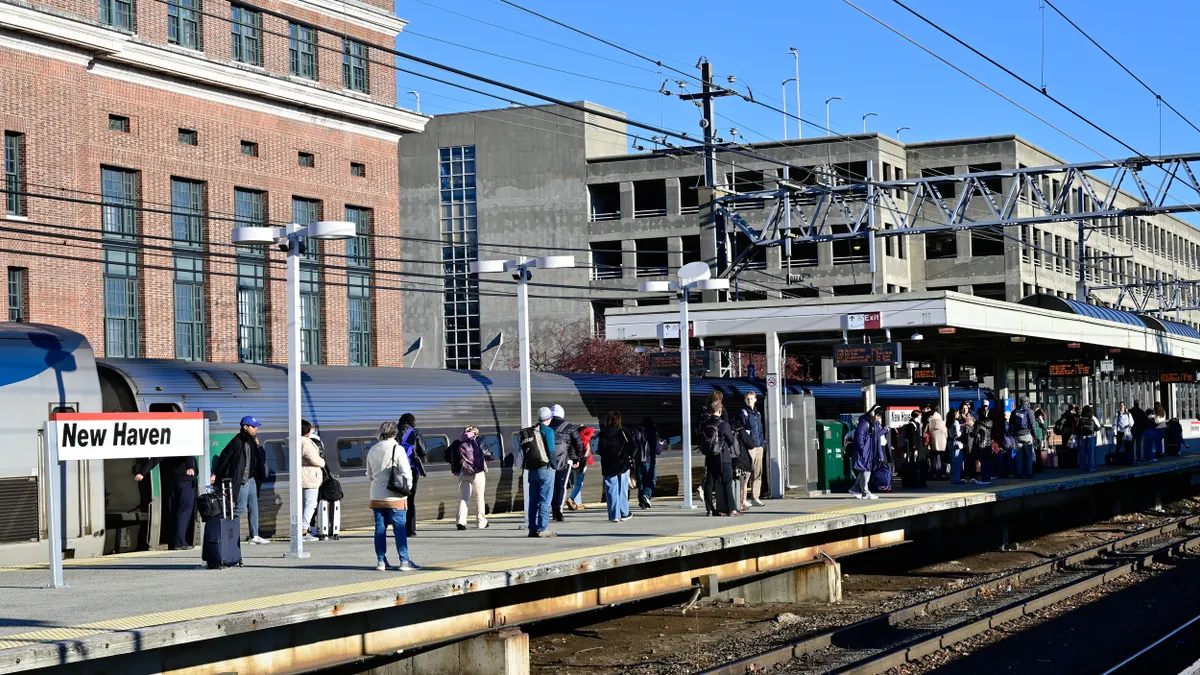
The first round of applications for the Northeast Corridor projects will focus on the New York Penn Station and Washington Union Station renovations, along with other high-priority station projects, the DOT said in a press release. The DOT took control of the Penn Station project last year, and it owns and manages Washington Union Station.
“The Northeast Corridor is the busiest and most complex rail line in America,” Federal Railroad Administrator David Fink said in a statement. The passenger rail grant program also includes projects that increase train frequencies and speed, establish new rail service and improve maintenance.
Amtrak’s Northeast Corridor trains carried 15.2 million passengers in fiscal year 2025.
The CRISI grants are open to projects that “reduce congestion and facilitate ridership growth in intercity passenger rail transportation along heavily traveled rail corridors,” improve highway-rail grade crossings, enhance connections between intercity rail and bus services and other projects focused on the safety and reliability of intercity passenger rail and freight rail, according to the Notice of Funding Opportunity.
“From the suburbs to rural communities, we want to equip our partners with the resources they need to modernize our rail infrastructure,” Fink said in a statement.
“Given the demonstrated demand from local governments looking to expand and upgrade service, we fully expect states to take full advantage of this funding opportunity to advance corridors across the U.S.,” Rail Passengers Association Vice President of Policy and Government Affairs Sean Jeans-Gail said in an email to Smart Cities Dive. Amtrak plans to replace its aging long-distance fleet with over 800 new rail cars serving 14 routes. The existing fleet’s double-decker rail cars will be replaced with standardized single-level vehicles.
“This new approach will deliver a more consistent and accessible customer experience across the Amtrak network while maintaining our commitment to introduce the first new long-distance cars in the early 2030s,” Amtrak President Roger Harris said in a February statement. Sources told Smart Cities Dive the initial investment in the new fleet will be at least $7 billion, with funding expected to come from the IIJA.