Chicago may soon step in to acquire the city’s intercity bus station, rescuing it from an uncertain future.
The facility’s owner, Twenty Lake Holdings, the real estate division of Alden Global Capital, wants to redevelop or sell the property. In the meantime, it allows continued use under a month-to-month lease with FlixBus, Greyhound's parent.
Greyhound’s previous parent company, FirstGroup plc, sold the bus company to Flix but retained most of its real estate holdings, including many bus stations. With the closure of those Greyhound stations, cities like Charlottesville, Virginia; Jackson, Mississippi; and Knoxville, Tennessee, lost their downtown bus stations. That often left riders with curbside stops or locations away from city centers.
When Greyhound’s lease on the 1989 Chicago station expired in 2024, it was feared the same fate would befall intercity bus travelers there. Just as the Chicago O'Hare International Airport and Amtrak’s Chicago Union Station are hubs for travelers making connections, bus routes fan out across the Midwest from Chicago.
“We felt that it was important for us to raise our voices in order to make it clear to the city that something needed to be done, rather than just let this facility go to waste,” Better Streets Chicago Executive Director Kyle Lucas said on a webinar last month.
The nonprofit jumped into the fray about two years ago, Lucas said. At first, city officials were slow to act, according to Joseph Schwieterman, director of the Chaddick Institute for Metropolitan Development at DePaul University. “We believe very strongly that preserving the existing location in Chicago is critical,” Lucas said.
The Chicago Department of Planning and Development wants to expand an adjoining tax increment financing district to include the Greyhound station. “There are plenty of funds within this TIF currently that can support both purchase as well as renovation of the existing station,” Lucas said.
Beginning in April, a series of governmental actions will determine the fate of the Chicago bus terminal. The Chicago Community Development Commission will hold a hearing, after which the city council will introduce the TIF amendment, Lucas explained. In May, the city council's finance committee will vote on whether to approve the amendment. The full city council could then decide to move forward with the purchase at its next meeting.
“A city-supported terminal would provide long-term stability and infrastructure certainty for intercity bus operators,” Flix North America CEO Kai Boysan said in an email. “Public investment reinforces that intercity buses are an essential part of the transportation ecosystem and helps ensure a safe, centralized, and well-maintained facility that passengers and operators can rely on.”
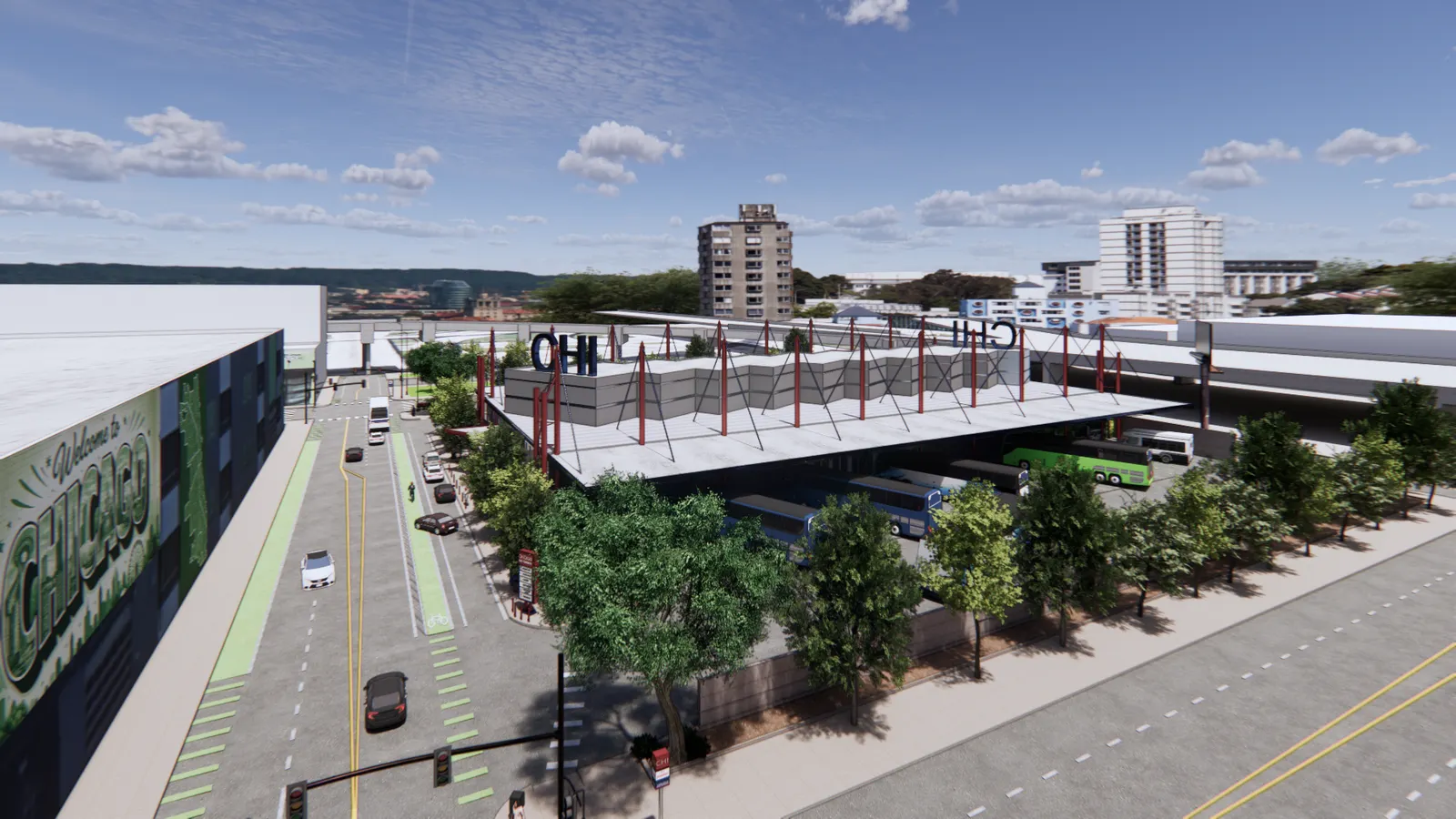
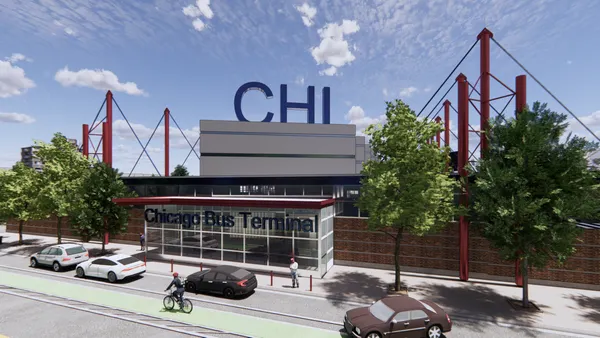
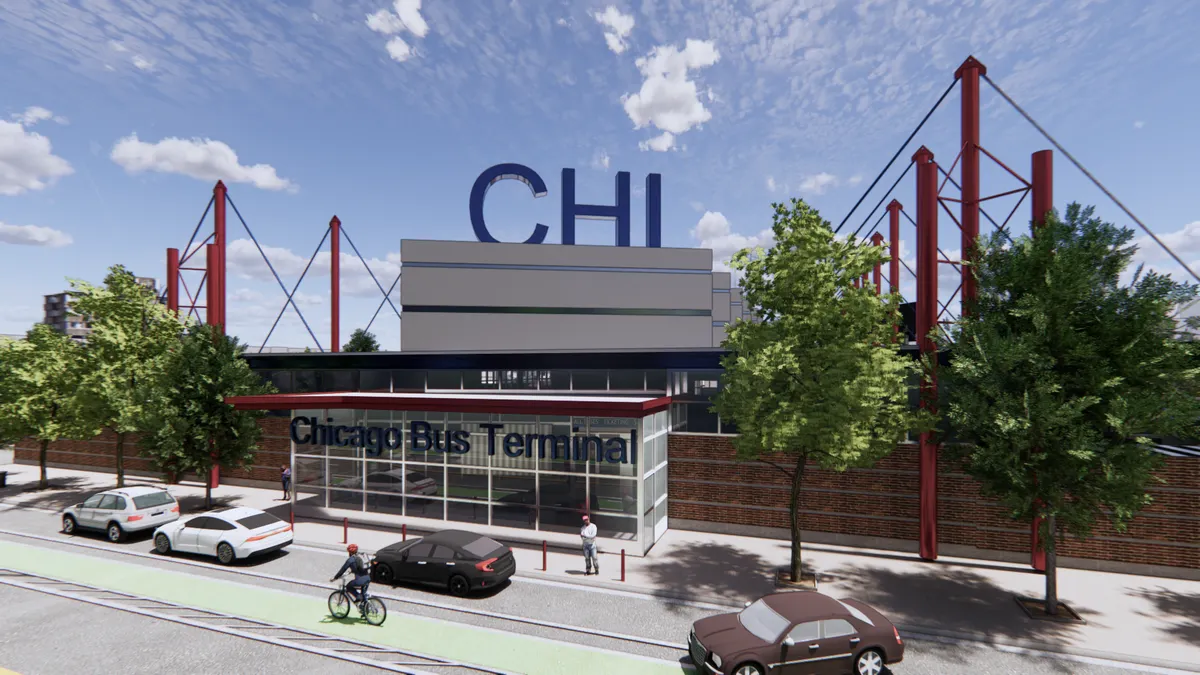
The Chaddick Institute asked urban planner and architect Nathale Nicoletti to develop some ideas and illustrations about potential renovations to the bus station. “We have a structure that is already really beautiful,” she said. “We have the suspended roofs, the pillars sticking out showing its height, but right now the place is getting old, and it's kind of forgotten.”
The renderings show a new glass entrance, added signage and street art along the station’s frontage. The street includes a bike lane and a pickup/drop-off lane for ride-hailing vehicles and taxis. The proposed renovation is “what you could do with a reasonable amount of money,” Schwieterman said.
The bus terminal serves FlixBus, Greyhound, Jefferson Lines and Barons Bus. Schwieterman suggested that some airport shuttle operators may want to come to the downtown station when the city takes it over.
Amtrak has begun work to upgrade Chicago Union Station, which is about a 15-minute walk from the bus terminal. The Chicago Transit Authority’s Blue Line Clinton station is a five-minute walk from the terminal.
“Passengers benefit most from well-managed, centrally located transportation hubs with strong connections to local transit,” Boysan said.
If Chicago goes ahead with acquiring and renovating the station, it will join Atlanta, Boston, New York City and Los Angeles in providing new or modernized downtown bus terminals in the U.S.