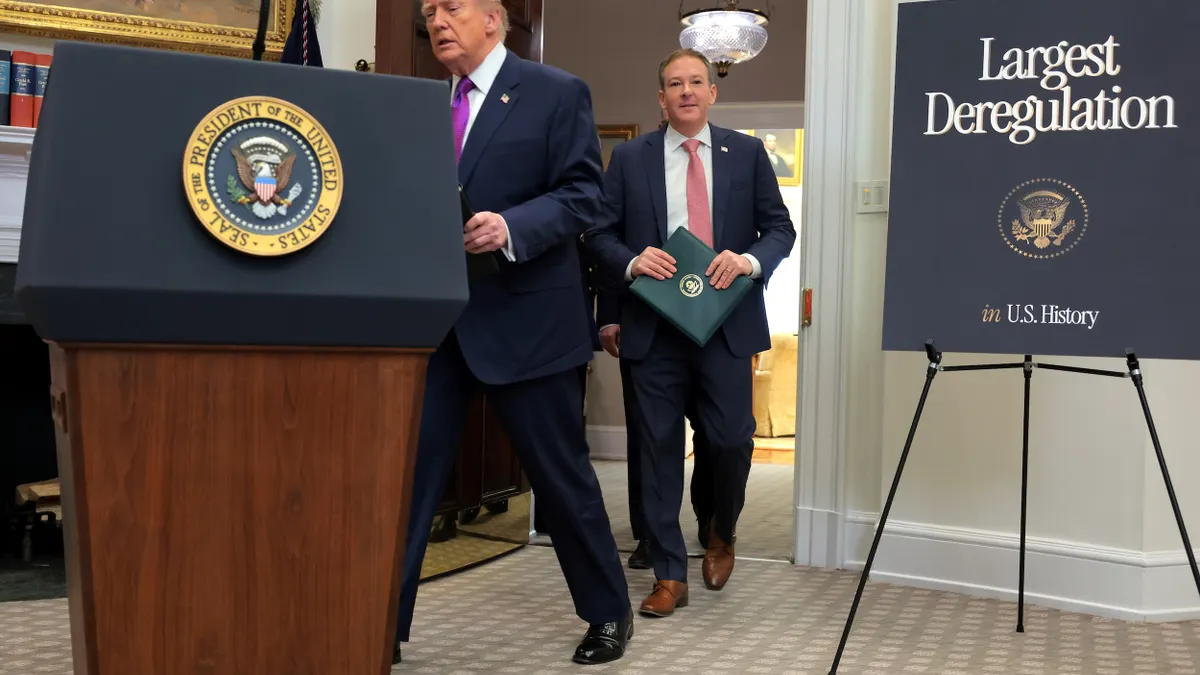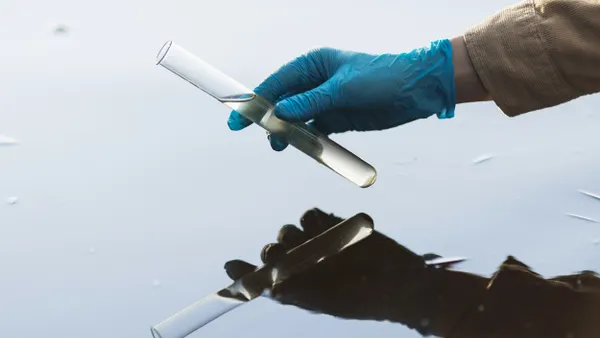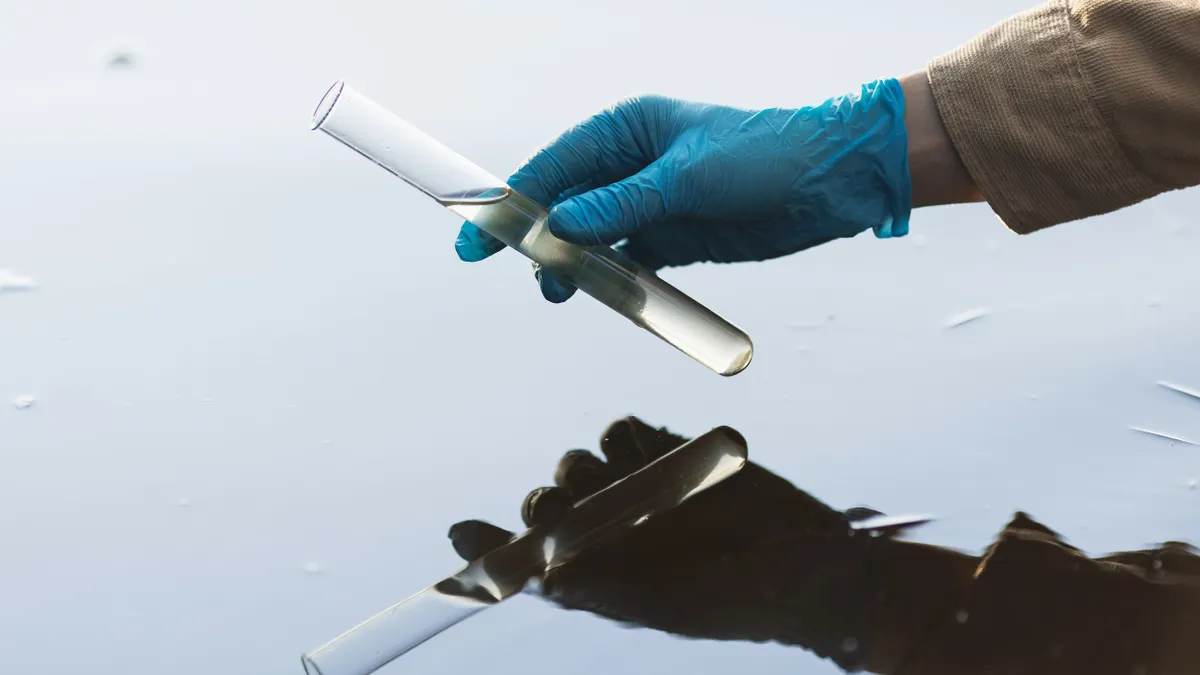
The Trump administration is moving to track microplastics in drinking water, but the science needed to measure their risk has not caught up, according to an environmental health expert. That could mean municipal water systems will be asked to monitor contaminants that current tools can’t reliably detect or interpret.
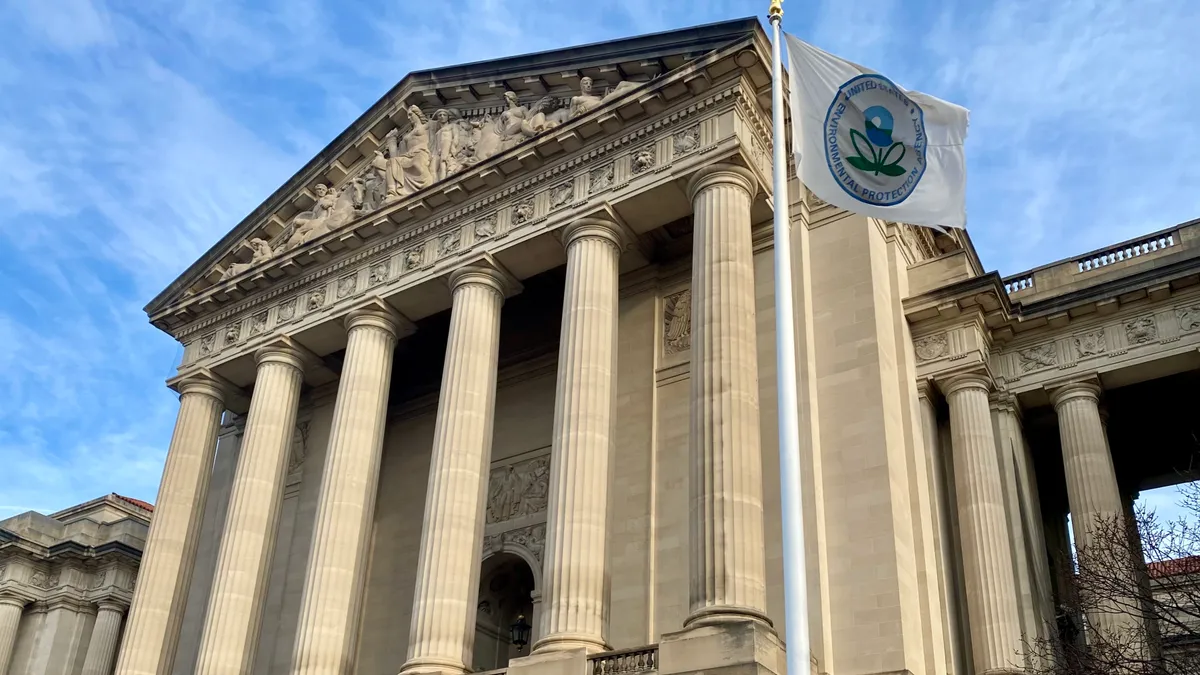
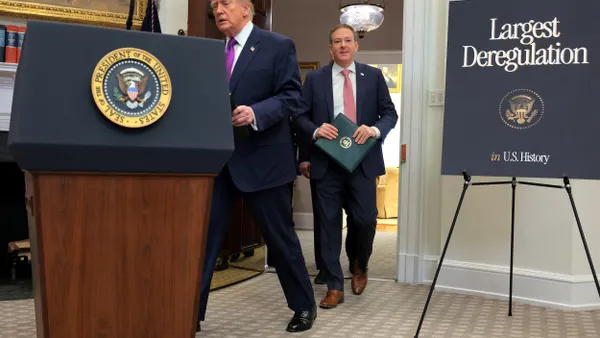
Last week, U.S. Secretary of Health and Human Services Robert Kennedy and Environmental Protection Agency Administrator Lee Zeldin proposed adding microplastics, pharmaceuticals and other contaminants to the EPA’s sixth Contaminant Candidate List under the Safe Water Drinking Act. They are accepting comments on the proposal through June 5.
“By placing microplastics and pharmaceuticals on the Contaminant Candidate List for the first time ever, EPA is sending a clear message: we will follow the science, we will pursue answers, and we will hold ourselves to the highest standards to protect the health of every American family,” Zeldin said in a statement.
The American Water Works Association released a statement saying the decision “reflects growing public concern about substances that are ubiquitous in the environment.” The AWWA said it looks forward to collaborating with its members, the research community and the EPA “on the best path forward to assure safe drinking water and protect public health.”
Earthjustice was more critical, calling the announcement “a PR stunt.” In a statement, Earthjustice Director of Drinking Water Advocacy Suzanne Novak said the Trump administration has approved pesticides that contain PFAS and eliminated the Office of Research and Development, undercutting its capacity to research and regulate water contaminants.
Costly analysis, questionable data
For municipal water systems, the practical implications are complicated. Rolf Halden, an engineering professor and director of the Biodesign Center for Environmental Health Engineering at Arizona State University, said in an email that pharmaceuticals and microplastics present very different challenges.
Pharmaceuticals are relatively well understood, Halden said. Their chemical properties have been extensively researched, their biological effects are documented and existing analytical methods are robust. But microplastics are a different matter, he said.
The core problem isn’t just what microplastics are made of but their physical characteristics, Halden said. He compares them to asbestos in that their particle size, surface area, physical shape and rough edges are potentially more dangerous than their chemistry. “A common misconception is that plastics are safe,” he said. “But we have studied only the chemical risks of plastic polymers; to what degree plastic debris poses physical risks has not been studied widely and is largely unknown.”

Current analytical methods struggle to detect the smallest, potentially most dangerous particles, Halden said. Techniques like pyro-GC-MS have made plastic polymer analysis more reproducible and affordable, but they tend to capture larger particles that may pose less health risks than nanoscale particles, which can evade detection entirely.
“When a non-detect value is produced with methods having high-particle size detection limits, significant health risks may still lurk from nanosized particles that go undetected,” Halden said. “Utilities may be asked to produce data that are unfit to inform on actual human health risks.”
For smaller utilities, in particular, meeting monitoring requirements could prove cost-prohibitive, and collecting data with inadequate methods risks producing results that are “uninformative and potentially misleading,” he said.
While Halden said he welcomes regulatory attention to microplastics, he questions whether drinking water is the right source to focus on. Research suggests that most human exposure to microplastics comes not from the tap but from contaminated food and food packaging, indoor and outdoor air, and synthetic clothing.
That context will affect how cities allocate resources. Halden recommends utilities push for monitoring methods that can meaningfully capture micro- and nanoplastics across different size ranges rather than attempting to comply with requirements using tools that weren’t designed for the job. The science of micro- and nanoplastic detection, he said, hasn’t yet caught up to meet the intent of public health protection from new regulations.