Dive Brief:
- The Israel-Hamas war has had a profound effect on U.S. cities and their residents, panelists on a Strong Cities Network webinar said last week. Local leaders have been forced to address large-scale demonstrations, a surge in hate speech and reports of harassment and violence directed toward Jewish and Muslim residents.
-
City councils have been inundated with requests for resolutions related to the conflict, from condemning the violence to expressing solidarity with the affected communities and calling for a ceasefire in Gaza. In the past three years, local governments in 32 states have adopted 183 ceasefire resolutions, according to a policy brief from the group.
-
City halls should create a standing protocol for addressing global crises, identifying affected groups, addressing security needs and planning for peaceful protests, said Brett Manzer, a postdoctoral researcher in political science at the University of Montreal, at the event. “The goal is institutional readiness, not a single script for every crisis,” she said. “Taking a stance in terms of adopting a resolution is optional. Protecting local residents is not.”
Dive Insight:
Antisemitic and Islamophobic rhetoric on social media ballooned after the Oct. 7, 2023, Hamas-led attack on Israel and Israel’s military offensive and blockade of the Gaza Strip that followed. Antisemitic incidents in the U.S. increased more than 200% in the year after the attack, according to the Anti-Defamation League. Anti-Muslim incidents increased by 178% in the three months after the Oct. 7 attacks, the Council on American-Islamic Relations reported.
These issues persist amid continuing violence in the region and the U.S. and Israel's war with Iran. Attacks against Muslims and Muslim institutions increased 11-fold in March, after the start of the Iran war, compared with all previous months, according to Sameer Hossain, managing director of the Muslim Public Affairs Council, in a video shared by American Community Media.
The conflict in Gaza has put Jews and Muslims around the world on guard, Milo Comerford, senior director of policy and research at the Institute for Strategic Dialogue UK, said at the Strong Cities event. Social media comments after the Oct. 7 attack catalyzed long-held prejudices, fueling hate speech and violence, he said.
An ISD analysis found that over a third of Islamic State-linked attacks and disrupted plots in 2024 and 2025 targeted Jewish or Israeli communities and institutions outside the Middle East and Africa, Comerford said.
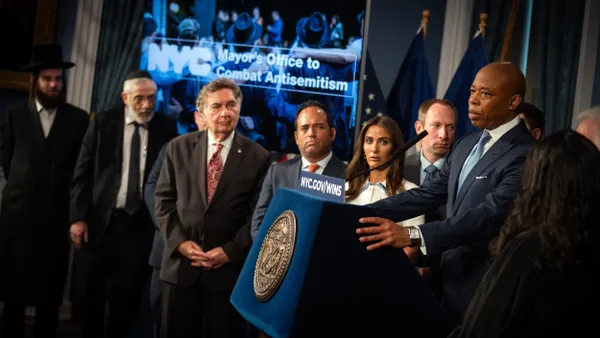
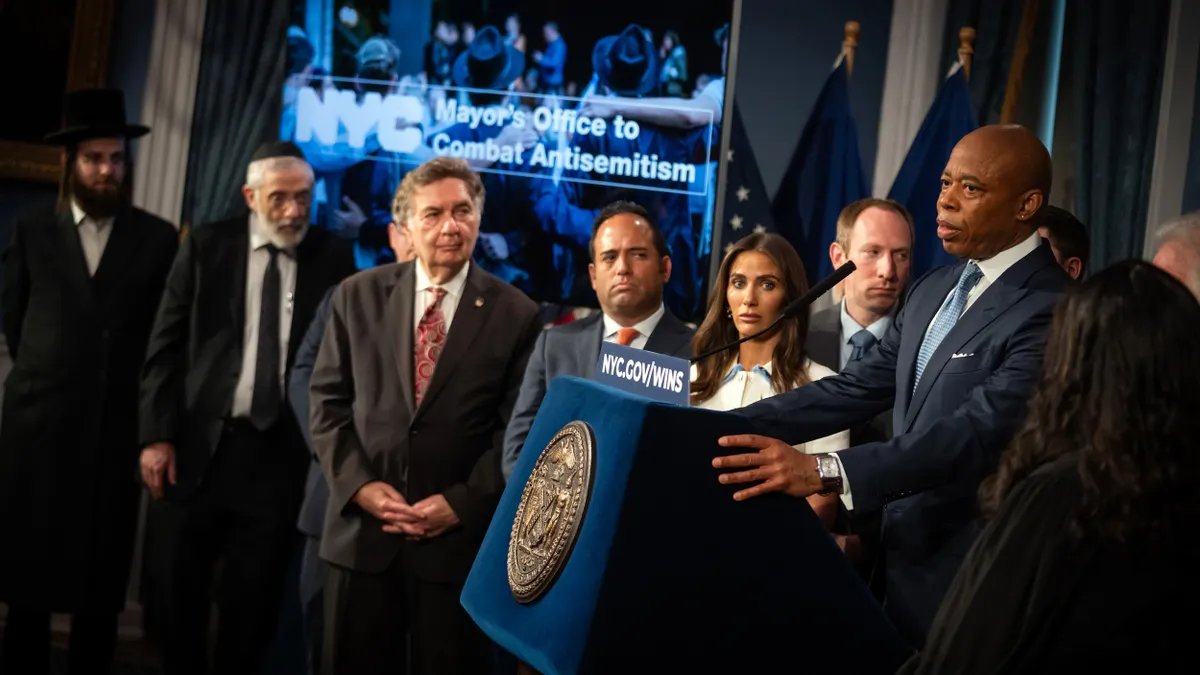
In New York City, home to the largest Jewish population outside Israel, more than 50% of hate crimes confirmed by the New York Police Department have targeted Jewish communities, said Phylisa Wisdom, executive director of the Mayor’s Office to Combat Antisemitism, also speaking at the Strong Cities event.
“They’re feeling increased fear, and they’re seeing and noticing increased incidents, and that’s changing the way that they move through the city,” Wisdom said.
To prioritize safety and reduce antisemitism, the office — the first of its kind in a major U.S. city — met with more than 100 Jewish residents to develop interventions. Mayor Zohran Mamdani announced last month that $7.4 million of the $26 million he earmarked for the Office for the Prevention of Hate Crimes will go, in part, toward strengthening security at synagogues and other houses of worship.
The speakers did not discuss city responses to increased threats and violence against Muslim residents. In one incident in Plainfield Township, Illinois, Joseph Czuba fatally stabbed 6-year-old Wadea Al-Fayoume and wounded the boy’s mother, who said that Czuba, their landlord, was angry about the Oct. 7 attack. U.S. Sen. Richard Durbin, D-Ill., later introduced the Wadee Resolution to honor the victim and condemn anti-Muslim hate.
In November 2023, Burlington, Vermont, resident James Eaton shot three Palestinian-American college students, one of whom is now paralyzed from the chest down. A month later, a cease-fire resolution that also expressed support for the victims of the shooting was the subject of a contentious Burlington City Council meeting. Neither that resolution nor a replacement that only expressed support for the shooting victims passed.
The New York City Council considered but did not vote on a cease-fire resolution on the Israel-Hamas war, though at least 20 council members voiced support for a cease-fire in other ways. Local governments have no formal role in making U.S. foreign policy, according to a Strong Cities Network policy brief written by Manzer, but the “symbolic actions are among the tools available to cities seeking to communicate values, represent constituents or seek to influence higher levels of government.”
Developing a protocol helps “cities protect residents and social cohesion when global events like the Israel-Gaza conflict become local issues” such as hate crimes and protests, Manzer said during the webinar. Cities should view these resolutions through “a local social cohesion lens,” she said. Specifically, cities must consider what taking the action could achieve, whom it could affect and whether another strategy, such as an anti-hate statement, might be more effective.
“Today’s response becomes tomorrow’s precedent,” Manzer said.