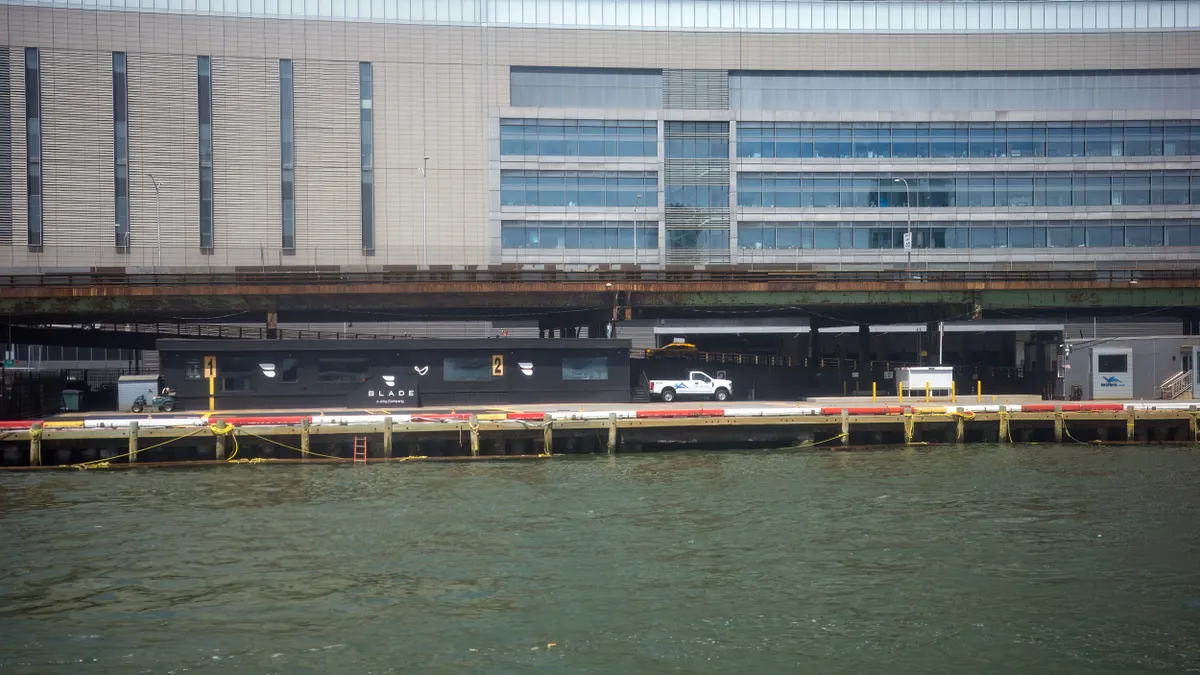
The New York City Economic Development Corporation is preparing two existing heliports in Manhattan for air taxi operations, which could begin as soon as this year.
The NYCEDC requires operators of city-owned heliports at East 34th Street, along the East River, and the Downtown Skyport near Wall Street in lower Manhattan, to “complete the build-out of electrification infrastructure requirements” within one year of Federal Aviation Administration certification that will enable commercial air taxi operations, according to an NYCEDC spokesperson.
Getting the vertiports ready will involve working with air taxi operators, local utility company Con Edison and existing helicopter operations, VertiPorts by Atlantic CEO Kevin Cox told Smart Cities Dive. But that won’t hold up initial flight operations. “We do anticipate [eVTOL] aircraft being operated in a few sites by the end of the year,” he said. The company, which manages the East 34th Street heliport, also works with locations in California and Florida, Cox said.
Vertiports are specialized areas for vertical takeoff and landing aircraft, according to the FAA.
A full build-out would include assessing what each facility can accommodate in terms of charging infrastructure, bringing in the necessary electrical power and providing two different charging systems for operators to use, Cox explained.
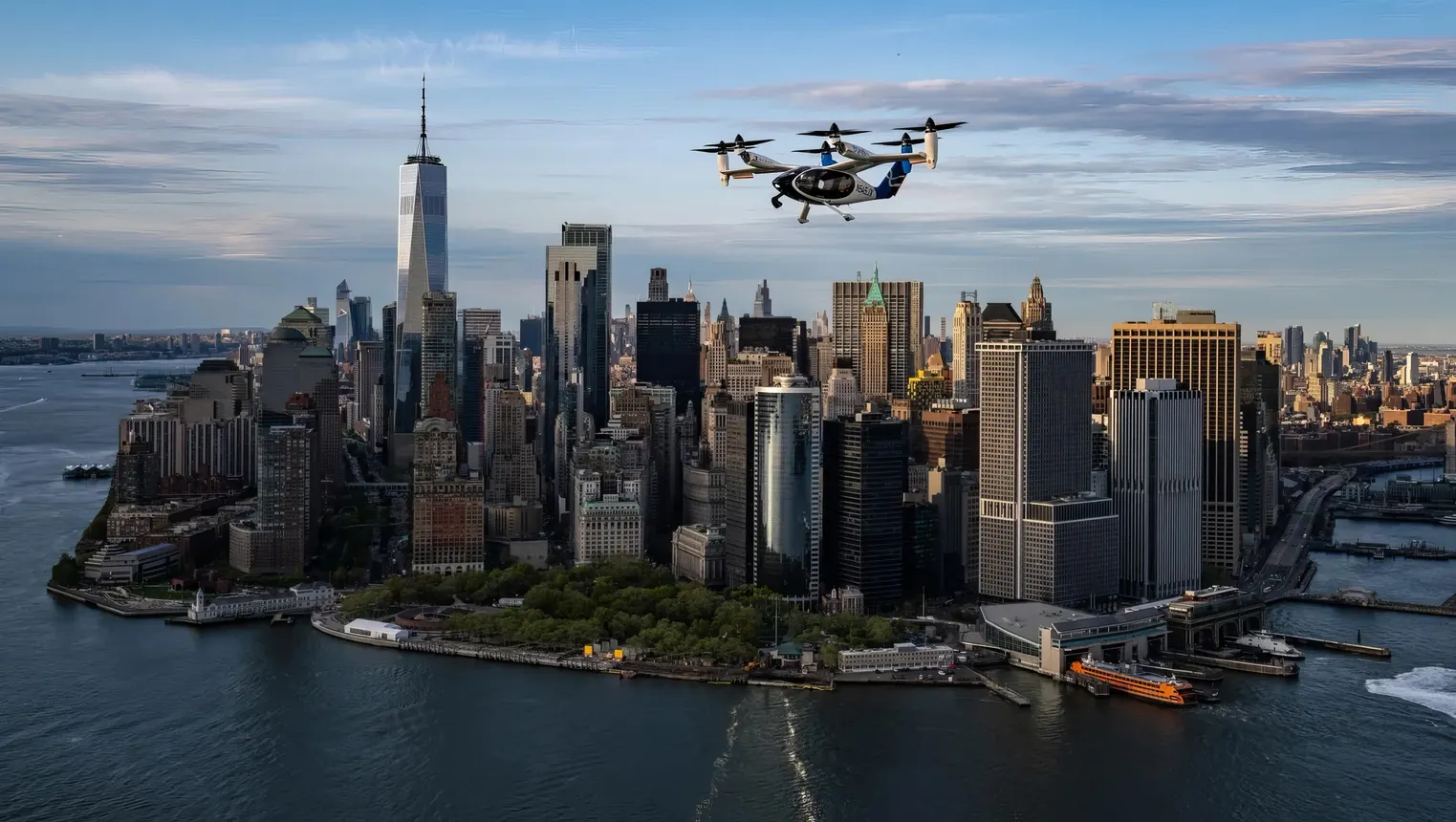
Archer Aviation and Joby Aviation intend to begin operations this year under the FAA’s eVTOL Integration Pilot Program. The program selected eight locations in six states, including New York and New Jersey. Other cities, in the U.S. and internationally, want to learn more about air taxi programs, Cox said.
“There is a growing understanding of what and truly how transformational these aircraft can be to communities,” he said. He sees the FAA’s program as a “tipping point,” and those cities that are getting involved now “will be the first beneficiaries of these aircraft,” he said.
Cox said the inquiries they receive fall into two categories: those seeking to learn more about the air taxi industry and what the community needs to do to attract operators. Cities with high traffic congestion levels are showing interest, he said. Other outlying cities with fewer transportation connections also want to know how air taxis can help them, Cox said.
Joby Aviation demonstrated its air taxis in New York City in April, flying from John F. Kennedy International Airport to the Downtown Skyport, the West 30th Street and East 34th Street heliports. Cox called it “a wonderful demonstration of how quiet, efficient, quick and clean from an emission standpoint” the aircraft are. Joby Aviation acquired Blade Air Mobility's passenger business last year, including the company’s network of terminals, such as those in Manhattan.
The Downtown Skyport, managed by a company of the same name and owned by the state of New York, is developing and operating the infrastructure required for electric air taxi flights. The West 30th Street heliport, managed by Air Pegasus, operates emergency, medical and passenger helicopters, but is constrained by construction of rail tunnels leading into Penn Station and, for now, has moved its landing pads to a barge.
While airports may be among the first destinations for air taxi operators, flights within urban areas are on the horizon, according to Cox. That would likely mean building new vertiports, which would require community engagement. “We're going to go where the community wants us,” he said.
Cox is optimistic about the future of air taxis. “I believe [that] five years from now there will be a robust market in the Northeast, the same thing in Florida, Northern California, Southern California [and] Texas,” he said.