


Dive Brief:
- Illinois Gov. JB Pritzker introduced the Building Up Illinois Developments plan, a state-level push to increase housing development by targeting local restrictions and establishing statewide zoning standards that legalize “missing middle” housing types in his State of the State address Wednesday.
- The initiative also injects $250 million in funding opportunities for missing middle, mixed-income and affordable housing projects through the Department of Commerce and Economic Opportunity and Illinois Housing Development Authority.
- The plan aims to make it “easier, faster and more cost-effective to build homes in Illinois,” Pritzker said. “City by city, town by town, neighborhood by neighborhood, block by block – a little more housing in each area can significantly advance our housing stock.”
Dive Insight:
Illinois, like many states, has a housing problem. It needs to build 227,000 units by 2030 to keep up with demand, according to research from the Illinois Economic Policy Institute and the Project for Middle Class Renewal at the University of Illinois at Urbana-Champaign.
Local government regulations, restrictive zoning and building codes hamper that goal, Pritzker said.
“Often, the problem is a failure to modernize and keep up with the changing times we live in,” he said. “It all adds up to bureaucratic red tape that unnecessarily increases costs, delays construction and frequently kills projects altogether.”
As cities and counties across the country face housing shortfalls, many are turning to building and zoning code reform as one solution.
Dallas last year did away with minimum parking space requirements for certain housing developments, a measure Pritzker also proposed under the BUILD plan.
“Unused parking spots add millions of dollars in costs and severely limit the number of new units that can be built affordably,” he said. “Spaces for cars are being prioritized over spaces for people.”
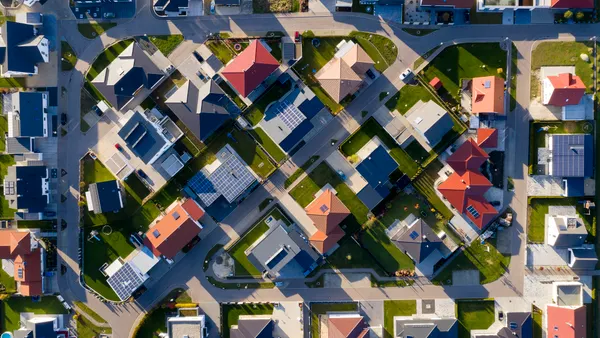
“Missing middle” housing types — which include duplexes, triplexes and small cottages — can be difficult to build due to zoning and code restrictions, but housing advocates see them as another way to address the affordability crisis.
Pritzker’s plan also seeks to legalize accessory dwelling units — sometimes referred to as “granny flats” or “coach houses” — on existing properties.
“The problem is clear – rent is too high, and home ownership is too far out of reach,” Pritzker said. “The cause is clear, too. We are not building enough homes fast enough.”