

Dive Brief:
- The Department of Veterans Affairs and the Department of Justice on Wednesday announced a memorandum of understanding that allows the DOJ to grant VA officials the ability to initiate the appointment of a legal guardian or conservator for “vulnerable” veterans, including those experiencing or at risk of homelessness.
- A legal guardian or conservator in health and recovery situations can be “a lifeline” for veterans who lack family or legal representation, according to the VA.
- The National Homelessness Law Center pushed back on the initiative, calling it a “plan to strip homeless veterans of their rights and autonomy.”
Dive Insight:
Veterans make up 5% of the adult U.S. homeless population, according to 2024 point-in-time counts. Since 2009, the number of veterans experiencing homelessness has fallen 50%, although the overall population of veterans in the U.S. has also declined since then, from an estimated 21.8 million in 2009 to 15.7 million in 2024, according to the U.S. Census Bureau.
NHLC has attributed continued declines in veteran homelessness to housing and supportive services. With the new VA and DOJ initiative, the Trump administration “is using homeless veterans as their latest political pawn to dehumanize all homeless people while ignoring the real cause of homelessness: the fact that the rent is too high for a growing number of people,” NHLC said in an issued statement.
VA Secretary Doug Collins said the new effort demonstrates a commitment to “ensuring that every Veteran receives timely, appropriate care, even in complex cases.”
In addressing homelessness, the Trump administration has shifted away from longstanding housing-first policies, instead treating it as a criminal justice issue and prioritizing treatment programs for those experiencing homelessness.
The VA said in November that it helped to house nearly 52,000 homeless veterans permanently in fiscal 2025.
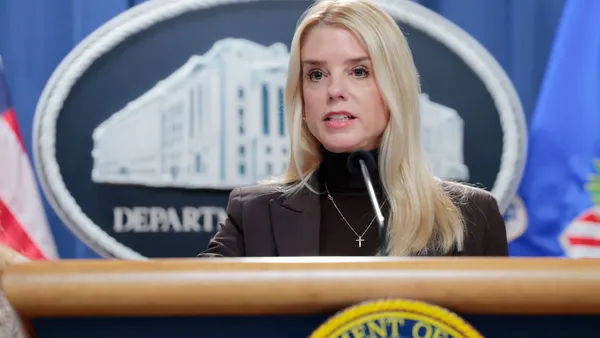
“The Department of Justice is proud to partner with the Department of Veterans Affairs to support our nation’s brave Veterans by ensuring that they have the best legal resources available when it comes to making medical decisions and receiving timely care,” Attorney General Pam Bondi said in a statement on Wednesday. “We owe our Veterans a debt we can never fully repay — but we can give them the support they deserve.”