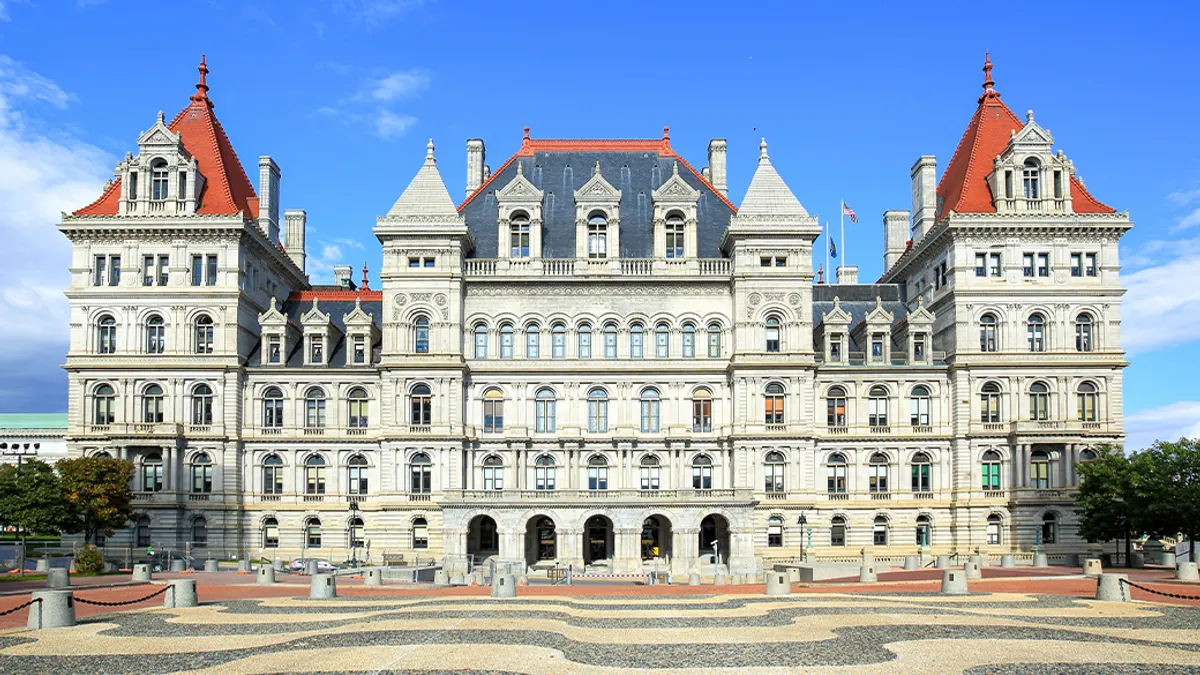

When cities think about resilience, they often focus on roads, bridges, transit systems, and utilities. Yet some of the most important assets in America are the historic buildings and structures that define communities, protect artifacts, and anchor daily civic life.
State capitol buildings, courthouses, and cultural landmarks are long-term public investments, and replacing them is rarely practical. Often, the smarter move is to extend the life and performance of these assets while protecting what makes them distinct.
That is becoming more complex due to aging materials, water intrusion, and decades of deferred maintenance. New pressures are applied to structures that weren’t originally designed for modern environmental demands, or whose prior solutions have reached their service life. The result is both a preservation challenge and an infrastructure challenge.
Increasingly, that work starts with the building envelope— roofs, walls, foundations, balconies, and other exterior surfaces often require unique solutions to protect against the elements. Through solutions designed for complex restoration projects, Siplast works alongside architects, engineers, contractors, and public agencies to protect historic assets while extending their service life.
Moisture Management in Preservation Work
Water infiltration is among the most persistent threats facing historic buildings. Uncontrolled moisture is a leading cause of deterioration in older structures, contributing to erosion, corrosion, rot, and damage to materials, finishes, and structural components. Left unaddressed, moisture intrusion can turn manageable repairs into major capital projects.
Managing roof and building-enclosure moisture is therefore central to any long-term preservation strategy.
Fallingwater, Frank Lloyd Wright's iconic residence in southwestern Pennsylvania, illustrates this challenge. Constructed in 1937 directly above a waterfall, the UNESCO World Heritage Site was designed to blur the line between architecture and nature. That same relationship, however, exposed it to decades of moisture-related deterioration.
Fallingwater’s terraces, curved concrete edges, stone walls, and limited drainage created multiple paths for water to move toward windows, doors, and interior finishes. In a building where architecture and landscape are inseparable, visible waterproofing elements had to be virtually invisible.
As part of a multimillion-dollar restoration effort, the Western Pennsylvania Conservancy enlisted Architectural Preservation Studio, DPC, which specified Siplast products to solve the complex roofing and waterproofing challenges. The team integrated advanced waterproofing membranes and flashing systems to resolve long-standing water infiltration issues while meeting the rigorous standards of preserving the iconic structure.
Fallingwater highlights a common challenge faced by preservation teams: Historic structures require contemporary solutions to meet highly unique design constraints and preservation criteria.
Keeping Essential Services Running During Critical Upgrades
Historic preservation is not limited to internationally recognized landmarks. Local governments face similar challenges in aging civic buildings that continue to serve the public daily.
In Charlotte, North Carolina, Mecklenburg County's District Attorney's Office required a roof replacement after leaks emerged across multiple roof sections. Built in 1928 as the Mecklenburg County Courthouse, the building remains an active civic facility, so construction could not disrupt services.
The existing roof structure included multiple deck types including lightweight insulating concrete, metal, and structural concrete, each varying in age and condition. Working with REI Engineers and Interstate Roofing, Siplast helped implement a hybrid roofing solution that could accommodate the patchwork of substrate types. The use of low-VOC roofing and waterproofing materials helped minimize disruption for occupants during construction.
For municipal facility managers, the project underscores a common challenge. Infrastructure upgrades often must occur while buildings remain fully operational. Success depends not only on technical performance, but also on minimizing impacts to employees, residents, and public services. Maintaining the visual character of a civic building, reducing disruption, and extending service life are all forms of public stewardship.
Historic Preservation as Infrastructure Strategy
For cities and public agencies, the lessons from these projects are clear. Preserving the built environment is an infrastructure decision, not just a cultural one. Historic buildings represent long-term public investments, and the cost of protecting them proactively is substantially lower than the cost of replacing what is lost due to deferred maintenance. Often, the most sustainable building is the one that's already standing.
For city leaders and facility teams, that means treating the building envelope as critical infrastructure. Prioritizing envelope assessments, integrating preservation goals into capital planning, and engaging technical partners early can reduce risk before failures appear inside a building.
As communities continue investing in the longevity of their historic assets, the future of preservation may depend less on choosing between old and new, and more on finding partners capable of making both work together. The smartest infrastructure investment may not always be the newest building. Sometimes, it is the system that allows an irreplaceable one to endure.
For more information about Siplast’s historic preservation and restoration solutions, please visit this page.