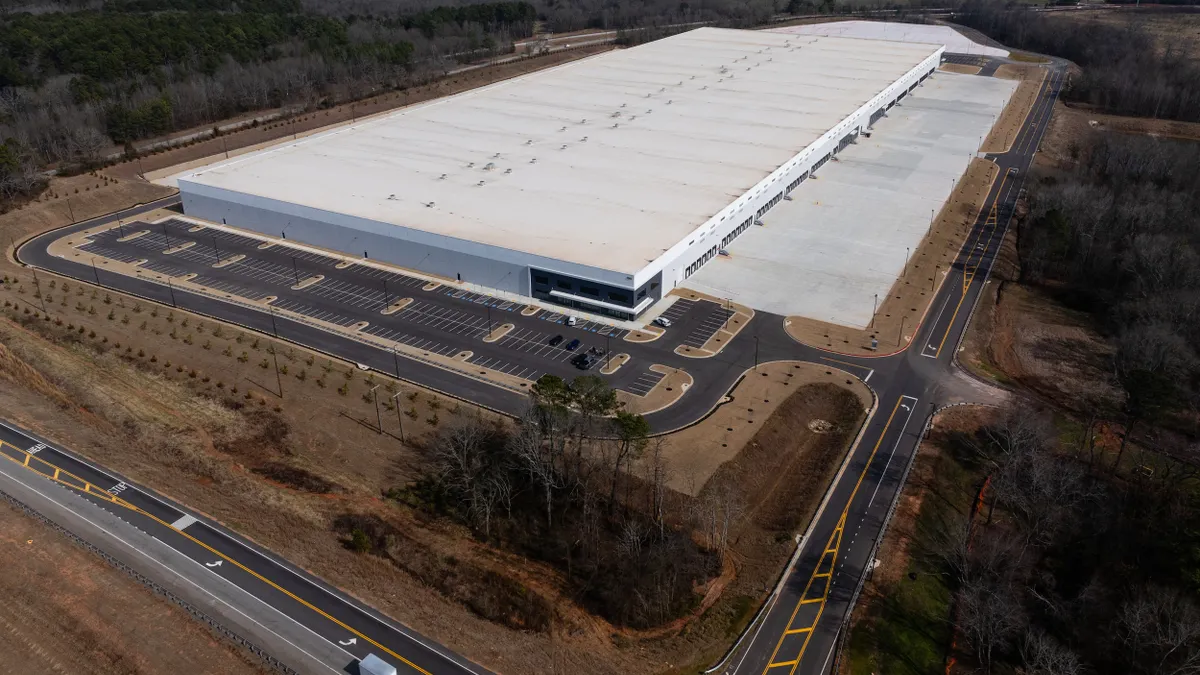
Last week in Salt Lake City, word got out that U.S. Immigration and Customs Enforcement had bought an 833,000-square-foot warehouse on 25 acres near the airport and planned to build a detention center that could hold 7,500 detainees.
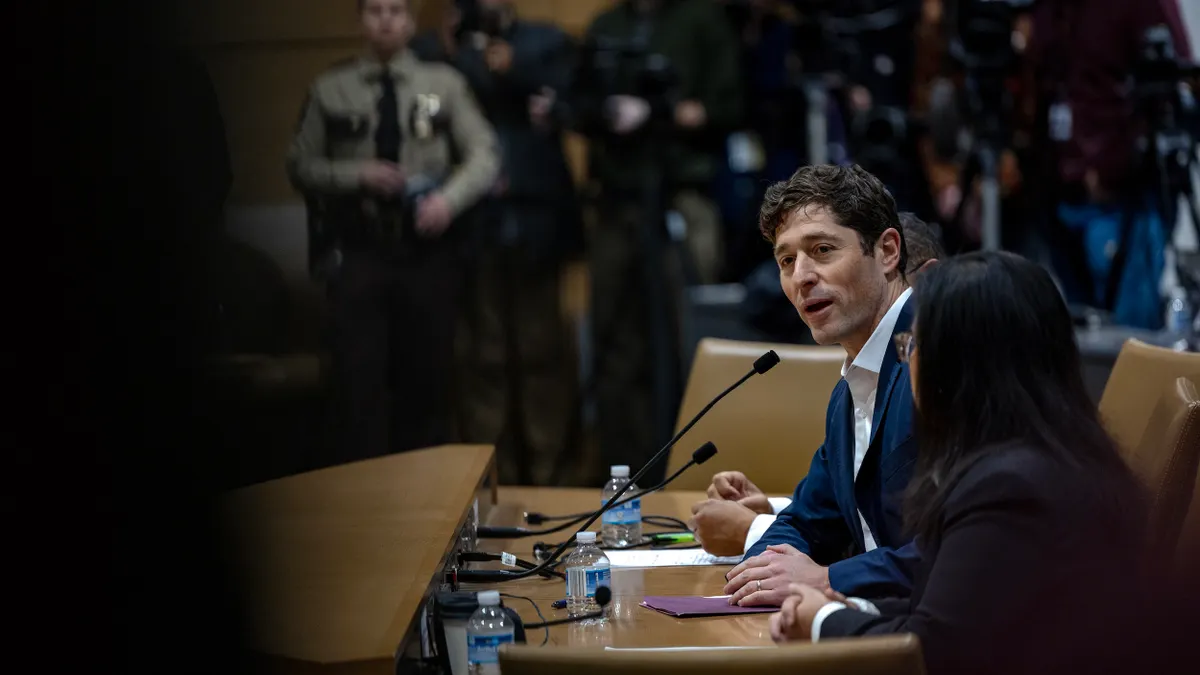
“Let me be clear,” said Salt Lake City Mayor Erin Mendenhall in a statement. “A detention center does not belong in our capital city — full stop.”
Mendenhall vowed to use every tool at the city’s disposal — including “a thorough and swift evaluation of utility infrastructure” — to block the facility. “But to put it plainly,” she said, “the use of a warehouse facility for this purpose is also wholly outside the scope of our available resources and zoning allowances.”
Salt Lake City is one of dozens of cities across the country looking for ways to keep ICE detention centers out of their communities. After receiving $45 billion in funding from President Donald Trump’s “Big Beautiful Bill” in July, ICE began acquiring land and empty warehouses to build a hub-and-spoke deportation system that acting Director Todd Lyons described as similar to Amazon Prime’s distribution network, “but with human beings.” The Trump administration plans to acquire 24 warehouses that will hold people waiting to be deported — some intended to hold nearly 10,000 people.
The Supremacy Clause, which states that federal authority takes precedence over state laws, prevents local jurisdictions from blocking federal detention centers directly. So they’re using a variety of tactics — from zoning and land-use restrictions to lawsuits and moratoriums — in attempts to keep the facilities out of their communities, including the following.
1. Moratoriums
Amid press reports that Kansas City, Missouri, was being considered as a potential site for a detention center for up to 10,000 people, the city in January passed a five-year moratorium on permits, licensing and zoning of all non-municipal detention facilities. Last week, the Seattle City Council followed suit, unanimously passing emergency legislation establishing a one-year moratorium on permit applications for development, expansion or conversion of existing structures into detention centers. Tukwila, SeaTac and King County, Washington, have also placed moratoriums on new or expanded detention centers, establishing a region-wide resistance.
2. Zoning and land-use restrictions
Jackson County, Missouri, on March 2 passed an ordinance prohibiting for five years all permit and zoning approvals for detention centers not owned by the county or municipal government. In South Fulton, Georgia, the City Council passed a resolution in February updating city zoning codes to ban ICE from building detention centers. South Fulton is also directing its land-use authority not to give tax abatements to developers who want to build detention centers.
In response to ICE’s purchase of land and a facility to expand detention operations in San Antonio, the City Council on March 5 directed city staff to examine potential changes to its primary land-use planning ordinance that could require City Council approval before detention centers could be developed.
3. Infrastructure capacity objections
Last month, ICE revealed plans to convert a warehouse into a detention center that could hold up to 8,500 detainees in Byhalia, Mississippi, which has a population of about 1,339. Sen. Roger Wicker, R-Miss., wrote to then-Department of Homeland Security Secretary Kristi Noem on Feb. 4 to convey “serious feasibility concerns.” Wicker said the center would place “significant strain” on Byhalia’s transportation, sewer, energy, medical and emergency resources.
“Many of my constituents have voiced concerns regarding the public safety, medical capacity, and economic impacts this center would impose on their communities,” Wicker wrote. “Proceeding with this acquisition without adequately addressing these issues disregards community input.”
4. Health, safety and labor inspection authority
In California, a state senator introduced legislation designed to strengthen the state’s authority to inspect detention facilities, impose fines for violations and suspend or revoke permits when they fail to meet health, safety and labor standards. “We are hearing chilling first-hand accounts of the deplorable and inhumane conditions inside these private detention centers that are making millions in profits through unacceptable human suffering,” State Sen. Sasha Renée Pérez, who introduced the bill, said in a statement. “My legislation will shine a light on these conditions by strengthening the state’s ability to conduct inspections, impose fines, and shut down the worst offenders.”
San Diego County sued DHS last week, alleging the Trump administration illegally blocked a public health inspection at the Otay Mesa Detention Center. The county is seeking a court order to allow county officials to conduct a full inspection.
5. State-level litigation
Last week, the U.S. District Court for the District of Maryland issued a temporary restraining order pausing construction of a detention center near Williamsport, Maryland, in response to Maryland Attorney General Anthony Brown’s lawsuit challenging ICE’s planned warehouse conversion.
“Today a federal court handed Maryland a critical victory, stopping construction that threatened our waterways, endangered species, and communities before irreversible harm could be done,” Brown said in a statement. “We will not let DHS and ICE rush through the proper legal process in their haste to ramp up deportations. We will keep fighting to make sure the law is followed and Marylanders are protected.”