


Dive Brief:
- The Department of Justice granted local governments a one-year extension to comply with website and mobile app accessibility standards required under the Americans with Disabilities Act.
- Localities with populations of 50,000 and above now have until April 26, 2027, to meet the new standards, while smaller local governments must comply by April 26, 2028.
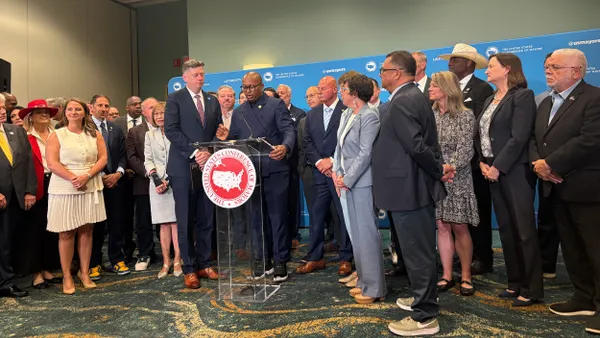
- National League of Cities CEO and Executive Director Clarence Anthony called the extension “a sound decision” that benefits localities. “The cost and staff time necessary to ensure that online content is fully compliant with the rule’s accessibility standards is significant, particularly for smaller communities,” Anthony said in a news release.
Dive Insight:
The DOJ adopted website accessibility rules for states and local governments in 2024 to protect individuals from disability-based discrimination in local government services, programs and activities, according to the DOJ.
Some local governments have been working toward digital accessibility for years and are well-positioned to meet the deadline, Brenden Elwood, a North Bend, Washington, councilmember and CivicPlus vice president of market research, told Smart Cities Dive in an email.
Smaller local governments and special districts are more concerned about meeting the standard on time, however, because often “they lack budget, specialized staff, or sometimes the baseline awareness that these deadlines were coming,” Elwood said.
With local government budgets running lean, capacity is a key pain point for implementing the changes, according to Elwood. Understanding what accessibility entails and the sheer volume of web content that must be updated are also challenges, he said.
Elwood recommended that local governments take inventory of the work and resources they have, assess the tasks ahead and be open with constituents about efforts to meet the standards. The DOJ offers a “first steps” guide for localities.
“Accessibility needs to be treated as an ongoing governance responsibility, not a one-time project tied to a deadline,” Elwood said. “Agencies that use this time to build sustainable processes and ownership will be far better positioned than those that treat it as a short-term compliance exercise.”
The deadline extension should be seen as a compliance accelerator rather than “a pause button,” Elwood added.
“The extra year is more planning room. It's a chance to do the work well rather than cut corners,” he said. “But it should absolutely not be treated as permission to stop or slow down.”