

Dive Brief:
- Following recent warnings from experts that AI could pose an existential threat to humanity, governors in multiple states are ramping up oversight and safety measures.
- California Gov. Gavin Newsom and Illinois Gov. JB Pritzker both signed executive orders establishing panels to assess AI risks and develop guardrails, while New York Gov. Kathy Hochul announced incident reporting requirements for AI companies under the state’s Responsible AI Safety and Education Act.
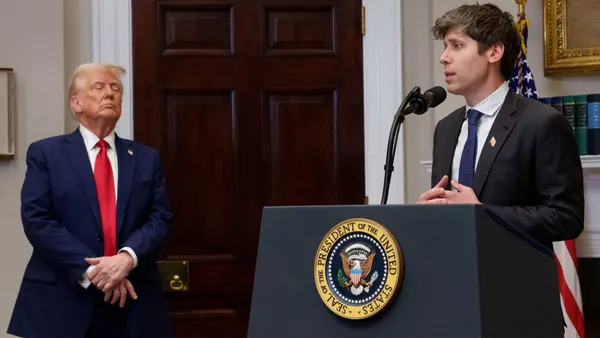
- President Donald Trump said in a Sept. 19 social media post he would form an “AI Force” with an AI czar but vowed the administration would “not in any way hinder or stifle the Growth of this incredible Industry. Rather, we will cherish it, help it, and watch over it, as it grows!”
Dive Insight:
Newsom’s Sept. 18 order calls together experts to create a guide for California to bolster its AI safety and security laws. The state is also considering requiring companies to have third parties develop safety plans and an emergency shutoff or “kill switch” for their most advanced AI models.
“We’re going to do this thoughtfully but with urgent velocity; the stakes are too high to wait or delay action,” Newsom said in a news release.
Pritzker on Sept. 22 signed an order to create the Illinois Artificial Intelligence Cabinet, which will include individuals across industries, including academia, law, ethics and governance, to assess AI risks.
“Artificial Intelligence has enormous potential to transform our everyday lives, but when experts and industry leaders sound the alarm bell, urge us to slow down, and ask for guardrails, we should listen,” Pritzker stated.
Pritzker and Newsom, both widely reported to be considering presidential runs, criticized the White House for a lack of federal AI oversight. Trump has previously called for a halt to a growing number of state regulations of the technology.
New York’s RAISE Act, first signed into law in December 2025 and later amended in March, establishes guardrails that require companies to report critical safety incidents within 72 hours and file quarterly assessments of “catastrophic risks.”