Dive Brief:
- Uber CEO Dara Khosrowshahi expects to have about 700 robotaxis on their platform by year’s end, growing to over 2,000 in 2027, he said on the company’s Q3 earnings call Wednesday.
- Uber will launch driverless vehicles in partnership with Zoox later this month in Las Vegas, followed by autonomous Motional vehicles, Khosrowshahi said in prepared remarks.
- “Our focus is shifting from partnerships and testing to driverless commercial service,” he said on the call.
Dive Insight:
Earlier this year, the Financial Times reported that Uber planned to invest more than $10 billion in robotaxis. “The real goal is to get to tens of thousand[s of] vehicles in '28 and beyond, and really scaling the ecosystem,” Khosrowshahi said on the call.
The company is partnering with automakers Lucid and Rivian to supply many of these vehicles. Last year, Uber said it planned to deploy at least 20,000 Lucid Gravity vehicles on its platform and in March said that it or its fleet partners expect to purchase up to 50,000 Rivian R2 robotaxis over the next several years.
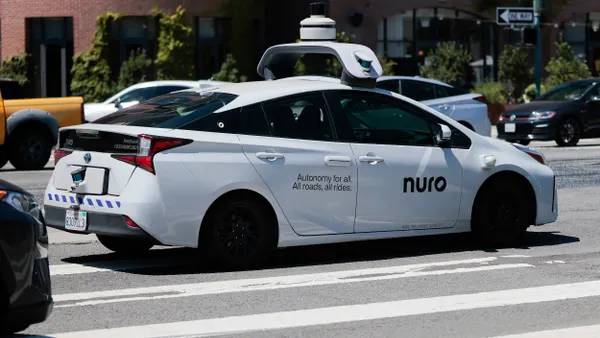
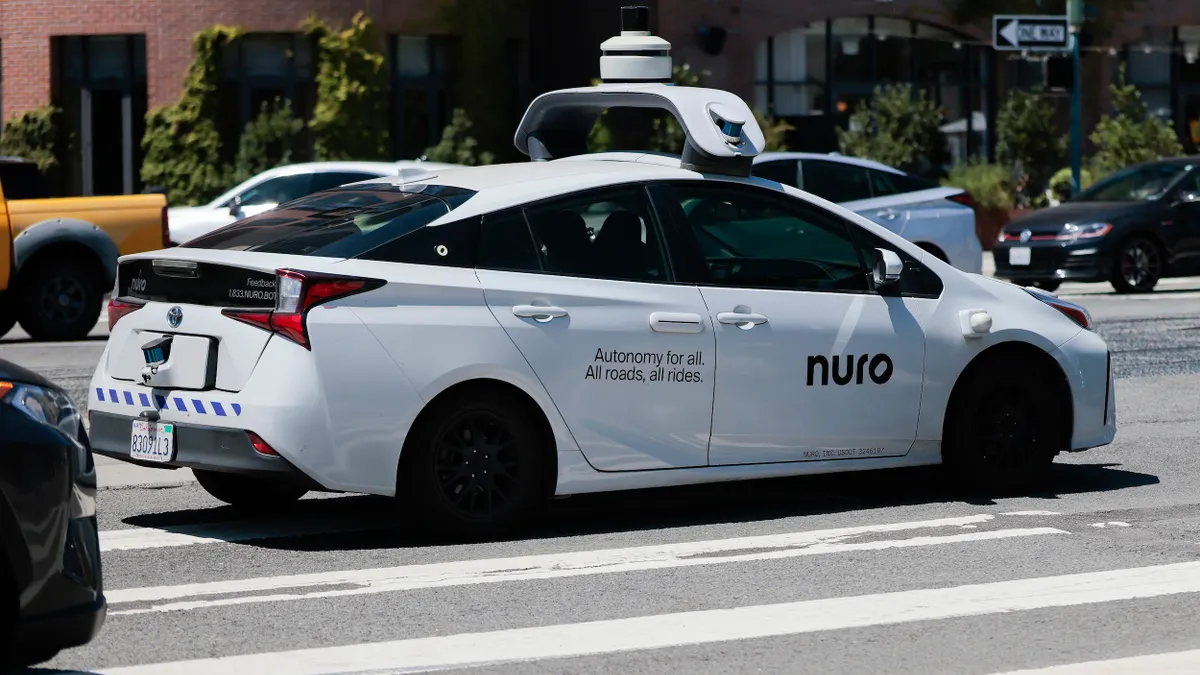
Uber expects to begin fully driverless testing with Nuro and Lucid this quarter, Khosrowshahi said. Commercial service would begin in the San Francisco Bay Area early next year, followed by Houston and other cities. “We have relationships with the cities. We have operations in those markets,” Khosrowshahi said. “We don't have to build demand. The demand is already there.”
For the year to date, Uber’s robotaxi trip growth rose seven percentage points faster than traditional rides in Atlanta, Los Angeles, Phoenix, San Francisco and Austin, Texas, where autonomous vehicles operate, he said.
Ride-hailing competitor Lyft offers robotaxis rides in Atlanta in partnership with May Mobility and in Nashville, Tennessee, with Waymo. Its Austin fleet is “fairly small,” CEO David Risher said during the company’s Thursday earnings call. They are increasing the number of robotaxis in Nashville by the end of this year, he said.