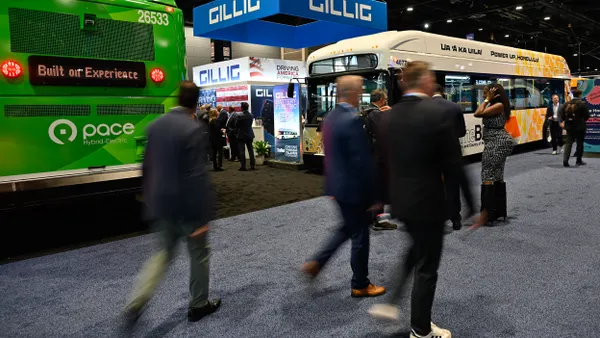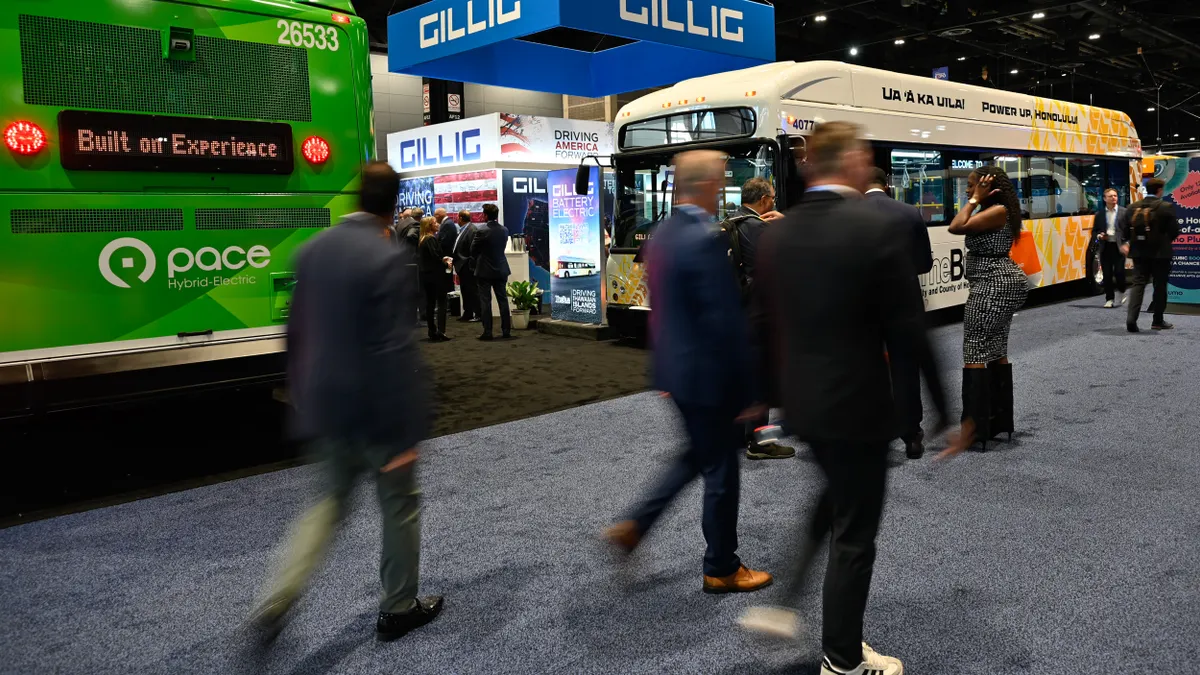
Nearly 700 exhibitors representing bus and train manufacturers, suppliers and technology companies filled the McCormick Place Convention Center in Chicago for four days during the American Public Transportation Association’s Expo program last week. The Expo is held every three years in conjunction with APTA’s TransForm conference, which drew almost 14,000 attendees this year, APTA said.
Smart Cities Dive spoke with some of the exhibitors. Here’s what they had to say about upcoming innovations in the industry.
Alstom
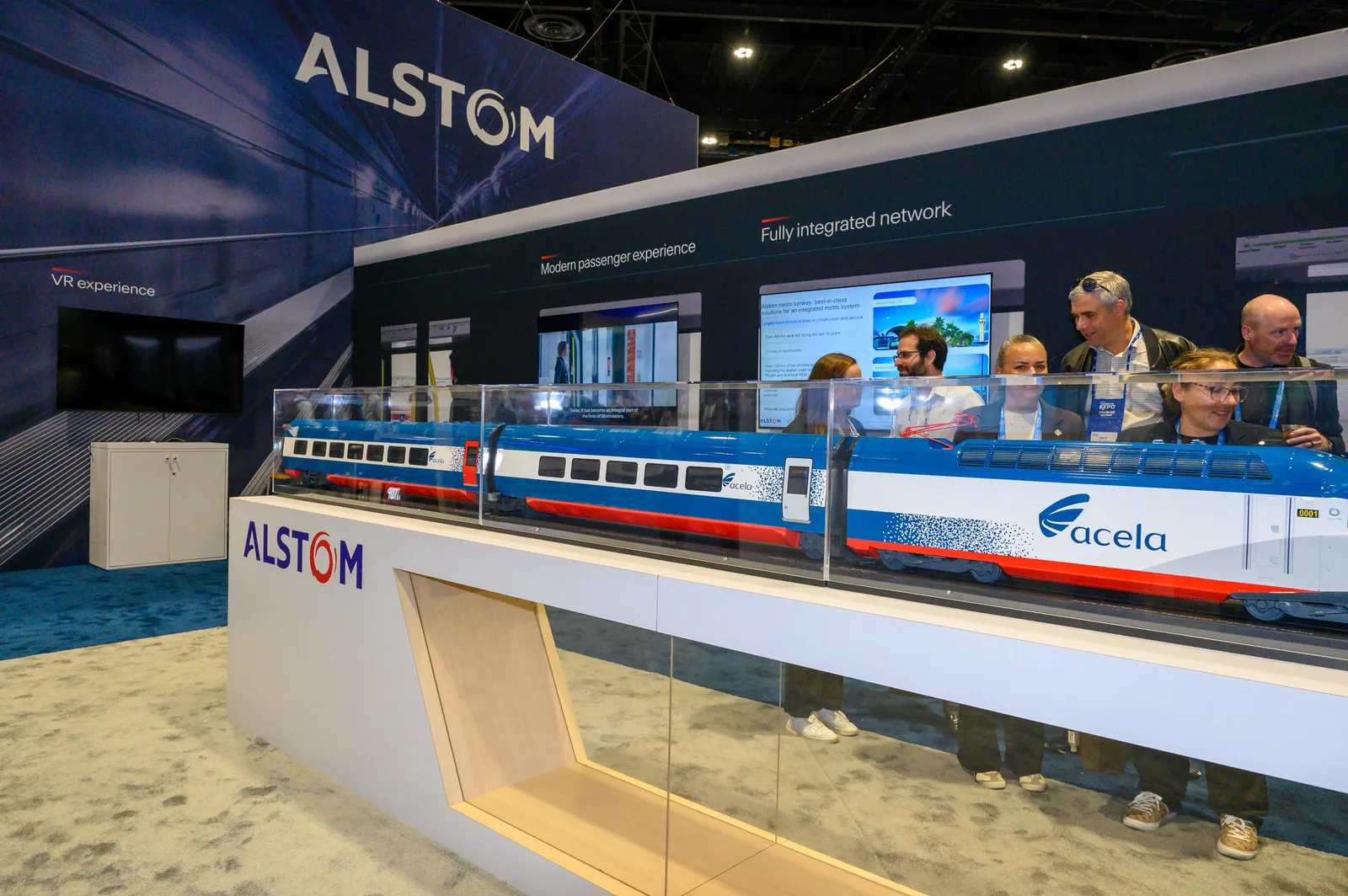
The rail car manufacturer said it is establishing an innovation hub in Pittsburgh to encourage collaboration among transit agencies, cities, universities, technology centers, startups and industry partners. It will “look for ways that we can pilot innovation that can help deliver value for our customers or help us potentially deliver projects in a way that is maybe faster and more efficient for our customers,” Dani Simons, Alstom vice president of communications and public affairs, Americas, said.
The U.S. Innovation Station joins others in Paris, Stockholm, Singapore and Montreal. Two of the recently announced projects are an AI tool to help maintenance and operations technicians trouble-shoot and resolve issues on rail vehicles with plain-language commands and a system to remotely drive a commuter train in a depot environment.
Lyt
Lyt’s AI detection systems give traffic signal priority to emergency and transit vehicles. The company’s CEO and founder, Timothy Menard, said its system brings “new intelligence” to traffic management, allowing “second-by-second” updates to predict bus arrival times. “For the transit agency, all of those seconds [saved] means more time moving, which means better fuel efficiency,” Menard said.
Optibus
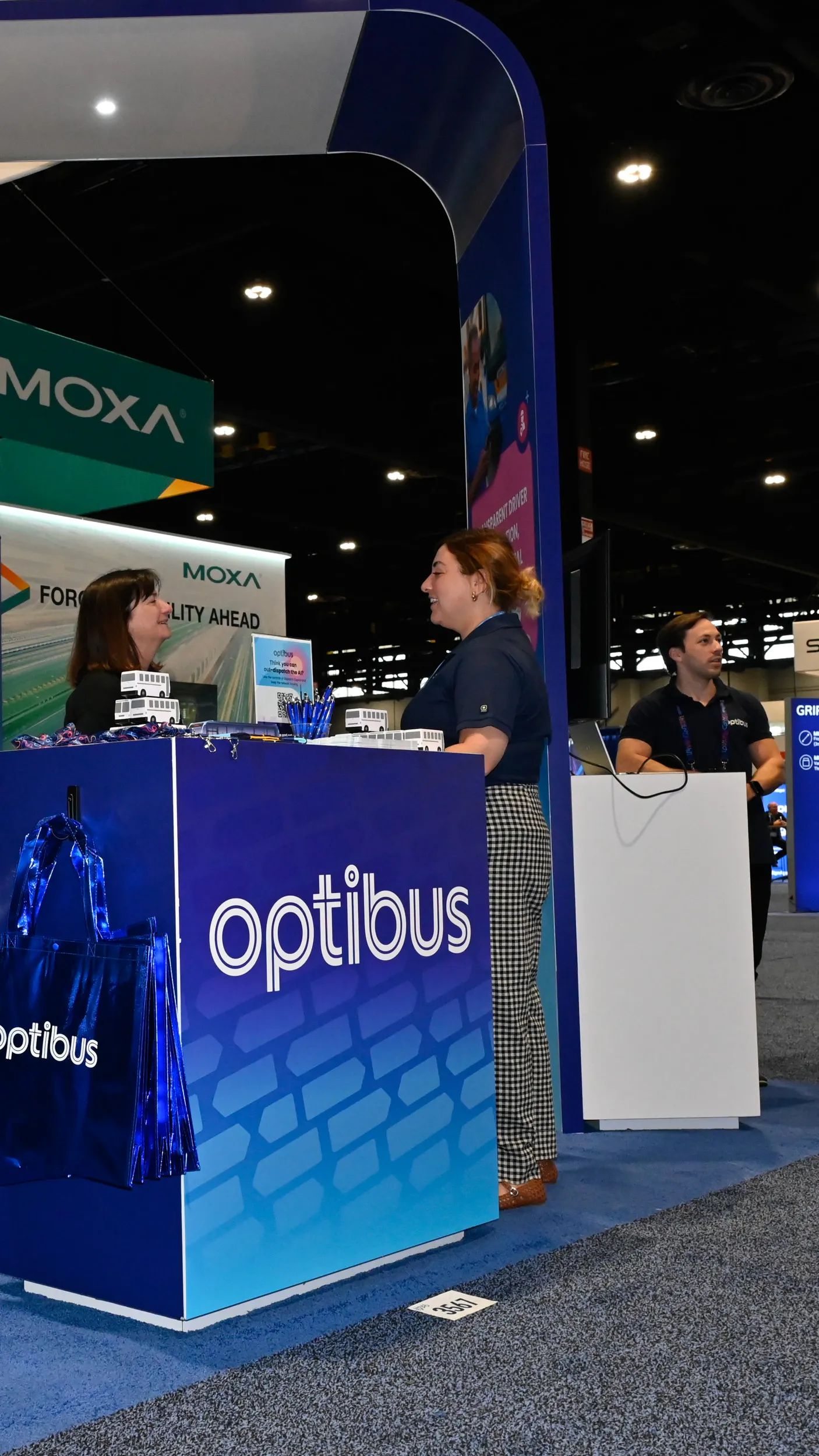
Optibus offers an AI platform for planning and operating public transportation systems. “The agent is able to anticipate trends and identify behaviors in the operation,” Senior Product Specialist Ivan Schejtman said. It can show the precise location of each bus in real time, Product Marketing Team Lead Shoshi Goldstein said.
If a bus is running ahead of schedule, for example, the product can automatically send a message to the driver to wait longer at the next stop, Goldstein said. It can also detect detours and alert dispatchers. It’s designed to benefit riders, operators and the transit system.
Siemens Mobility
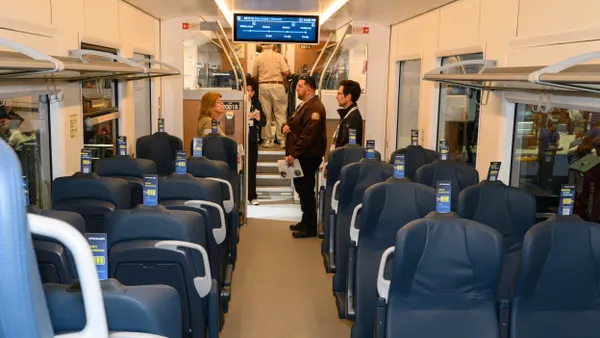
Rail car and locomotive manufacturer Siemens Mobility displayed a train that Seattle’s Sound Transit system will use and a scale model of its next-generation, low-floor light rail vehicle. “It's highly accessible … whether you're able-bodied or a person with reduced mobility,” a Siemens spokesperson said.
Wabtec
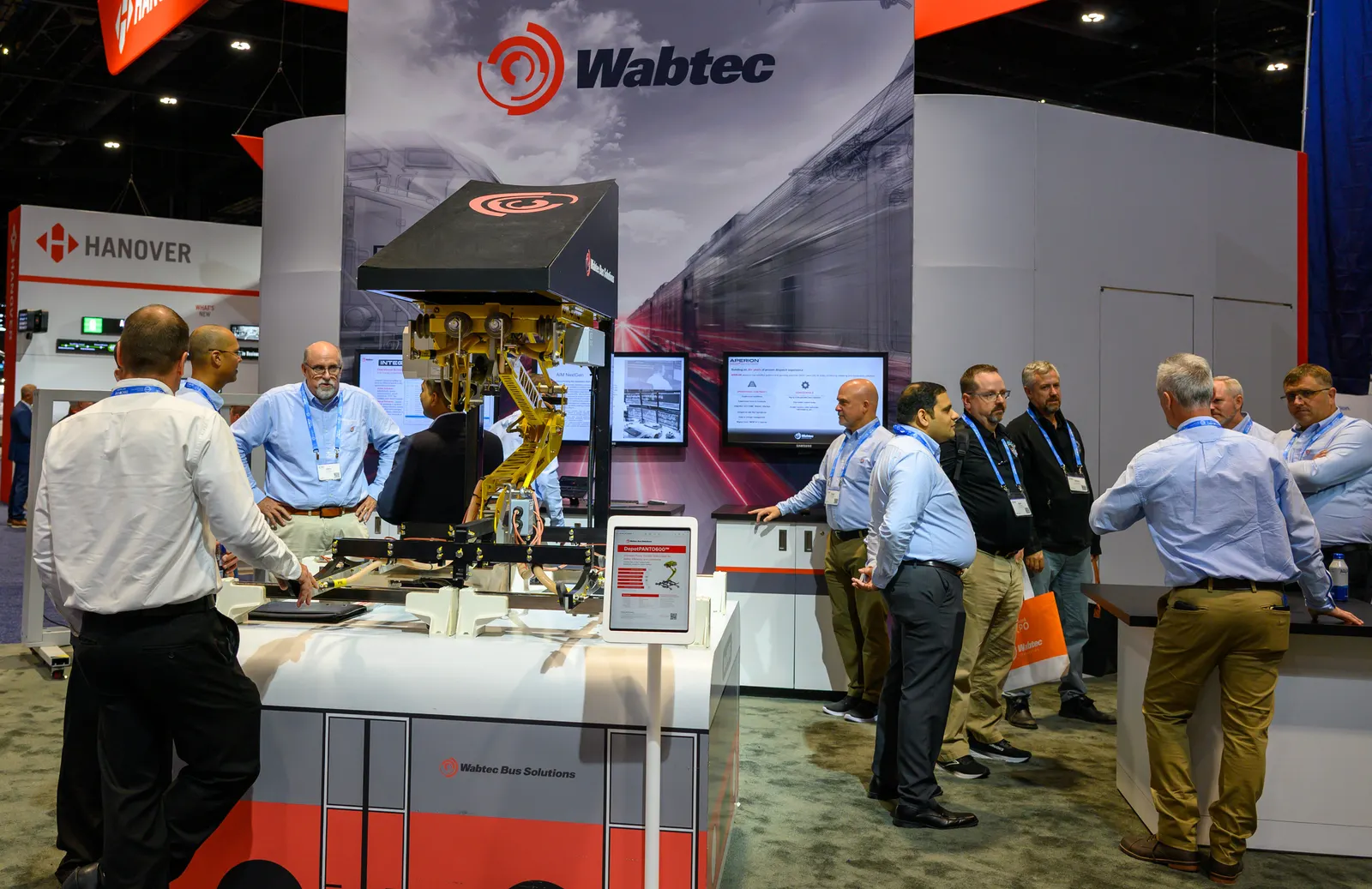
Wabtec, a rail technology company, demonstrated its latest passenger information system. It offers arrival-time predictions, can handle service disruptions and integrates with passenger-facing websites, social media and dispatch systems, John Shepley, senior product line manager for passenger information systems, said. The system will launch on Sound Transit’s light rail and Sounder commuter rail in Seattle, Shepley said.