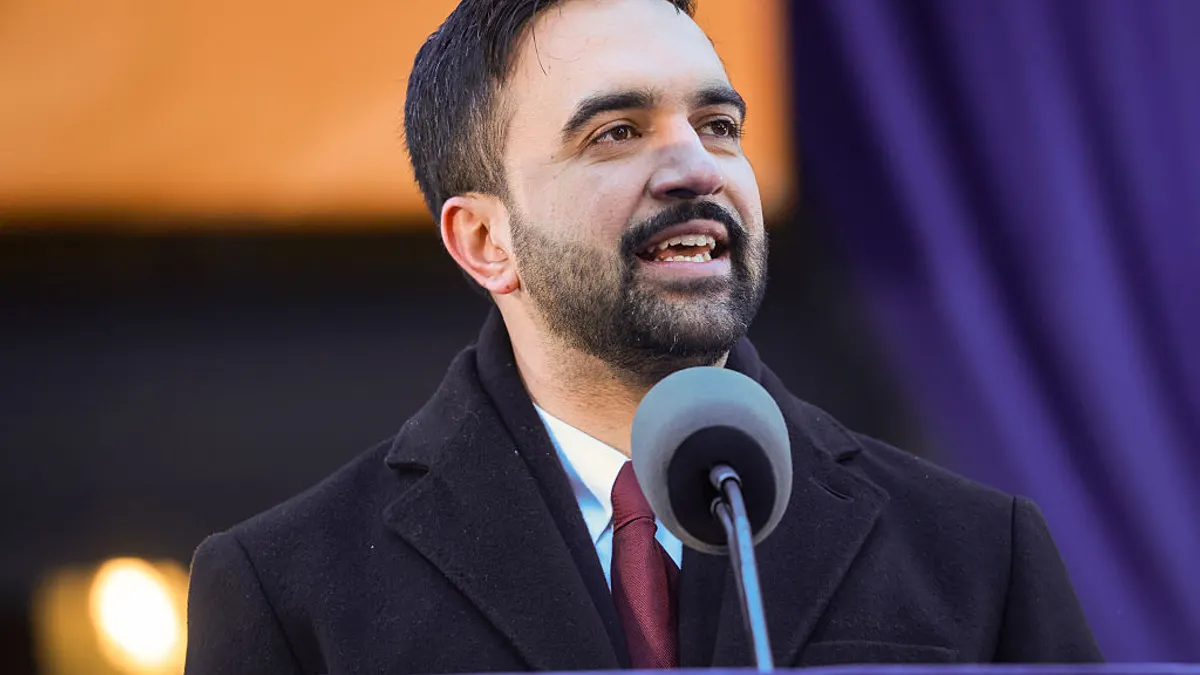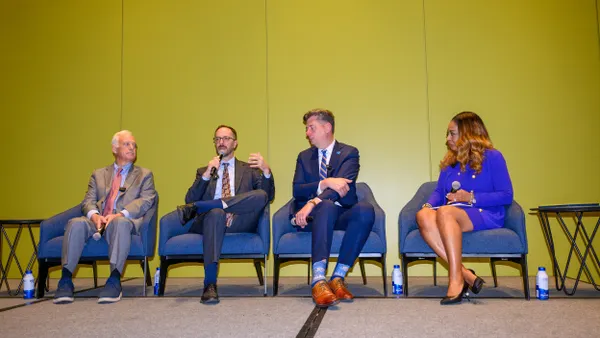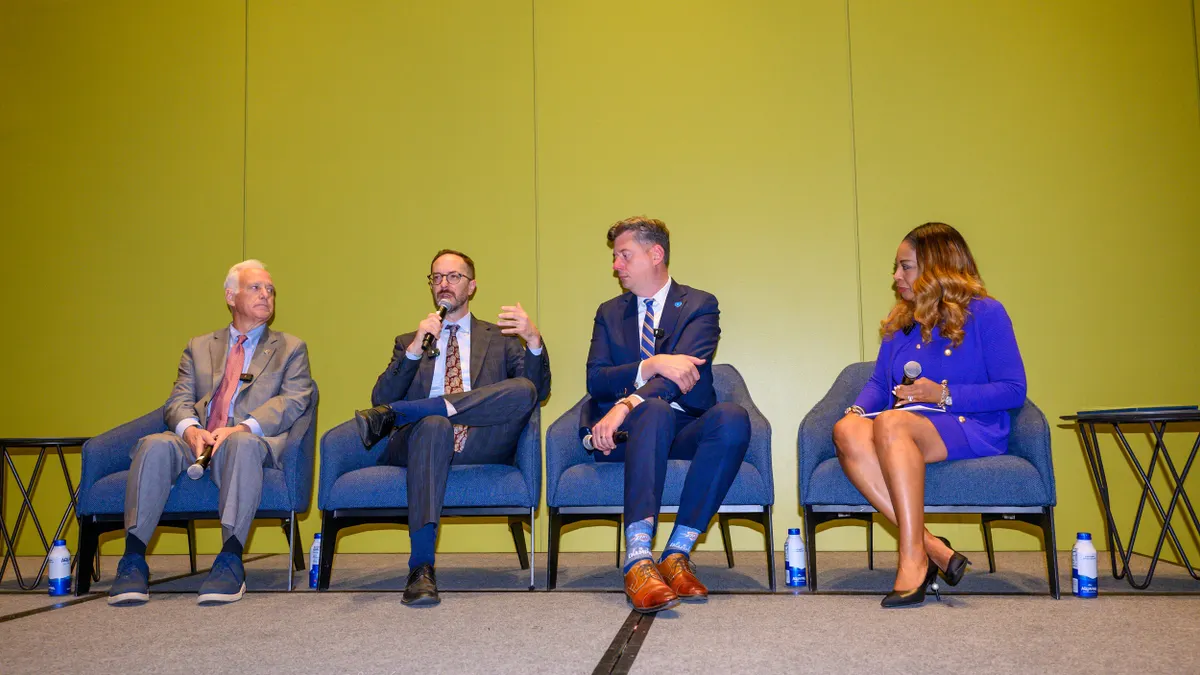
Three mayors of Southern, car-centric cities discussed their efforts to improve public transportation during an Oct. 5 panel at an American Public Transportation Association conference in Chicago.
Voters in Austin, Texas, created the Capital Metropolitan Transportation Authority, funded by a 1% sales tax in its service area, in 1985. The authority is now looking to reorient its services around post-pandemic travel patterns and population growth while adding services including light rail. Nashville, Tennessee, residents approved a half-cent sales tax increase in 2024 to expand the city’s bus system and add more sidewalks and bike lanes after rejecting a $5.2 billion transit plan in 2018. Oklahoma City has built a trail system, added bike lanes and two bus rapid transit lines, Mayor David Holt said.
The common threads among these cities have been population growth and migration toward downtowns. “People very much want to be in the heart of Nashville,” Mayor Freddie O'Connell said. “We have more than 20,000 urban residents, and that happened in a single generation.”
Austin Mayor Kirk Watson linked transportation to housing. “I can build a whole lot of so-called affordable housing, but it's not really affordable unless I also fix the transportation system around that,” he said. “Is it a place where somebody can maybe walk to work because we've created a land-use pattern along a rail line or along a rapid bus line in such a way that you enhance the quality of life?”
Holt said Austin is already experiencing the benefits of transit-oriented development with its downtown streetcar system. “We've seen hundreds of millions of dollars of development occur along the line,” he said.
Holt said “a historic transportation initiative for 2027” is underway to prepare for population growth and the traffic congestion that could come with that. “We really have to make a new financial commitment to realize the next level of aspiration, and so that's what we're talking about right now,” he said. “We think that the public is receptive to it because they see the increase in traffic.”
O'Connell said he “has tried to make sure that the land use choices we make, the service choices we make, the capital investments we make try to bring people together, offer more community [and] offer more affordability.”
Sun Belt cities, some of the fastest growing in the U.S., “tend to have some politics that are historically right of center,” Holt said. “There's a reason that Oklahoma City didn't really make any substantive investments in transit for half a century because our residents didn't want us to.” That may be changing as younger residents move into these cities, he said.
Regardless of politics, it’s important to be good stewards of the constituents’ money, Watson said. “We need to always be thinking not just about the vision, not just about the choice, and not about the opportunity, because we can also impact affordability,” he said. Taking that into account is “how we build the trust” around transportation investments, he said.