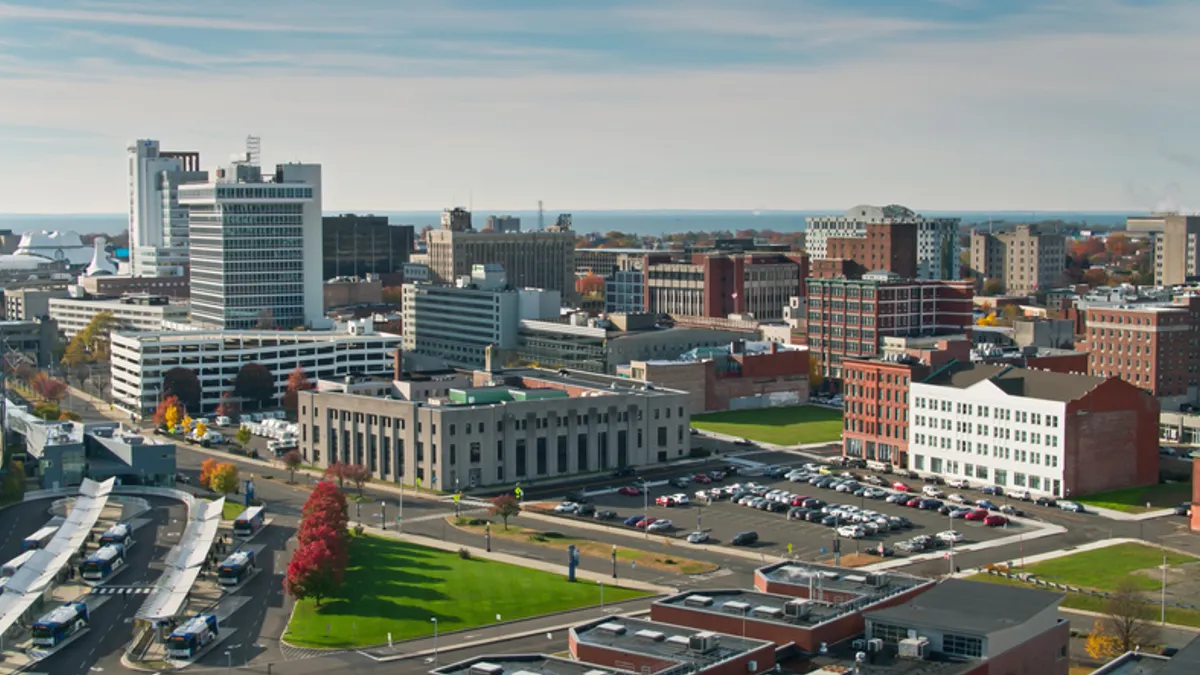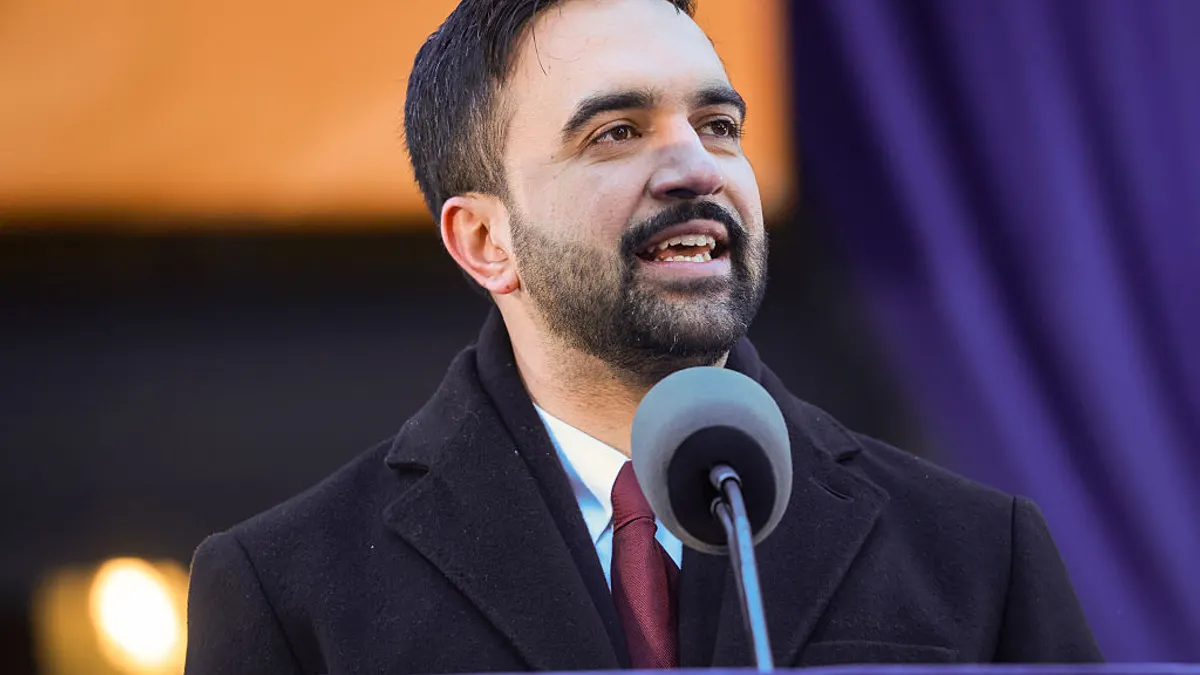
As Floridians get ready to vote in November on an amendment to the state constitution that would substantially cut residential property taxes, Lauderhill Commissioner Melissa Dunn is making her own preparations. A preliminary analysis shows Dunn’s Fort Lauderdale-area city of about 75,000 people will lose $8 to $10 million in property tax revenue beginning in fiscal year 2028 if the amendment passes, she told Smart Cities Dive.
“The question voters are going to have to answer is what services are they going to cut, or what fees are we going to have to raise?” said Dunn, cautioning that she’s not speaking in her capacity as an elected official regarding a ballot issue.
In Moore, Oklahoma, Mayor Mark Hamm is also bracing for lost tax revenue if the state Supreme Court approves adding a citizen initiative to eliminate property taxes on homesteads to the November ballot. Property taxes account for about 12% of the annual budget for his city of 63,000 people, Hamm told Smart Cities Dive.
“People in general think cities are rolling in the dough, but If we do away with property taxes, the money has to come from somewhere,” he said. “Are we just going to shift to a statewide use tax instead?”
North Carolina and Tennessee also have property tax measures on their November ballots. North Carolina’s amendment would require the state legislature to limit local property tax increases, while Tennessee’s amendment would “prohibit the general assembly from levying, authorizing or otherwise permitting a state tax on property.”
These states are the latest to join the low- or no-property taxes movement. From 2020 to 2025, the National Association of Counties reports that 34 states passed legislative actions that lowered local property tax revenues by a combined $12 billion a year.
Property taxes account for 70% of all local tax revenue, the nonprofit Tax Foundation noted in a 2025 report. A 2026 Tax Foundation report called property taxes the “primary tool for financing local governments.”
Backlash from high home prices
The nationwide trend to slash or eliminate property taxes is not without basis, according to the Tax Foundation.
“Property values have skyrocketed in recent years, rising almost 27% faster than inflation since 2020, which yields dramatically higher property taxes in jurisdictions that fail to adjust millages (rates) downward,” the foundation reports. “In just two years, the average sales price of a U.S. home soared from $371,100 to $525,100.”
Iowa Gov. Kim Reynolds cited a more than 10% increase in property taxes over the last two years when she signed a bill in May that limits local government revenue growth to 2% a year.
Altoona, Iowa, Mayor Dean O’Connor sympathizes with the desire for property tax relief. “Historically, Iowa has been very affordable, but house values have gone up over the last few years. This has caused problems for people on fixed incomes,” he told Smart Cities Dive. “I understand why the [state] legislature is trying to fix that. I just don’t think killing the cities is the proper way to do it.”
Here’s how O’Connor’s, Dunn’s and Hamm’s cities will be affected by property tax adjustments — and how they plan to cope.
‘Closed for business’ in Iowa
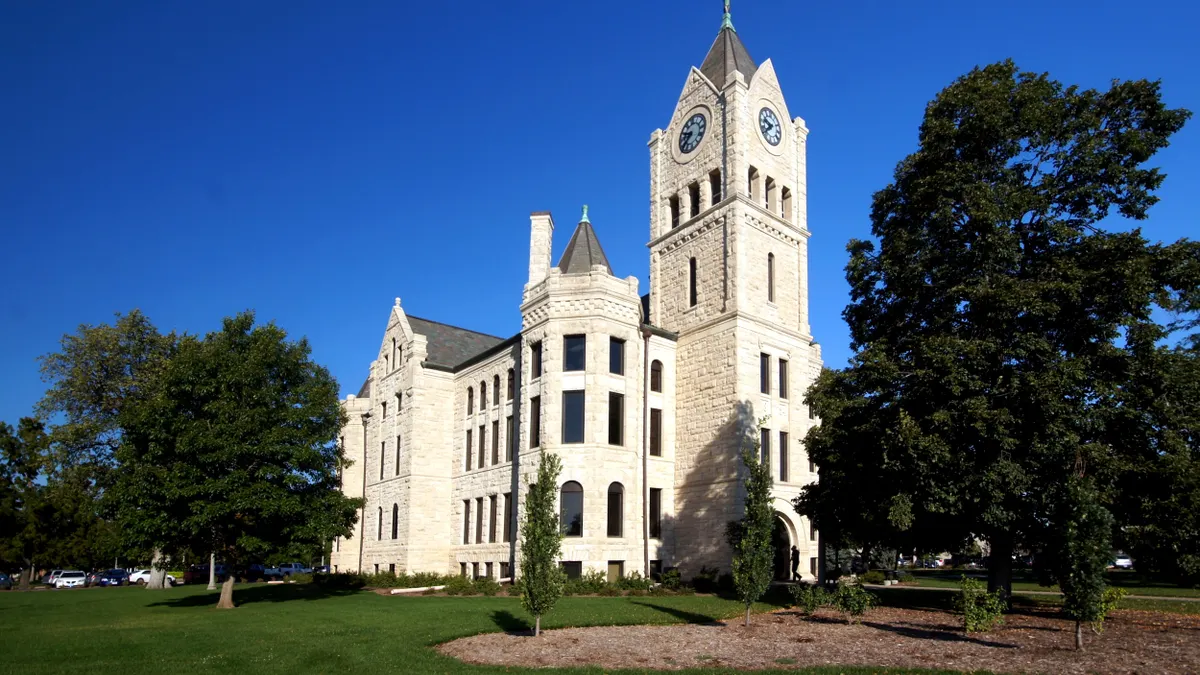
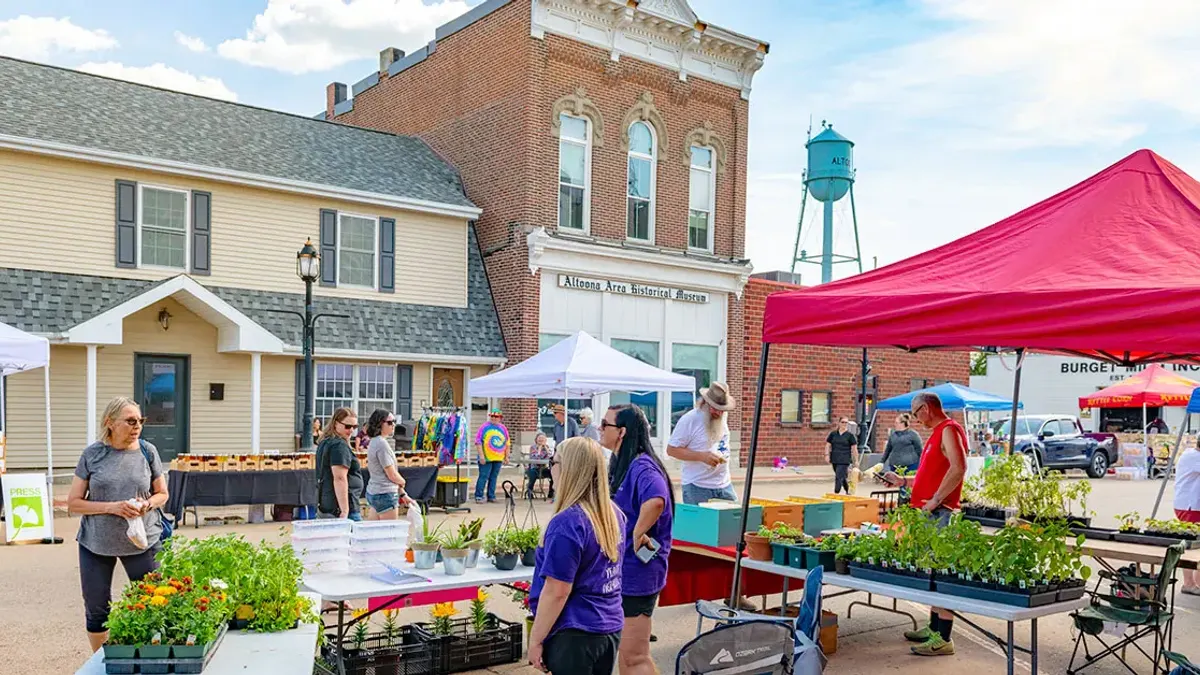
Altoona, a suburb of Des Moines with a population of around 23,000, is one of only about three areas in the state that are growing, O’Connor said. The city’s revenues consistently increase about 6% to 8% a year, he said.
O’Connor believes the state’s new property tax law will kill that growth.
“Basically, what the state is saying is if you grow 6, 8, 10%, you only get to keep 2%. So it’s silly for us to grow at 6%. Why would I give incentives to bring a business to town?” he said. “That’s the kind of attitude [Iowa cities] may eventually come to — 'I don’t want to grow.’ In my opinion, the state of Iowa is basically telling site selectors in the future that we are closed for business — go away.”
This particularly affects Altoona, O’Connor said, because the city gave a 20-year property tax abatement to Meta to build a multibuilding, 5-million-square-foot data center. Meta will begin paying property taxes in 2034 when the abatement ends. “We bet on that 20-year abatement, and now the state is coming in and saying you only get to keep 2%,” he said.
O’Connor said as a moderate Republican, he understands why the Republican state legislature passed the property tax bill. “But my opinion is the state legislature didn’t understand local governments and how efficient we are with our budgets.”
To save money, Altoona in July eliminated a tax abatement program for new homeowners, O’Connor said. He also hopes that next year, before the property tax cuts go into effect July 1, state legislators will talk to local leaders and reevaluate the new law.
Shifting the burden in Florida
Florida’s residential property tax amendment ballot issue was originally titled “Save Our Homes From Excessive Property Taxes” until a Tallahassee judge ruled that the amendment title and summary contained “political taglines” and must be rewritten. The new ballot summary states: “This amendment increases the homestead exemption, for all non-school taxes, to $150,000 in 2027 and $250,000 in 2028, and adjusts for inflation thereafter.”
Dunn said she understands why Florida residents want tax relief, but “I think the question is for folks to decide whether or not it gives real relief or just shifts [the tax burden] onto renters or businesses.”
Lauderhill has consistently lowered its mill levy over the last five years, Dunn said. “It was 8.998 mills when I was elected in 2020, and in 2026 it’s 7.498 mills.” Still, she said property taxes make up $34.9 million of the city’s $92 million general fund in fiscal year 2026. Of that, $41.1 million is earmarked for public safety, she said, including “$35 million for police alone.”
Dunn said Lauderhill has the ninth largest SNAP population in Florida and she’s also concerned about Medicaid and SNAP cuts in 2028. “At the same time the city could potentially be losing revenue, we’re also potentially having more people being dropped from benefits,” she said.
Dunn, who is active in the Florida League of Cities, said some cities believe they could go bankrupt if the property tax amendment passes. Broward County could potentially lose hundreds of millions of dollars, she said.
Stymieing capital improvements in Oklahoma
Oklahoma is the only state in the nation in which cities can’t get revenue from property taxes unless voters approve it, Hamm said. For Moore, that means the general fund is made up of sales tax, and capital improvements or other large projects are funded by property tax.
“The only way we can build a park is from property tax. Voters vote to issue [general obligation] bonds, which are paid back by property taxes from the city’s portion of the county property taxes,” he said.
By law, Moore’s $40 million general fund can pay for public safety, maintenance, public works and other operating expenses. “But if we want to rebuild a road that costs $5 million or $10 million, we have to go to the voters to ask to pay for it with property tax,” Hamm said.
To get around that, in April the city asked voters to fund a 1 cent sales tax “to build things and not have to issue GO bonds,” Hamm said. The initiative failed.
“There probably needs to be some changes to property taxes and who gets what. I understand people get burdened,” he said. “But I believe for what residents pay in Moore, they’re getting a good deal.”