Zuri Tau is the founder and CEO of Social Insights Research, which partners with foundations, nonprofits and communities to determine whether their investments are making a difference in collective care and racial equity and how to best translate those findings into action.
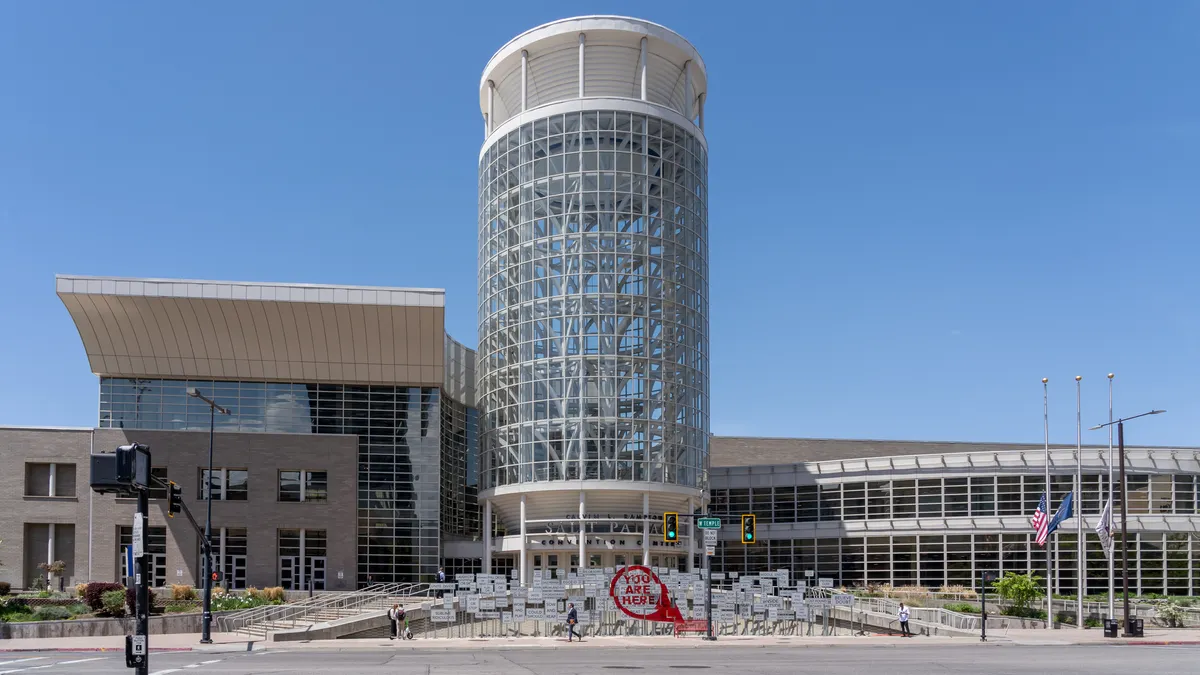
Cities are leveraging major events as accelerators of change. The 2026 Super Bowl in San Francisco was estimated to bring as much as $630 million in local economic impact. Salt Lake City could generate more than $6.6 billion in economic impact for the state if it scores the 2034 Winter Olympics.
But the numbers rarely show the full picture of what a city stands to gain or lose in the process.

Measuring economic impact alone risks treating growth as the sole proof of progress, even when residents’ lived experience shows otherwise. While a city experiences record visitor spending, community members may be struggling with higher housing costs. Whether residents experience change as opportunity or as displacement is highly dependent on the gap between what leaders communicate and what the community actually experiences.
Take Atlanta as an example. It was the first U.S. city to open federal public housing in 1936. Decades later, it was the first to systematically demolish its public housing projects in favor of private, mixed-income developments, largely in preparation for the 1996 Olympics. Framed as a strategy to “deconcentrate” poverty and modernize housing stock, the demolition reduced the overall supply of affordable units available to the city’s lowest-income residents. When framing focuses on revitalization, yet the outcome results in loss, the gap between message and reality is the lasting legacy.
Major events compress decision-making timelines and push public agencies to coordinate at scale. Those conditions can unlock investments that cities have wanted for years. But they also increase the likelihood of downstream changes in factors like scope and cost, which is where many projects lose community confidence. If the goal is lasting economic growth, cities must treat community well-being as part of both their economic and communication strategy.
The question is not whether cities should pursue these economic opportunities but how to do so without losing the public’s trust along the way. At Social Insights, we have found that the most impactful levers contribute to accountability. These three tips can help keep momentum aligned with community priorities.
1. Practice transparency, even when the plan changes.
Some of the promises you make early on will not survive first contact with reality. What matters more than keeping those promises is whether residents can see what’s changing and why. Build transparency into the process before decisions get made.
The 2026 FIFA World Cup, arriving in cities across North America this summer, illustrates what happens when transparency isn’t built into the process before the event begins. FIFA required each of the 16 host cities to produce a Human Rights Action Plan identifying risks to workers, local residents, and marginalized groups. With weeks until kickoff, most cities had not released their plans. In Foxborough, Massachusetts, city officials learned at a public meeting that neither the Boston host committee nor FIFA's own venue director could tell them where the millions of dollars needed for local security would come from.
Residents and elected officials were not asking for perfect plans. They were asking for basic visibility into decisions that would directly affect their communities. The lesson? Create the conditions under which communities can follow the decisions being made on their behalf, including the incomplete and evolving ones, before the gap between what was promised and what is happening becomes too wide to bridge.
2. Create a clear system for communicating change.
Communities need a way to track what’s happening without chasing scattered updates. The difference between a status board and an accountability system is that one tells residents where a project stands today, while the other shows the full arc of promise to execution.
New York City's participatory budgeting process is an excellent model. Since 2012, residents have voted on how to spend over $210 million across more than 700 community improvement projects. When organizers recognized that winning a vote and seeing a project implemented were two different things, they built a public tracking tool called myPB so residents could follow every funded project over time. The system did not just announce outcomes. It made the gap between decision and delivery visible and accountable. A peer-reviewed study later confirmed that neighborhoods participating in the process showed measurable improvement in public service performance.
The conclusion is not that every city needs participatory budgeting but that every city can benefit from more transparency. Every major public commitment needs a system that shows communities not just the current status but the full record of how commitments evolved and what was ultimately done with them.
3. Document not just when, but why a goalpost has changed.
When the measure of success shifts, residents need a written record of the exact reason. Without that trail, communities cannot distinguish between a decision made out of necessity and one made out of convenience. Treat your success measures as living commitments. Publish the original goal. Publish the revision. Publish the reasoning. The aim is not to be perfect. It is to be legible, so that when things change, the community can engage the change rather than simply absorb it.
The three practices outlined here do not require new legislation or major investment. They require a decision, made early and honored over time, to treat public trust as an indicator of success. The payoff is a clearer path from a temporary spike in economic activity to long-term prosperity that people can actually feel.