UPDATE: Sept. 28, 2026: Seventeen Brightline Florida-related entities filed for Chapter 11 bankruptcy Thursday in Bankruptcy Court for the District of New Jersey. Brightline Trains Florida secured $490 million of new long term capital, including $140 million of additional senior debt and $350 million of new junior debt, according to a Sept. 25 press release.
Trains will continue to run. “This transaction will be a catalyst for further growth in ridership and revenue,” Brightline Florida CEO Patrick Goddard said in a statement. “We are grateful to our creditors, advisors, vendors, teammates, and guests for their confidence throughout this process, and we look forward to the bright future ahead.”
UPDATE: Sept. 24, 2026: Brightline Florida is expected to file for Chapter 11 bankruptcy as soon as this week, according to Bloomberg and The Wall Street Journal. Train service will continue, as only its holding company would file, leaving the railroad’s operating company outside the bankruptcy.
Brightline Florida aims to cut its $5.5 billion debt to about $2.7 billion. A number of municipal bondholders and lenders have agreed to provide $490 million in exit financing, according to The Wall Street Journal. Brightline Florida is carrying $4.4 billion in municipal debt, according to The Bond Buyer.
Brightline Florida’s West Coast cousin, Brightline West, has until Nov. 2 to make a $400 million equity investment in the project, according to The Bond Buyer. Brightline West had promised to raise the funds by March 31, 2026, but failed to do so, according to Bloomberg. Brightline West plans to build a 200-mph rail line between Las Vegas and Southern California. Both projects are backed by Fortress Investment Group.
Brightline Florida’s day of reckoning with its lenders may be coming soon.
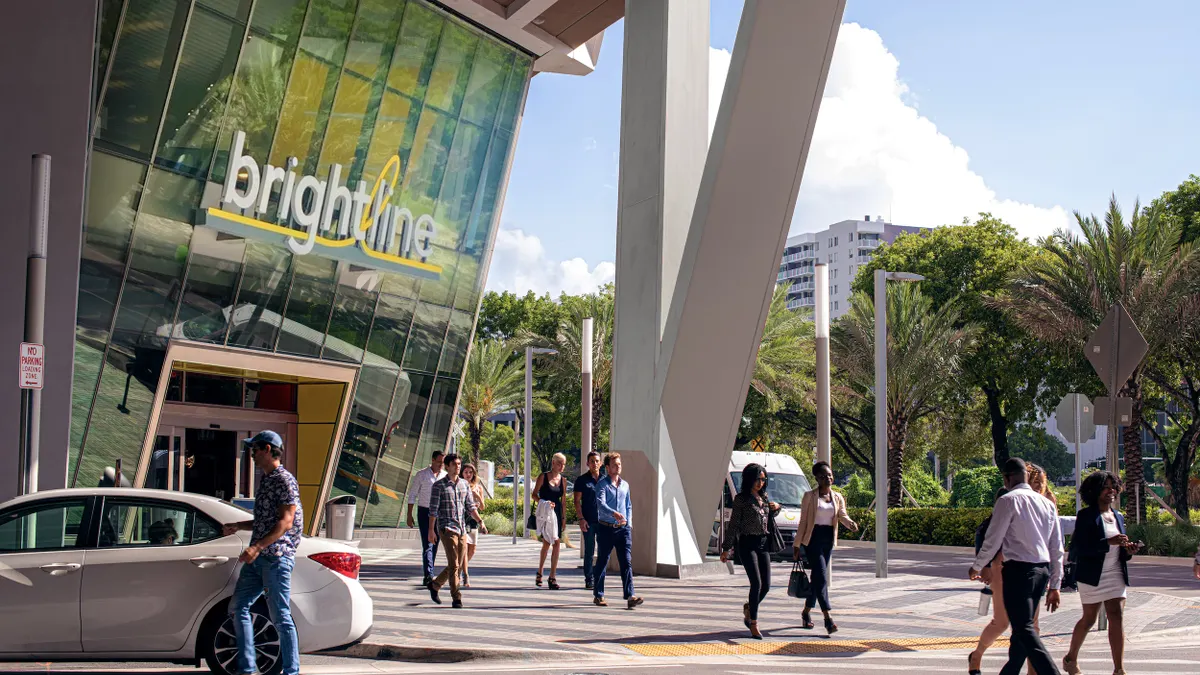
The privately owned, 235-mile railroad connecting Miami and Orlando, Florida, faces a July 15 deadline to make a payment on $985 million in “commuter” bonds, according to The Bond Buyer. The Florida Development Finance Corp., which issued the bonds, previously agreed with bondholders to defer payment from Feb. 17 to July 1, and then to July 15. If Brightline or its affiliates default on making the required payments, it could be forced into bankruptcy or liquidation, according to a Feb. 5 FDFC memorandum.
The company’s total debt stands at $5.5 billion, according to The Wall Street Journal. In Brightline Florida’s 2024 and 2025 combined financial statements, its independent auditors wrote that “substantial doubt exists about the Company’s ability to continue as a going concern.”
Brightline Florida’s problem isn’t ridership: The railroad carried nearly 1.5 million passengers from January to May this year, a 16% increase over the same period last year. But ticket and ancillary revenues aren’t covering operating expenses and debt interest, according to its latest financial statement. “Brightline continues to need additional liquidity to address operating requirements, as well as upcoming debt service payments,” the company said in its May 2026 revenue and ridership report.
Discussions around debt restructuring or bankruptcy are underway, according to multiple news reports.
A railroad entering bankruptcy is different from an airline, which can sell and transfer its aircraft, gates and other assets, Ivan Reich, a bankruptcy attorney at Florida-based Nason Yeager, told Smart Cities Dive. Reich does not represent any of the parties related to Brightline Florida. A railroad can’t be picked up and moved, he explained, making bankruptcy more likely.
“Generally, what happens when you go into bankruptcy is you get a pause, and then you try to restructure [the debt],” Reich said. “I'm sure that's exactly what they're setting up for.” He notes that “companies have more value as a going concern than in a liquidation.”